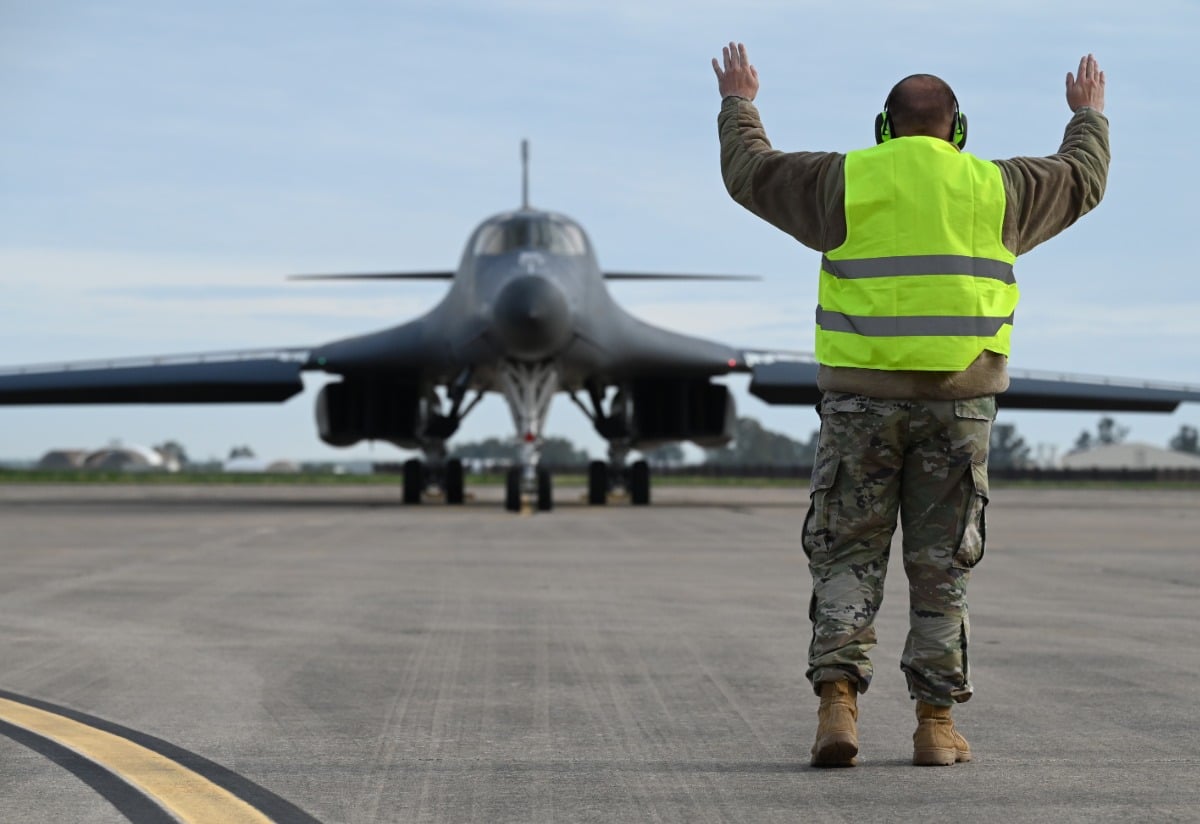
Mainstream defense analysts are wringing their hands over the Pentagon pouring $400 million into Spain’s Morón Air Base.
The lazy consensus goes like this: Washington is getting ripped off. Critics point out that Madrid restricts the base from being used for active combat operations in places like Libya or the Sahel without explicit permission. They call it a strategic dead end. They claim the US is funding a fortress it cannot legally use to fight. If you enjoyed this piece, you might want to look at: this related article.
They are completely misreading the modern mechanics of power projection.
This is not a story of American diplomatic weakness or wasted taxpayer money. It is a masterclass in infrastructure arbitrage. In defense logistics, access and throughput matter far more than immediate permission to pull a trigger. Washington isn't buying a launchpad for tomorrow's airstrikes; it is securing the central nervous system for trans-continental logistics for the next three decades. For another angle on this story, refer to the latest coverage from Reuters.
The Operational Fallacy of the Combat Ban
The loudest complaint from defense watchdogs is that Spain's veto power over offensive sorties makes Morón a bad investment.
This argument assumes that an air base is only valuable if fighter jets can take off from it to drop bombs. That is 20th-century thinking.
Let's look at the actual geography. Morón sits at the literal crossroads of Europe, Africa, and the Middle East. It features a massive 11,800-foot runway and over 2.5 million square feet of ramp space.
Morón Air Base Capability Matrix
+-------------------+-----------------------------------+-----------------------------------+
| Metric            | Mainstream Interpretation         | Strategic Reality                 |
+-------------------+-----------------------------------+-----------------------------------+
| $400M Investment  | Wasted capital on restricted base | Life-extension for global transit |
| Madrid Combat Ban | Severe operational constraint     | Irrelevant to cargo/refueling     |
| Base Function     | Underutilized strike platform     | Indispensable logistical hub      |
+-------------------+-----------------------------------+-----------------------------------+
When the US Air Force moves assets into the Middle East or Africa, the bottleneck is never a lack of bombs. The bottleneck is fuel, maintenance, and staging. Spain’s restrictions apply specifically to launching kinetic strike missions from Spanish soil. They do not apply to:
- C-17 Globemasters hauling critical equipment.
- KC-135 and KC-46 tankers providing the aerial refuel pipelines over the Atlantic.
- En-route maintenance for transport fleets heading toward active theaters.
By upgrading Morón, the US military ensures its heavy lifters can always land, refuel, and fix mechanical issues before crossing into more volatile airspace. If you cannot get the cargo across the ocean, the combat capability at the destination drops to zero.
Why Washington Welcomes Spanish Restrictions
I have spent years analyzing defense procurement and staging contracts. Here is the open secret nobody in Washington wants to say out loud: the Pentagon actually prefers bases with clear political guardrails.
When a host nation places specific, legal boundaries on base usage, it creates stability. Madrid’s stance is highly predictable. It is governed by a long-standing bilateral Agreement on Defense Cooperation. Both sides know exactly where the lines are drawn.
Compare Morón to a "no-strings-attached" forward operating site in a politically unstable region. Those unrestricted sites look great on paper until a coup or a sudden shift in local alignment locks the gates overnight.
Furthermore, Spain's restrictions force the US to maintain a diversified basing strategy. Relying on a single unconstrained mega-base creates a single point of failure. By using Morón as the unassailable logistical anchor, Washington can use smaller, more agile locations elsewhere for the actual kinetic launches.
Dismantling the People Also Ask Doubts
The public debate around this $400 million contract is riddled with fundamentally flawed premises. Let's dismantle the most common ones.
Is Spain exploiting its NATO partnership at US expense?
This question misunderstands how burden-sharing works. Spain provides the physical territory, local security, and sovereign diplomatic cover. The US provides the capital to modernize infrastructure that it exclusively uses for its global reach.
Imagine a scenario where a corporation builds a proprietary distribution warehouse on leased land. The landlord stipulates that you cannot manufacture hazardous chemicals on site. Does that mean the corporation is being exploited? Of course not. The warehouse exists to move inventory, not to mix chemicals.
Why not just move these operations to Rota or Ramstein?
This is the classic "consolidation cure-all" pushed by bureaucrats who have never managed complex supply chains.
Naval Station Rota is already congested, dealing with Aegis destroyers and naval logistics. Ramstein Air Base in Germany is already at peak capacity, serving as the primary medical and logistical funnel for northern and eastern Europe.
Airspace and ramp space are finite resources. If you crowd everything into Germany or coastal Italy, you create massive air traffic bottlenecks during a crisis. Morón provides geographic separation. It offers clear weather year-round and an open approach over the Atlantic that avoids congested European civilian air corridors.
The $400 Million Breakdown: What Washington is Actually Buying
To understand why this spend is a bargain, look at where the money goes. It isn't going toward building luxury barracks or state-of-the-art pilot lounges. It is going into heavy engineering.
- Apron and Runway Resilience: Heavy transport aircraft like the C-5 Galaxy crack standard tarmac. Constant resurfacing is required to handle high-tempo, max-weight takeoffs.
- Fuel Hydrant Systems: Modern warfare runs on JP-8 fuel. The ability to hot-pit refuel multiple wide-body aircraft simultaneously cuts ground turnaround times from hours to minutes.
- Ammunition Storage Areas: Morón serves as a massive Prepositioned Materiel site. The US stores thousands of tons of equipment here in a secure, stable environment, ready to be airlifted at an hour's notice.
This is a capital expenditure that pays dividends over thirty years. Dividing $400 million across three decades of guaranteed, strategic access breaks down to roughly $13 million a year. That is a rounding error in the Pentagon's budget. It is cheaper than the annual maintenance cost of a single littoral combat ship.
The Downside to the Contrarian Reality
Honesty demands admitting the real risk of this strategy. The risk isn't that Spain will block a mission. The risk is that the US becomes overly reliant on Western European predictability while the nature of global conflict shifts completely away from these traditional corridors.
If the primary theater of tension moves decisively to the Indo-Pacific, the entire value proposition of European staging hubs diminishes. A pristine runway in Andalusia does nothing to solve the logistical tyranny of distance in the South China Sea.
But as long as the US maintains commitments to NATO’s southern flank, North Africa, and the Middle East, Morón remains an irreplaceable node.
Stop judging military investments solely by the destruction they can directly unleash from their perimeter fence. True military dominance is built on concrete, fuel lines, and unglamorous transport links.
Washington knows exactly what it bought in Spain. It bought the logistics pipeline that keeps the rest of the empire running. Turn off the outrage machine and look at the ledger.


