The Valuation of a Second
A modern football match is a relentless algorithm designed to erase men like Josimar Dias. On a humid Monday afternoon in Atlanta, the algorithm functioned precisely as written. Spain, the reigning European champions, operated with the cold, frictionless geometry of a luxury watch. They strings-attached twenty-seven shots. They starved the opposition of the ball until the grass itself seemed to tilt toward one end of the stadium.
Every variable in the stadium pointed toward a routine, forgetting destruction. Cape Verde, an island nation making its absolute debut on the global stage, was supposed to be a footnote. A pleasant story about qualification. A factual guarantee of three points for the elite.
But football is ultimately a human game, which means it is prone to glitches.
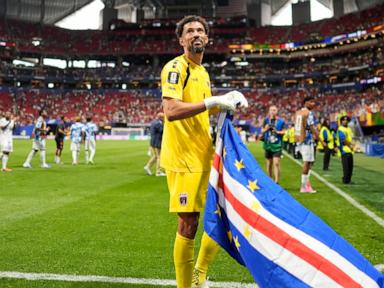
Josimar Dias is forty years and twelve days old. In a sport that treats thirty-four like senior citizenship, his presence on the pitch is an chronological absurdity. He spends his regular weekends playing for Chaves in the Portuguese second division, far away from the blinding light of billionaire ownership and private jets. He is a man who knows the texture of long bus rides and damp changing rooms.
Yet, for ninety minutes, he stood between the most expensive collection of footballing talent on earth and the back of his net. Seven times, the ball left a Spanish boot with the mathematical certainty of a goal. Seven times, a limb belonging to the forty-year-old interfered with the script.
When the final whistle blew, cementing a historic 0-0 draw, the scoreboard recorded a solitary point for Cape Verde. But the true calculation was happening elsewhere, silently, in the pockets of millions of people watching across the globe.
The Origin of the Little Voice
To understand why a man bursts into heavy, chest-heaving tears after achieving a sporting miracle, you have to look past the green grass of the stadium. You have to go back to the dust of São Vicente Island.
His birth certificate reads Josimar José Évora Dias. His father, a soldier, named him in a feverish burst of admiration for the legendary Brazilian right-back who took the 1986 World Cup by storm. It was a heavy name to carry for a boy who was small, skinny, and entirely unprotected from the rough street football of Mindelo.
He played with older boys. He lost often. He was bruised, tackled into the dirt, and left to fend for himself. Whenever the pain or the injustice of the street games became too much, he would walk away, sulking, carrying his deflated pride home.
The neighborhood kids noticed. They laughed. They shouted after him that he was running to complain to his grandmother.
In the local Creole language, they called him Vozinha. Little Grandmother.
The name was meant to be a weapon of shame, a brand for a child who needed shelter. But names have a strange habit of twisting under pressure. Decades later, when he arrived in Angola to play for Progresso, he found another player named Josimar on the roster. Rather than accept a sterile Roman numeral next to his name, he chose the old insult from the streets. He put Vozinha on the back of his jersey. He wore the vulnerability like armor.
Consider what happens next when that vulnerability meets the absolute peak of pressure.
Seven Seconds of Defiance
The algorithm doesn't care about grandmothers. Spain launched wave after wave of attacks. Pedri orchestrated. Gavi chased. Ferran Torres struck a thunderbolt that rattled the crossbar so hard the camera shook. The rebound fell with terrifying precision to Mikel Oyarzabal. His header was downward, sharp, and destined for the bottom corner.
A forty-year-old body should not react to that. The joints are stiff from decades of impact. The lower back carries the memory of every bad landing on concrete fields.
But Vozinha flew. It was a full-stretch, desperate tip over the bar that defied the basic laws of trajectory.
Shortly after, Lamine Yamal—a teenager young enough to be Vozinha's son—cut inside with the arrogance of youth, curling a ball toward the far post. Vozinha read it. He didn't guess; he remembered. He had seen that exact curl a thousand times in his mind during his twenty-year trek through the leagues of Moldova, Cyprus, and Slovakia. He plucked it from the air.
Every time his gloves met the ball, a strange phenomenon occurred in the digital ether.
Before kickoff, Vozinha’s Instagram account was a quiet place. It had roughly 50,000 followers. It was populated by friends from Cape Verde, a few loyal supporters from Chaves, and people who knew him from his eighty-nine appearances for the national team. It was the digital footprint of an ordinary life.
But as the saves piled up, the internet began to look for the man with the grand-maternal nickname. A massive digital surge, spearheaded by Brazilian broadcast outlets who saw their own history reflected in his name, began to sweep across social platforms.
By the time the match reached the sixtieth minute, the count was rising by tens of thousands every second. By the seventy-fifth, it crossed two million. By the time the sun set over Atlanta, the profile had swelled to over 7.7 million followers.
An overnight global sensation. A viral commodity.
The Weight of the Invisible
The modern world looks at a number like 7.7 million and sees a marketing triumph. It sees leverage. It sees data points to be converted into sponsorships and digital revenue.
But when the broadcasters shoved a microphone into Vozinha’s face minutes after the final whistle, he wasn't thinking about the data. He was weeping so hard he could barely form words in Portuguese.
The millions of people who had just clicked "follow" were looking at a screen. Vozinha was looking at the sky.
Two years ago, he lost his grandmother. Shortly after, his grandfather followed. The two people who had raised him while his mother worked long hours and his father served in the military were no longer in the stands. They were not there to see the boy who used to run home crying from the street games stand as the oldest goalkeeper in the history of the World Cup to keep a clean sheet on his debut.
"If they were still alive today, they would be very proud of their grandson," he whispered, his voice cracking under the stadium lights.
That is the invisible currency of the tournament. The algorithm measures the possession percentage, the expected goals, the digital impressions, and the follower velocity. It translates human effort into clean, easily digestible graphs for a public that consumes stories in fifteen-second clips.
Yet the man at the center of the machine remains entirely old-fashioned. He is still just a boy from Mindelo who spent twenty years traveling the world with a suitcase, waiting for a single afternoon where he could prove to the ghosts of his childhood that he didn't run away from the fight.
On Sunday, Cape Verde will play Uruguay. The digital cameras will be focused on Vozinha from the tunnel to the final whistle. The sponsors will watch his profile. The internet will wait for another viral moment to consume.
But the man in the green jersey will just be looking for the ball, waiting to see if a forty-year-old body can hold the world at bay for ninety minutes more.