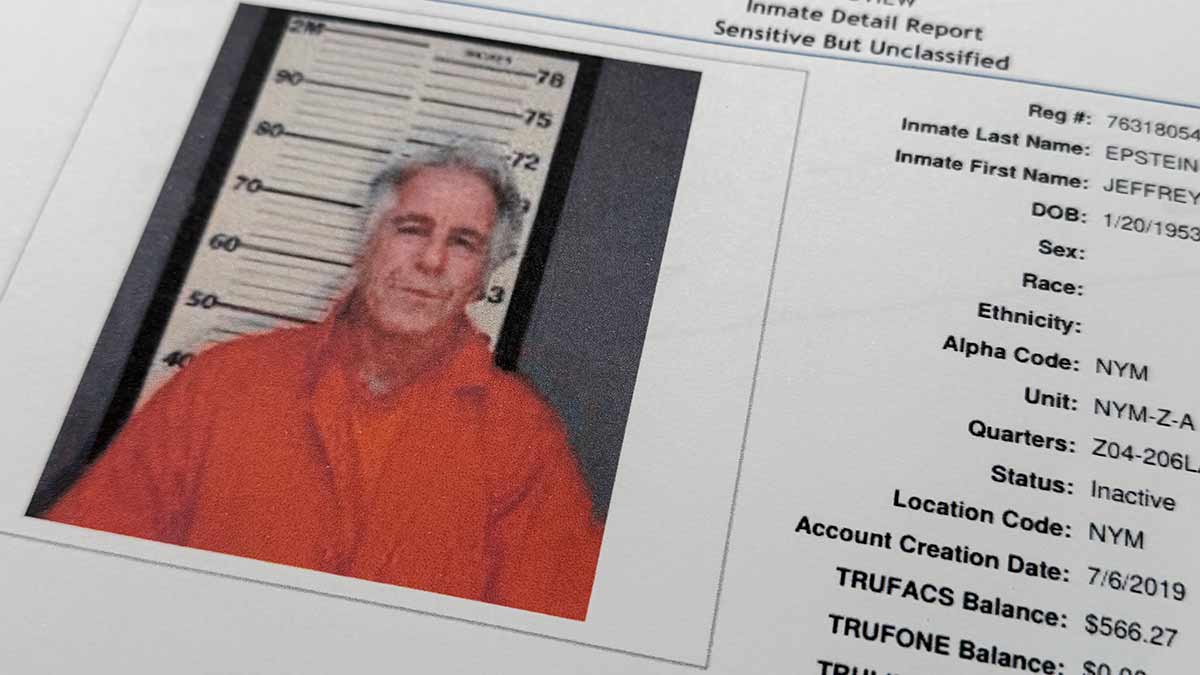
Forensic pathology relies on biomechanical probability rather than absolute certainty, a distinction that explains why the August 2019 death of Jeffrey Epstein remains one of the most contested rulings in modern medico-legal history. While the New York City Office of Chief Medical Examiner (OCME) officially classified the death as suicide by hanging, Dr. Michael Baden—a former New York City Chief Medical Examiner hired by Epstein's estate to observe the autopsy—publicly challenged that conclusion, arguing that the anatomical trauma points more consistently toward homicidal strangulation. Resolving this dispute requires stripping away media sensationalism and examining the exact physiological mechanisms, fracture probabilities, and institutional chain-of-custody failures documented in the public record.
The Biomechanical Diagnostic Matrix
In forensic medicine, differentiating between suicidal hanging and homicidal strangulation depends on evaluating a cluster of physical markers rather than relying on a single smoking gun. When a body is suspended, gravitational force acts along a vertical axis; when an assailant applies manual or ligature pressure, the vector of force is predominantly horizontal. Each mechanism leaves a distinct structural signature across the neck's cartilaginous and vascular systems. Meanwhile, you can explore related stories here: Inside the Balochistan Media Blackout Nobody Is Talking About.
To evaluate the competing claims in the Epstein autopsy record, forensic investigators weigh four primary physiological variables:
- Hyoid Bone and Thyroid Cartilage Fractures: The hyoid is a U-shaped bone situated at the base of the tongue, anchored by muscles rather than articulated to other bones. The thyroid cartilage sits directly beneath it, shielding the larynx. In younger individuals, these structures remain flexible and rarely break during suspension. In older adults—Epstein was 66—progressive ossification turns cartilage into brittle bone, increasing fracture susceptibility.
- Ligature Furrow Trajectory: Suicidal hangings typically produce an inverted V-shaped furrow that angles upward toward the suspension point, usually behind the ear or at the occiput, leaving a gap where the noose pulls away from the skin. Homicidal ligature strangulation generally creates a continuous, horizontal groove encircling the neck at or below the level of the thyroid cartilage.
- Petechial Hemorrhages: Petechiae are pinpoint red spots caused by ruptured capillaries in the conjunctiva of the eyes, the eyelids, or the oral mucosa. They occur when venous return from the head is obstructed while arterial inflow continues, spiking intravascular pressure. Complete suspension often occludes both arteries and veins simultaneously, suppressing petechiae, whereas intermittent or incomplete manual compression frequently produces dense petechial clusters.
- Soft Tissue and Muscular Trauma: Deep bruising within the sternocleidomastoid muscles, strap muscles, and prevertebral fascia indicates localized, high-pressure crushing forces.
Dr. Baden’s central thesis rests on the presence of three distinct fractures in Epstein’s neck: one in the left hyoid bone and two in the thyroid cartilage (specifically on the left and right sides). Based on his five decades of reviewing thousands of custodial deaths and homicides, Baden asserted that multiple fractures of this specific configuration are statistically rare in suicidal hangings, particularly in low-suspension scenarios where the body does not drop from a height, and occur with far greater frequency in homicidal strangulation. To see the bigger picture, check out the recent report by NBC News.
The Ossification Counter-Argument and Statistical Overlap
The divergence between Baden and the OCME illustrates a core limitation in forensic science: overlapping probability distributions. Neither hanging nor strangulation holds a monopoly on hyoid or thyroid fractures.
Peer-reviewed forensic literature demonstrates that the incidence of laryngohyoid fractures in suicidal hangings varies widely depending on age, sex, and suspension mechanics. In subjects over the age of 60, age-related calcification significantly lowers the mechanical threshold required to snap the superior horns of the thyroid cartilage or the greater horns of the hyoid bone. Studies published in journals such as Forensic Science International and the American Journal of Forensic Medicine and Pathology indicate that fractures occur in roughly 25% to 45% of suicidal hangings among older demographics, and the presence of multiple fractures, while less common than a single fracture, does not automatically exclude suicide.
The biomechanical explanation lies in asymmetrical load distribution. If a ligature shifts laterally during a partial suspension—such as kneeling, sitting, or leaning forward from a bunk bed—the upward tension concentrates on one side of the laryngohyoid complex while compressing the opposite side against the cervical spine. Under these conditions, a 66-year-old male's brittle cartilage can fracture in multiple locations without external manual intervention.
Conversely, Baden’s critique highlights that statistical possibility does not equate to clinical likelihood. In classic manual strangulation, an assailant’s thumb and fingers grip the anterior neck, compressing the thyroid cartilage directly against the vertebral column and fracturing both superior horns simultaneously while snapping the hyoid above it. When an autopsy reveals bilateral thyroid fractures alongside a hyoid fracture, standard forensic protocol demands treating the case as a presumptive homicide until scene evidence proves otherwise.
The Contextual Dependency Rule in Medico-Legal Rulings
A foundational principle in death investigation is that an autopsy cannot be interpreted in a vacuum. Because anatomical findings in asphyxial deaths frequently overlap, medical examiners rely on the integration of three investigative pillars:
- Pathological Findings: The internal and external examination of the body.
- Toxicological Screening: The presence or absence of sedatives, paralytics, or substances that could incapacitate a victim prior to staging.
- Scene and Circumstantial Reconstruction: The physical geometry of the ligature, anchor point height, body position upon discovery, and facility security logs.
The OCME’s initial autopsy report, completed on August 11, 2019, listed the cause of death as "pending further study"—a standard procedural pause used when pathologists require microscopic tissue analysis, toxicology results, and investigative context before committing to a manner of death. Five days later, Chief Medical Examiner Dr. Barbara Sampson issued the final determination of suicide by hanging.
This five-day window represents the operational fault line of the controversy. Because the anatomical evidence permitted two competing hypotheses—an atypical low-suspension suicide in an older male versus a staged homicidal strangulation—the final tie-breaker had to come from the scene investigation inside the Special Housing Unit (SHU) at the Metropolitan Correctional Center (MCC).
Systemic Failures as Analytical Noise
When scene reconstruction is compromised, the diagnostic certainty of the autopsy collapses. In the Epstein case, the external evidence meant to anchor the pathological findings suffered from severe institutional breakdowns:
- Disrupted Visual Surveillance: Two cameras positioned outside Epstein’s cell tier malfunctioned on the night of August 9–10, 2019, eliminating objective visual verification of whether anyone entered or exited the locked tier.
- Breached Custodial Protocols: Correctional officers assigned to the SHU failed to conduct mandatory 30-minute wellness checks for several hours and subsequently falsified log entries to conceal the lapse.
- Altered Scene Geometry: By the time independent investigators and photographers documented the cell, emergency responders had already cut down the body, removed the torn bedsheet ligature, and transported Epstein to New York-Presbyterian Lower Manhattan Hospital, destroying the exact spatial relationship between the body, the bunk, and the suspension point.
- Unexplained Removal from Suicide Watch: Despite a documented neck-injury incident on July 23, 2019, that resulted in his placement on suicide watch, Epstein was removed from heightened monitoring after six days and housed without a cellmate on the night of his death, violating explicit Bureau of Prisons directives.
From an analytical standpoint, these operational failures inject massive uncertainty into the causal model. When the scene evidence is degraded, a medical examiner cannot use environmental certainty to override ambiguous pathology. Baden’s intervention exploited this exact gap: if the facility cannot prove the cell was secure, and the scene was disturbed before forensic mapping occurred, then the triple-fracture pathology regains primary diagnostic weight.
Evaluating Competing Hypotheses Through Operational Risk
To assess the validity of Baden’s challenge without falling into speculative conspiracy, an analyst must weigh the operational requirements of both scenarios against the known constraints of a federal detention facility.
Scenario A: Suicidal Hanging (Official Ruling)
This hypothesis requires Epstein, facing life imprisonment without realistic hope of bail, to utilize an improvised ligature fashioned from prison-issue bedsheets tied to the upper frame of a bunk bed. By leaning forward or dropping his body weight, he generates sufficient localized force to occlude cerebral blood flow and fracture his calcified hyoid and thyroid structures. The institutional failures—sleeping guards, broken cameras, and missing cellmates—act as passive enablers that gave him an uninterrupted window of several hours to complete the act without intervention.
Scenario B: Homicidal Strangulation (Baden Hypothesis)
This hypothesis requires one or more assailants to access a locked tier inside a maximum-security federal housing unit, enter a locked cell, overpower a 6-foot-tall adult male without leaving defensive wounds on his hands, forearms, or face, manually or mechanically strangle him with enough force to break three neck structures, stage the body with a bedsheet ligature to mimic a hanging, and exit the facility undetected—all while leaving zero forensic trace DNA or physical evidence of forced entry.
The autopsy record notably lacks classic markers of a physical struggle. There were no documented defensive lacerations under Epstein’s fingernails, no contusions on his knuckles, and no blunt-force trauma to the cranium suggesting he was rendered unconscious before strangulation. While an attacker approaching from behind or utilizing a surprise chokehold can subdue a victim rapidly without triggering defensive injuries, executing that maneuver inside a confined cell without generating acoustic disturbance on a quiet tier carries high operational risk.
The Standard of Proof in Contested Custodial Deaths
The enduring friction between Dr. Baden and the New York OCME stems from differing thresholds of proof. A medical examiner signing a death certificate operates under a "preponderance of evidence" standard—determining which scenario is more likely than not (greater than 50% probability) based on the totality of available data. Dr. Sampson concluded that the combination of the ligature marks, the absence of defensive wounds, the prior July 23 incident, and the psychological profile of a high-profile defendant facing catastrophic legal exposure tipped the balance toward suicide.
Conversely, an independent forensic consultant evaluating the case through an adversarial lens applies a standard closer to "exclusion of reasonable doubt." From Baden’s perspective, when an autopsy exhibits anatomical hallmarks strongly associated with homicide and the custodial agency fails to preserve the crime scene or produce functional surveillance footage, issuing a definitive ruling of suicide overstates the certainty of the science. In such cases, forensic purists argue the scientifically rigorous classification is "Undetermined."
Strategic Protocol for High-Profile Custodial Death Investigations
Institutional credibility collapses whenever a high-profile detainee dies under disputed circumstances, regardless of the actual cause of death. When internal oversight bodies investigate themselves or rely on compromised scene data, public trust erodes permanently.
To eliminate diagnostic ambiguity and prevent future evidentiary deadlocks in custodial deaths, correctional and medico-legal authorities must enforce four non-negotiable operational standards:
- Mandatory Scene Preservation Freeze: Unless active resuscitation is medically viable, correctional staff must leave the body and ligature completely undisturbed until independent crime scene investigators complete 3D laser scanning and high-resolution photogrammetry of the exact suspension geometry.
- Independent External Jurisdiction: Any death occurring within a federal or state detention facility must automatically trigger an investigation led by an outside agency with zero administrative overlap with the holding institution, barring internal facility personnel from handling primary evidence.
- Redundant Biometric and Video Telemetry: High-security housing tiers require uninterruptible power supplies, automated real-time alert systems for camera outages, and continuous biometric monitoring (such as millimeter-wave radar vitals tracking) for high-risk detainees to replace fallible human visual checks.
- Default "Undetermined" Classification Threshold: Medical examiners should adopt a formal rule mandating an "Undetermined" manner of death whenever laryngohyoid fractures exceed a single unilateral break and verifiable, continuous video surveillance of the cell exterior is absent.