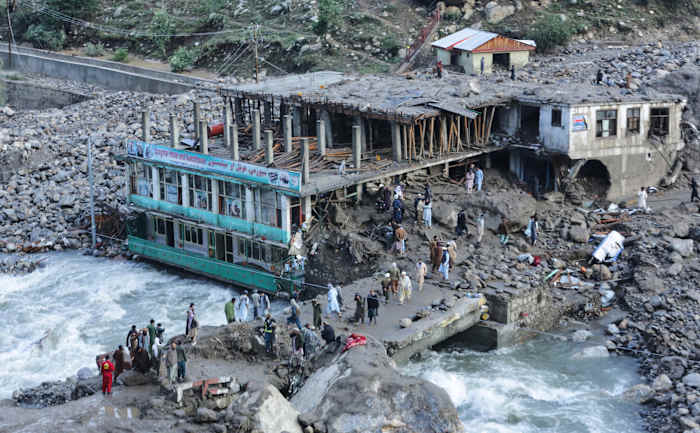
Every time flash floods tear through eastern and northern Afghanistan, the international press runs the same script. Newsrooms broadcast heartbreaking images of mud-caked ruins, quote body counts, and detail the frantic search for missing family members under collapsed brick. Then comes the inevitable call for emergency relief funds, blankets, and temporary food rations.
This reactive cycle is useless.
Treating predictable, seasonal mountain runoff as an unexpected act of God hides a uncomfortable truth: the disaster is not the water. The disaster is the multi-billion-dollar failure of international emergency response models that prioritize post-tragedy band-aids over basic structural engineering.
Emergency aid crews digging through rubble make for dramatic headlines, but they arrive days after the damage is irreversible. We keep pouring millions into reactive search-and-rescue while ignoring the basic realities of riverbed mechanics, deforestation, and concrete infrastructure.
The Search and Rescue Myth
When a flash flood hits a mountain village built from unfired mud brick, the window for effective survival rescue is measured in hours, not days. Heavy mud-and-timber roofs collapse instantly when saturated, creating high-density asphyxiation zones rather than survivable air pockets.
Yet international aid campaigns routinely celebrate sending specialized search teams and heavy machinery into roadless valleys days after the surge has cleared.
It looks proactive. It satisfies donor demands for visible action. But logistically, it does almost nothing for survival rates.
International disaster response organizations have spent decades managing crises across South Asia. The pattern never changes. Relief operations focus on shipping perishable supplies along washed-out roads rather than addressing why the village was built directly inside an active alluvial fan in the first place.
The Engineering Reality We Ignore
Flash flooding in arid mountain regions is entirely predictable. It is a known fluid dynamics problem. High-elevation meltwater combined with sudden rainfall hits dry, unabsorbent soil. Without vegetation to slow velocity, runoff channels into narrow valleys, picking up silt and boulders until it acts like liquid cement.
You do not solve a fluid dynamics problem with wheat sacks and medical tents. You solve it with civil engineering.
- Check dams and step-terracing: Small, low-cost masonry walls built upstream reduce water velocity and catch heavy sediment before it reaches population centers.
- Retaining walls along seasonal washes: Simple gabion baskets—wire mesh filled with local stone—divert peak surges away from residential zones.
- Controlled land-use enforcement: Building homes directly on historical floodplains guarantees destruction when fifty-year rain events occur.
Building basic stone deflectors upstream costs a fraction of a single large-scale international relief mobilization. Yet funding structures remain overwhelmingly tilted toward emergency response rather than preventive infrastructure. International donors prefer funding visible, high-drama crisis interventions over unglamorous masonry projects completed six months before the rain starts.
The True Cost of Dependency
Pumping emergency funds into a region without changing physical infrastructure creates a cycle of permanent vulnerability. Villages are rebuilt using the exact same materials, in the exact same drainage paths, waiting for the next monsoon season to wash them away again.
This approach carries real trade-offs. Diverting capital into temporary supply lines starves long-term watershed management projects. It treats symptoms while guaranteeing the disease returns next spring.
Stop celebrating the arrival of rescue trucks forty-eight hours too late. The real work is not digging through the rubble—it is ensuring the river never reaches the front door.