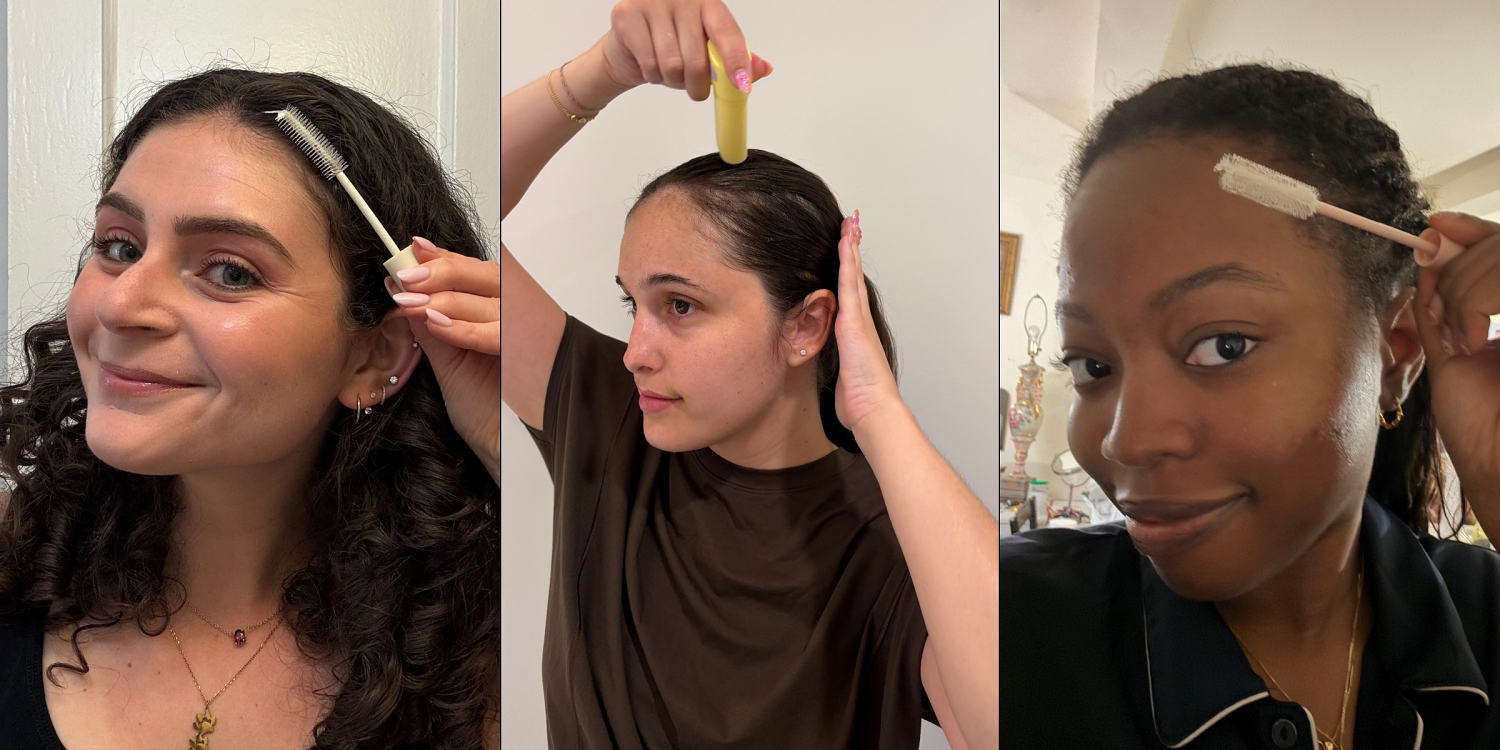
Static, humidity, and broken cuticles create the persistent halo of flyaway hairs that sabotage even the most expensive styling jobs. To stop flyaway hairs at bay, you need a precise combination of moisture sealing, low-friction fabrics, and lightweight fixatives that target the root cause of cuticle disruption rather than just gluing the strands down.
Most style guides treat stray hairs as a surface-level annoyance. They recommend heavy pomades or generic hairsprays, ignoring the mechanical and chemical reality of the hair shaft.
That approach fails. It treats the symptom while accelerating the damage.
The Anatomy of a Stray
Every strand of hair on your head operates independently. Under a microscope, a healthy hair shaft resembles a shingled roof, with overlapping cuticles lying flat to protect the inner cortex. When those cuticles lift, split, or snap off mid-shaft, they lose weight and electrical neutrality. They catch the ambient charge in the room. They repel each other. They stand straight up.
Humidity worsens this by forcing moisture into the exposed cortex, causing the hair fiber to swell unevenly. Traditional styling products attempt to force these rebellious fibers into submission through sheer chemical weight. Silicones and heavy waxes glue the stray hairs to the scalp or neighboring strands.
The weight creates a greasy buildup that attracts airborne dust and dirt, weighing down the roots while the ends continue to fray. Within a few hours, the bond breaks. The flyaways return with a vengeance.
The Friction Factory
We destroy our hair long before we ever pick up a curling iron or a styling brush. The primary driver of chronic flyaways is mechanical trauma.
Consider the standard cotton pillowcase. It feels soft to the touch, but on a microscopic level, cotton fibers act like miniature velcro hooks. Every time you toss and turn at night, those fibers catch individual hair strands, twisting them, stretching them past their elastic limit, and snapping them off. You wake up with a fresh crop of short, broken hairs that refuse to lie flat.
Switching to a tight-weave silk or high-grade satin pillowcase eliminates this nocturnal friction. The hair glides across the surface without resistance.
Brushing habits compound the damage. Ripping a plastic paddle brush through wet hair is an exercise in structural vandalism. Wet hair stretches to nearly double its normal length, and when stretched, the internal protein bonds snap. The resulting breakage leaves jagged, lightweight hairs that lack the structural length to anchor themselves into a cohesive style.
The Chemistry of Control
If heavy waxes and cheap lacquers fail, what actually works? The answer lies in targeted molecular bonding and moisture equilibrium.
Polymers and Resins
Modern styling requires flexible hold, not a rigid helmet. Look for products containing polyquaternium compounds or copolymers. These ingredients form a microscopic, breathable film around the hair shaft, smoothing down lifted cuticles without suffocating the follicle. They also neutralize static electricity by balancing the electrical charge on the hair's surface.
Lightweight Oils and Silicones
Not all silicones are bad, but heavy, non-water-soluble variants like dimethicone accumulate quickly. Instead, opt for lightweight, volatile silicones like cyclomethicone that evaporate after delivering their smoothing agents, or natural oils with small molecular weights. Argan oil and fractionated coconut oil penetrate the cuticle layer rather than just sitting on top of it, restoring internal elasticity.
The Spoolie Technique
For the stubborn hairs framing the face or parting line, the delivery mechanism matters more than the product itself. Dumping a dollop of hairspray directly onto your head results in a crunchy, unnatural finish.
Take a clean, dense makeup spoolie or a soft-bristled toothbrush. Mist it lightly with a flexible-hold hairspray or dab it into a pea-sized amount of a low-shine styling paste. Gently comb the spoolie over the offending flyaways in the direction of the style. This deposits microscopic amounts of product precisely where needed without saturating the surrounding hair.
Environmental Triggers
Indoor heating systems, air conditioning units, and synthetic clothing generate massive amounts of positive ions in the air. These positive ions strip electrons from your hair, leaving it positively charged. Like magnets of the same polarity, the individual hairs push away from each other.
Combat this by incorporating ionic tools into your routine. Ionic hair dryers emit negative ions that neutralize the positive charge of water droplets and static-prone hair, collapsing the cuticle faster and locking in smoothness.
Hydration from the inside out remains non-negotiable. Dehydrated hair acts like a dry sponge, aggressively sucking moisture out of the air and swelling unpredictably. Deep conditioning treatments containing hydrolyzed keratin and amino acids rebuild the internal scaffolding of the hair, giving strays the weight and flexibility they need to cooperate.
Stop fighting your hair with brute force. Fix the friction, balance the electrical charge, and treat the cuticle with precision.