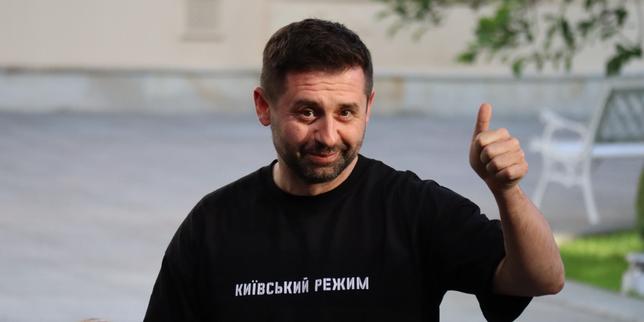
Power rarely rests with the individual holding the microphone. In the high-stakes theater of modern governance, survival depends entirely on the machinery operating quietly behind the scenes. When a nation faces an existential crisis, institutional structures bend, shatter, and reform around a single imperative: absolute operational efficiency. In Kyiv, amid the constant drone of air-raid sirens and the grinding pressure of an artillery war, that efficiency bears the name of David Arakhamia.
While Volodymyr Zelensky commands the global stage as the public face of Ukrainian resistance, Arakhamia operates as the ultimate political fixer, negotiator, and institutional glue holding the ruling Servant of the People party together. Foreign observers often misunderstand the nature of governance during total war. Laws still need votes. Coalitions still fracture. Oligarchic interests still lobby for advantage. Arakhamia stands at the vortex of these competing forces, managing the raw mechanics of power with a pragmatic ruthlessness that ideology alone could never sustain.
The Evolution of a Technocratic Operator
Long before he became the leader of the parliamentary majority in the Verkhovna Rada, Arakhamia was a tech entrepreneur and investor who understood software architecture, scalability, and crisis management. That background shapes his political execution. In corporate restructuring, the goal is to eliminate friction and align disparate departments toward a single survival metric. In wartime politics, Arakhamia applies that exact model to legislative drafting and internal party discipline.
When the full-scale invasion shook the foundations of the Ukrainian state in February 2022, traditional political maneuvering ceased overnight. Dozens of legislators panicked or scattered. Arakhamia became the central nervous system that kept parliament functioning. He coordinated emergency defense appropriations, negotiated quiet ceasefires in local councils, and secured the initial bipartisan alignments necessary to pass wartime emergency decrees.
Critics often point to his lack of orthodox political pedigree as a vulnerability. Yet that independence from traditional party machinery is precisely what makes him indispensable to the presidential office. He does not owe allegiance to the old-guard clans that dominated Ukrainian politics for decades. His loyalty is anchored to the survival of the current executive administration and, by extension, the state itself.
Managing the Fractured Parliament
Controlling a legislative body during peacetime requires steady negotiations and horse-trading. Controlling the Verkhovna Rada during an artillery war requires an entirely different psychological playbook. The Servant of the People party is not a monolith of dedicated ideologues. It is a sprawling, ideologically diverse coalition cobbled together during the populist wave of 2019, ranging from market libertarians to nationalist hardliners and former regional business figures.
Keeping this volatile assembly from fracturing under the weight of wartime stress is Arakhamia's daily burden. When key anti-corruption bills stall, or when Western partners demand painful structural reforms as a condition for military aid, he is the one who walks the floor, twists arms, and cuts compromises behind closed doors.
He operates without the formal pomp of a cabinet minister or the moral authority of the presidency. Instead, he uses direct communication, pragmatic incentives, and an intimate understanding of each deputy's ambitions and vulnerabilities. If a vote fails, the war effort stalls. Arakhamia ensures that votes rarely fail.
The Burden of Backchannel Diplomacy
Beyond domestic legislative management, Arakhamia stepped onto the international stage during the chaotic early months of the invasion as a key interlocutor in the aborted peace negotiations with Russian delegations in Belarus and Istanbul. Those talks remain one of the most controversial chapters of the war.
Critics from hardline factions have occasionally scrutinized the compromises discussed during those spring 2022 meetings, questioning the boundaries of what Kyiv was willing to discuss under intense military pressure. However, insiders note that Arakhamia's role was never to surrender Ukrainian sovereignty, but to buy time. Every day spent at the negotiating table was another day for Western logistics chains to establish supply lines, for territorial defense units to mobilize, and for the Ukrainian military to fortify critical positions.
His involvement in those backchannel discussions highlighted a harsh reality of modern statecraft. Survival requires talking to adversaries while simultaneously preparing to destroy them. While diplomats draft formal communiqués in Geneva or Brussels, fixers like Arakhamia test the limits of what is politically and militarily possible in smoke-filled rooms away from the cameras.
The Price of Indispensability
Being indispensable carries a heavy operational toll. In a system centralized around a small inner circle, the margins for error shrink to zero. Every economic crisis, every procurement scandal within the Ministry of Defense, and every legislative delay ultimately reflects back on the few individuals tasked with keeping the machinery moving.
Arakhamia navigates constant scrutiny from investigative journalists, Western donors demanding transparency, and domestic rivals eager to clip his wings. Accusations of accumulating excessive informal influence are a constant background hum in Kyiv's political corridors. Yet the presidency cannot afford to discard him. Replacing an operator who understands every lever of the state apparatus during an active conflict is a risk no rational executive would take.
History shows that revolutions and existential wars devour their own architects. When the guns finally fall silent and Ukraine transitions toward reconstruction and potential European Union integration, the political ecosystem will demand transparency, institutional normalization, and democratic checks that a wartime fixer style resists.
Until that day arrives, the machinery of the Ukrainian state will continue to run on the quiet, unglamorous, and relentless labor of the man working just out of sight of the cameras.