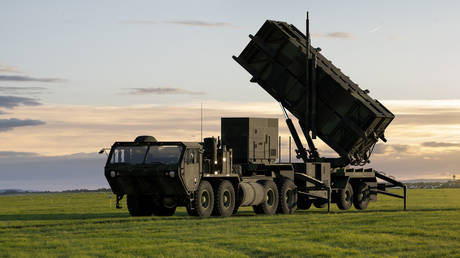
US allies are confronting a crippling five-year delay in securing vital missile deliveries from American defense contractors, exposing severe fractures in the Western industrial base. Foreign military sales backlogs have swelled into an unprecedented bureaucratic and manufacturing quagmire. Orders placed today for Patriot interceptors, precision-guided artillery, and tactical munitions will languish in production queues well into the next decade. This is not merely a temporary supply chain hiccup. It represents a fundamental structural failure of a defense apparatus optimized for peacetime efficiency rather than sustained geopolitical friction.
The Anatomy Of An Industrial Bottleneck
Defense manufacturing does not scale overnight. For three decades after the Cold War, defense prime contractors consolidated. They embraced lean manufacturing principles designed to eliminate excess inventory and maximize shareholder returns. Factories operated on single shifts. Production lines were deliberately kept warm rather than hot. When demand surged, the system broke.
Building a modern tactical missile requires an intricate choreography of specialized subcomponents. Specialized guidance chips, thermal batteries, composite structures, and energetic materials must arrive with absolute precision. When a single tier-three supplier encounters a staffing shortage or a raw material bottleneck, the entire final assembly line stalls. Prime contractors like Lockheed Martin and Raytheon find themselves bound by long-lead-time procurement cycles that cannot be bypassed simply by throwing capital at the problem. Money prints currency, but it does not instantly forge titanium casting presses or train certified aerospace welders.
The backlog is staggering. Governments in Europe and the Indo-Pacific that signed foreign military sales agreements months ago are routinely told their shipments are deferred. Delivery schedules slip by quarters, then by years. Allied defense ministers sit in briefings in Brussels and Tokyo, staring at spreadsheets that reveal empty armories while global tensions escalate.
The Workforce Shortage Crippling Production Lines
Machines sit idle because operators cannot be found. The defense industrial base faces a generational demographic cliff. Experienced machinists, metallurgist engineers, and quality assurance inspectors are retiring faster than apprenticeship programs can replace them.
For years, high-tech manufacturing lost talent to software industries and corporate environments offering remote work and higher starting wages. Aerospace manufacturing requires physical presence, rigorous security clearances, and meticulous adherence to safety standards. The talent pool shrank. Rebuilding that workforce requires extensive vetting periods and specialized technical training that takes years to bear fruit.
A hypothetical example illustrates the friction. If a munitions factory needs to double its output of solid rocket motors, it cannot simply hire five hundred workers off the street tomorrow. Each technician must undergo federal background checks and months of safety training to handle hazardous propellants. A single misstep on the propellant mixing floor destroys millions of dollars in equipment and halts production for months. This institutional fragility creates a hard ceiling on how fast the United States and its partners can re-arm.
The Priority Paradox In Washington
Pentagon procurement priorities clash directly with allied export demands. United States law mandates that the Department of Defense prioritize American military readiness above all else. When domestic stockpiles are drawn down to support allied deterrence or emergency transfers, replenishment orders take precedence in the production queue.
Foreign military sales requests must navigate a labyrinthine bureaucratic approval process governed by the State Department, the Pentagon, and congressional oversight committees. By the time a foreign nation receives final authorization to purchase a complex missile system, the manufacturing queue has already shifted. New orders are stacked behind massive backlogs generated by prior commitments.
Washington tells its allies to buy American equipment to ensure NATO and regional interoperability. Yet, when those allies commit billions of dollars to purchase American systems, they discover they are trapped at the back of a multi-year waiting list. This dynamic breeds quiet resentment among allied capitals. Some nations are beginning to look inward, funding domestic defense startups or forging independent bilateral agreements with alternative suppliers to bypass the American export bottleneck.
The Solid Rocket Motor Bottleneck
At the heart of the crisis lies a severe consolidation in propulsion technology. The production of solid rocket motors dictates the production rate of almost every tactical missile in the Western inventory.
Decades of mergers reduced the number of domestic solid rocket motor producers in the United States to a duopoly. When demand for Javelins, Stingers, GMLRS, and PAC-3 interceptors spiked simultaneously, these manufacturing facilities hit a hard physical limit. Expanding a solid rocket motor manufacturing plant requires environmental permits, specialized explosive-handling safety zones, and heavy capital investment that private contractors are reluctant to shoulder without multi-year government guarantees.
Ammonium perchlorate, the primary oxidizer used in solid rocket propellants, relies on a fragile chemical supply chain with limited global sources. When supply lines for precursor chemicals tighten, production slows across the board. The Pentagon has attempted to inject funding into supplier development, but industrial transformation moves at glacial speeds compared to the velocity of modern geopolitical conflict.
Geopolitical Shockwaves From Europe To East Asia
The delivery delays carry profound strategic consequences across different theaters. In Europe, eastern flank nations racing to modernize their air defense networks find themselves dangerously exposed. Countries that transferred their Soviet-era stockpiles to Ukraine expected rapid backfilling with modern Western alternatives. Instead, they face half-decade delays for systems like the National Advanced Surface-to-Air Missile System.
Across the Pacific, Taiwan faces a similar predicament. Billions of dollars in approved arms sales remain backlogged in the American production pipeline. Deterrence relies on credible, delivered capability, not promissory notes written on procurement contracts. Adversaries watch these delays closely, calculating the window of vulnerability during which allied magazines remain depleted.
The friction also undermines alliance cohesion. When allied governments explain to their domestic taxpayers why defense budgets are climbing while hardware fails to materialize, political friction mounts. Critics question the reliability of American defense commitments when the industrial machinery behind those commitments stutters.
The Hard Choices Ahead For Defense Planners
Resolving this crisis demands more than temporary funding bills or patriotic appeals to defense executives. It requires a fundamental rethinking of how the Western world arms itself.
Multi-year procurement authority must become the standard rather than the exception, giving contractors the financial confidence to build excess capacity. Licensing agreements must be streamlined to allow trusted allies to manufacture components locally under strict quality oversight, distributing the production load rather than concentrating it inside a fragile domestic footprint.
The five-year delivery delay is a flashing warning light on the dashboard of Western security. Time is the one commodity defense planners cannot manufacture, and the clock is ticking down.