The human body under pressure does strange things to time. In the dark, a minute stretches into an hour. A day feels like a season. When the earth shifts and thousands of tons of concrete, rebar, and dust suddenly swallow the air, the world shrinks to the size of a chest cavity. You breathe what you can. You wait for the silence to crack.
For nine days, that was the reality in the wreckage. Nine days of absolute, crushing isolation.
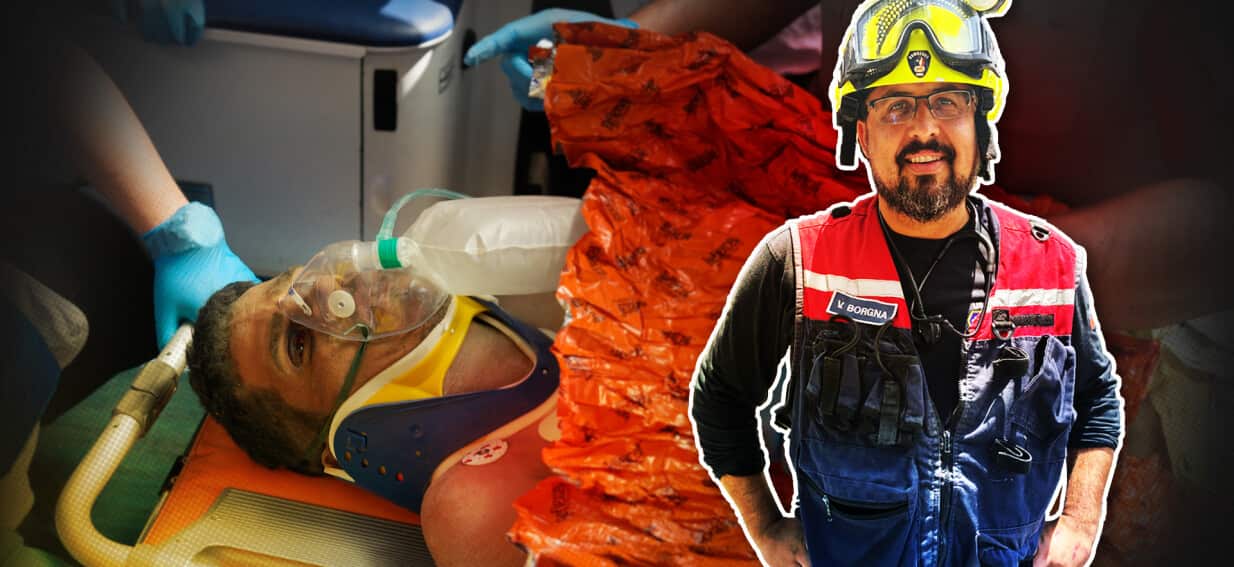
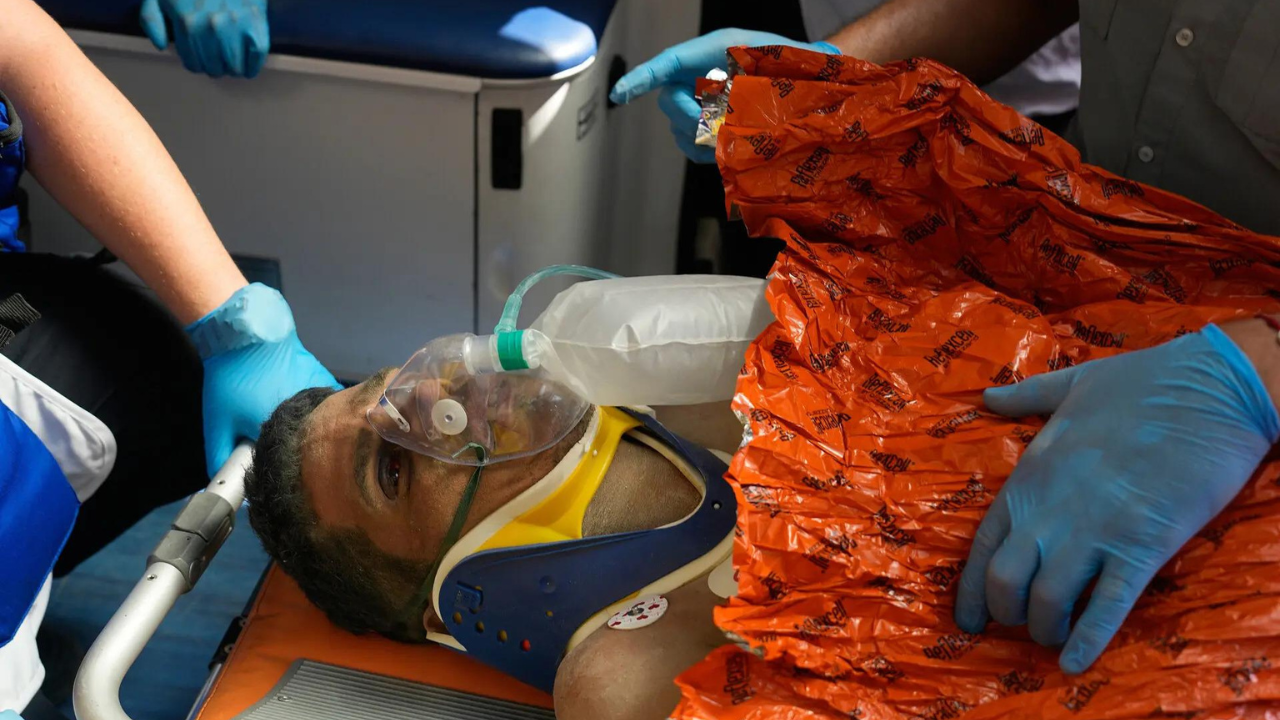
When the rescue teams finally breached the final layer of debris, they expected the heavy, grim silence that usually accompanies a site untouched for over a week. Instead, they found a pulse. They found breath. And before the medical teams could stabilize him, before the hydration lines could be prepped, the man trapped beneath the ruins had one urgent, whispered plea for the paramedics leaning into the dust.
"Don't tell my wife."
It is a phrase born not of deceit, but of a profound, desperate instinct to protect. In the absolute nadir of human suffering, buried alive beneath a collapsed reality, this Venezuelan survivor did not ask for food. He did not cry out in agony for his own limbs. His first conscious act upon returning to the living world was an attempt to shield the person he loved most from the agonizing terror of what he had just endured.
To understand how a man survives nine days under the weight of a collapsed structure, you have to look past the medical anomalies. You have to look at the invisible architecture of hope.
The human body is remarkably resilient, yet it has strict mathematical limits. The rule of threes is a familiar benchmark in survival medicine: three minutes without air, three days without water, three weeks without food. But benchmarks fail to account for the anomalies. They fail to account for pockets of moisture trapped in concrete, or the way the metabolism slows to an absolute crawl when the mind forces the body into a state of suspended animation.
Consider what happens when the lights go out permanently. The brain, stripped of visual stimuli, begins to hyper-focus on sound. The scratch of a shifting stone. The distant, muffled thud of heavy machinery. Every sound is a promise or a threat. In those hours, the mind becomes either your greatest ally or your most ruthless executioner. If you let the panic in, the heart races. The lungs demand more oxygen. The limited air supply evaporates.
He chose stillness.
Outside, the world had likely written him off. Rescue operations face a brutal ticking clock. After the seventy-two-hour mark, the statistics drop off a cliff. Hope becomes an expensive luxury. Heavy equipment moves in, shifting from a rescue operation to a recovery effort. It is a sterile word for a heartbreaking reality.
But beneath the surface, the survival instinct operates on a different timeline. It doesn't care about statistics.
When the rescuers finally felt the pocket of air and heard the faint, rhythmic tapping from deep within the void, the atmosphere on the surface changed instantly. The mechanical roar of excavators ceased. Hand tools took over. Men and women dug with their bare fingers, moving rocks piece by piece, guided only by the sound of a fading heartbeat.
The physical toll of such an ordeal is immense. Dehydration ravages the organs. Muscles begin to break down, releasing proteins into the bloodstream that threaten to shut down the kidneys—a condition known as crush syndrome. The moment a victim is freed, the sudden shift in pressure can cause these toxins to rush through the body, meaning the act of rescue itself can sometimes be fatal. The medical team knew they were racing against a biological time bomb.
Yet, when the gap widened and the first beam of flashlight hit his face, the immediate concern wasn't the failing kidneys or the withered muscles. It was the human connection.
"Don't tell my wife."
It is a line that flips the entire narrative of survival on its head. We often think of survival as an inherently selfish act—a primal, clawing desire to keep one's own lungs moving. But true endurance is almost always tethered to something outside of ourselves. We survive for others. We endure the unthinkable so that someone else doesn't have to carry the weight of our absence.
As the gurney was lifted into the blinding sunlight, surrounded by tears, cheers, and the chaotic sirens of waiting ambulances, the dust of nine days began to settle. The physical wounds would require months of rehabilitation. The psychological shadows would likely take longer to fade. But the core of the man remained entirely intact, preserved by a quiet promise kept in the dark.
A crowd of onlookers watched the ambulance doors slam shut, leaving only the faint smell of turned earth and the quiet realization of what had just been witnessed.