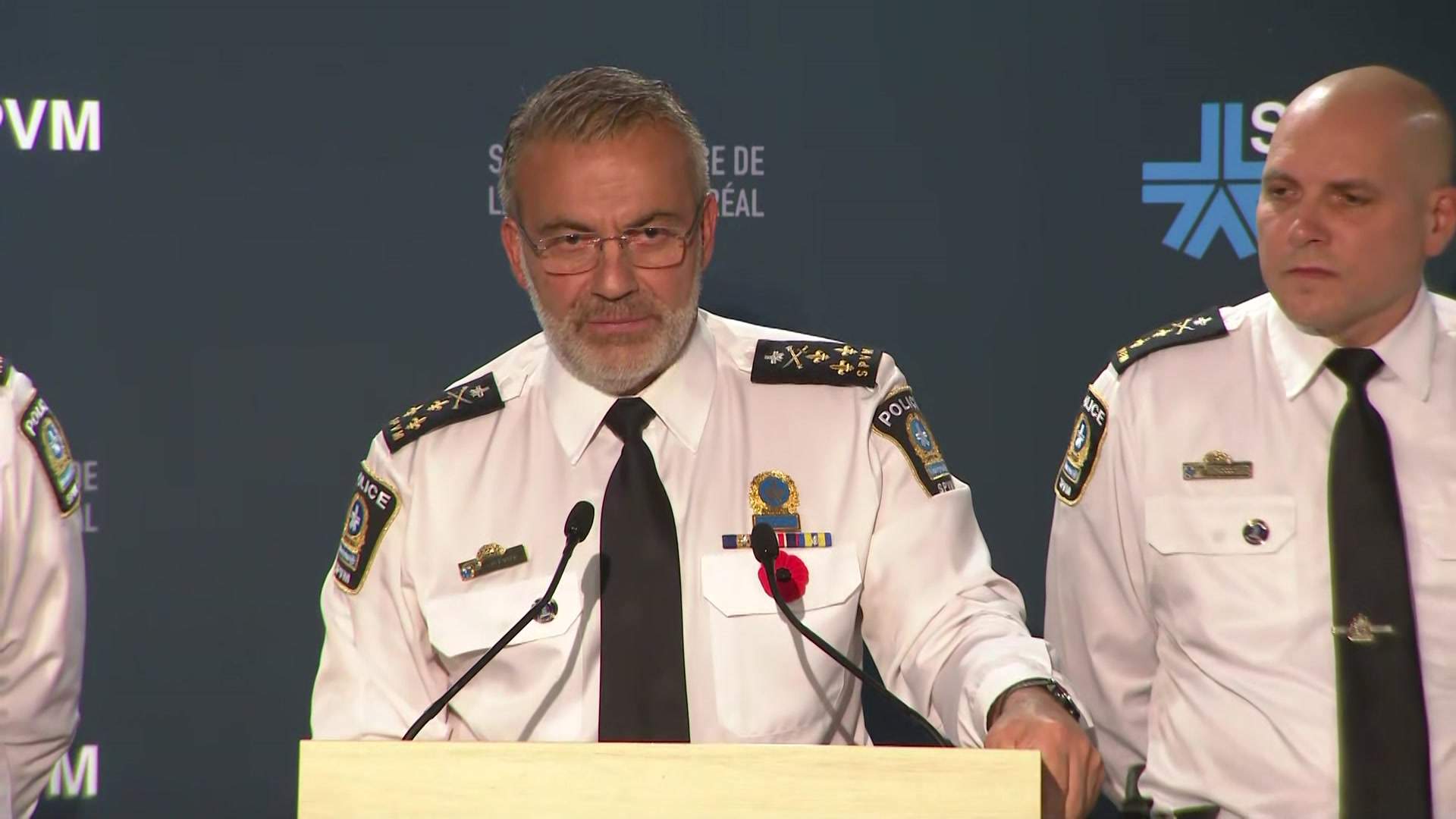
Seven badges turned in. That's the headline grabbing attention across Quebec right now, and honestly, it's easy to see why people are talking. When the Service de police de la Ville de Montréal (SPVM) dismisses seven officers, the immediate public reaction splits right down the middle. Some see it as proof that accountability finally has teeth. Others see it as a desperate PR bandage slapped over a much deeper, systemic wound.
Can Montreal police actually rebuild public trust after something like this? The short answer is yes, but not by simply showing a few bad apples the door. Firing officers is the bare minimum of basic human resources management, not a grand institutional reform. If you've ever watched how municipal institutions handle scandals in Canada, you know the playbook well. A crisis hits, heads roll, press conferences happen, and then six months later, the exact same cultural friction flares up in a different precinct.
To understand whether the SPVM can genuinely earn back the confidence of Montrealers, we have to look past the immediate dismissals and examine the mechanics of police accountability in Quebec, the history of friction between the force and marginalized communities, and what real transparency actually looks like on the ground.
The Reality Behind Police Dismissals in Montreal
Getting fired as a police officer in Quebec isn't simple. Strong union protections, specifically through the Fraternité des policiers et policières de Montréal (FPPM), combined with strict administrative law, mean that termination is usually the end of a very long, grueling paper trail. When seven officers are let go, it signals that the internal misconduct or ethical breaches crossed lines that even the most aggressive legal defense couldn't walk back.
People often assume police chiefs can just point at an officer and tell them to pack their locker. That's not how it works. Between internal affairs investigations, the Bureau des enquêtes indépendantes (BEI), and the Quebec Police Ethics Commissioner, the disciplinary machinery moves at a glacial pace.
Because it takes so long, the public rarely connects the punishment to the original offense. By the time a firing is announced, the community harmed by the initial incident has often spent years feeling ignored. Trust erodes in the gap between the incident and the consequence. You can't expect residents in neighborhoods like Montréal-Nord or Saint-Michel to throw a parade because an administrative process finally caught up to reality.
Why Montreal Police Trust Has Been Straining for Years
This current scrutiny didn't materialize out of thin air. The SPVM has been wrestling with a severe credibility deficit for over a decade, driven by documented issues around racial profiling, street checks, and the use of force.
Consider the independent reports commissioned by the city itself. In 2019, a landmark report by independent researchers revealed stark systemic biases in how Montreal police stopped Black, Indigenous, and Arab residents. Black and Indigenous individuals were four to five times more likely to be stopped by police than white residents. That wasn't an activist talking point—it was data pulled directly from SPVM records.
Then came the 2020 ban on random street checks without an observable infraction, followed by updated policies requiring officers to document the perceived race of individuals they stop. Yet, subsequent follow-up reports showed those disparities hadn't vanished. They just shifted.
When a community sees data proving they're disproportionately targeted, and then watches high-profile cases of officer misconduct drag through ethics committees for years without meaningful penalties, skepticism becomes a survival mechanism. Firing seven officers addresses specific rule-breakers, sure. It doesn't automatically rewrite the daily habits of thousands of other patrol officers operating under the same institutional culture.
What Actually Rebuilds Public Confidence in Policing
If terminating officers isn't enough on its own, what actually moves the needle? Criminologists and municipal governance experts who study police reform point to a few non-negotiable shifts that separate real change from performative politics.
Radical Transparency Over PR Spin
The SPVM has historically struggled with communication during crises. When body-worn cameras were debated, delayed, and pilot-tested for years in Montreal, critics rightly pointed out that hesitation looks a lot like resistance. Real trust requires releasing information before a journalist forces it out through an access-to-information request. When misconduct happens, the public needs clear timelines, plain-language explanations of what rules were broken, and regular updates on disciplinary outcomes—without hiding behind vague privacy excuses.
Civilian Oversight With Real Teeth
In Quebec, the BEI investigates cases where a civilian is killed or seriously injured during a police intervention. While creating an independent civilian agency was a massive step forward compared to police investigating themselves, the BEI has faced persistent criticism over its staffing—many investigators are former police officers—and the secrecy surrounding its final reports. When the Director of Criminal and Penal Prosecutions (DPCP) declines to lay charges after a BEI investigation, the public rarely gets to see the full reasoning. Trust dies in the dark.
Changing What Gets Rewarded Inside the Force
Every organization shapes behavior through incentives. If young recruits join the SPVM wanting to do community-oriented work, only to learn from veteran training officers that aggressive stop-and-frisk metrics are how you get noticed for promotions, the culture wins every single time. Rebuilding trust means changing the evaluation criteria for patrol officers and supervisors. De-escalation, community partnerships, and zero-complaint track records need to carry more weight than ticket quotas or aggressive arrest numbers.
The Union Factor and Institutional Resistance
We can't have an honest conversation about Montreal police reform without talking about the union. The FPPM is one of the most politically potent municipal unions in Canada. Historically, it has pushed back hard against external oversight, mandatory body cameras, and policies restricting street checks, arguing these measures handcuff officers and make their jobs more dangerous.
Union leadership is legally obligated to defend its members. Nobody disputes that. However, when a police union consistently frames every accountability measure as an attack on rank-and-file officers, it creates an "us versus them" bunker mentality. That mentality is toxic to public trust.
When officers view the citizens they patrol as potential adversaries—and view city hall reformers as naive meddlers—community policing becomes impossible. Bridging that divide requires leadership from both SPVM Chief Fady Dagher and the union executive to acknowledge that getting rid of bad actors protects the reputation of the good officers who show up every day trying to do an extraordinarily hard job right.
How Fady Dagher's Approach Changes the Equation
When Fady Dagher took the helm of the SPVM, he arrived with a reputation as an unconventional reformer, largely built during his tenure leading the Longueuil police service. His immersion program—sending new recruits into communities without their uniforms or badges so they could actually talk to residents as human beings—earned national attention.
That background matters right now. Dagher has been far more willing than many of his predecessors to openly admit that systemic issues exist within the force. Acknowledging the problem is step one, and honestly, it's a step many police chiefs refuse to take because they fear losing the loyalty of the rank and file.
Still, one chief's vision has to survive contact with a massive bureaucracy. Montreal is a much larger, more complex beast than Longueuil. Firing seven officers signals that Dagher is willing to enforce strict boundaries, which aligns with his stated goal of cleaning house where necessary. Yet his real test isn't firing people who clearly crossed the line; it's shifting the mindset of the middle management—the sergeants and lieutenants—who dictate what happens on a Tuesday night shift when nobody is watching.
What Montrealers Can Watch For Next
If you live in Montreal, or if you're tracking how major North American cities handle police accountability, don't judge the SPVM's progress by this week's headlines. Watch the boring, structural details over the next twelve months.
Pay attention to whether the city follows through on full, unedited body-camera deployment with strict penalties for officers who conveniently forget to turn them on. Look at the quarterly data on street checks to see if the racial disparities are actually shrinking, or if officers are simply finding new legal pretexts to stop the same demographics. Watch how the Quebec Police Ethics Commissioner handles complaints—specifically whether the backlog of cases shrinks and whether sustained complaints result in real career consequences rather than a few days of unpaid suspension.
Residents also have direct levers they can pull. Attend your local borough council meetings when neighborhood police commanders (PDQ chiefs) present their annual action plans. Ask specific questions about use-of-force data and local complaint rates. If you ever witness or experience misconduct, document everything immediately—badge numbers, patrol car numbers, time, location, and witness contact info—and file formal reports with both the SPVM internal affairs division and the Quebec Police Ethics Commissioner so there is an external paper trail that can't be buried internally. Accountability only sticks when the public refuses to look away once the initial scandal fades from the news cycle.


