The red clay of Alabama does not yield easily. It clings to boots, gums up excavator tracks, and stains everything it touches a deep, bruised orange. For decades, the soil around Huntsville has been shoved aside to make room for things that fly. But if you stand outside the L3Harris facility just beyond the city limits on a damp morning, the quiet is deceptive.
The air smells of pine needle rot and ozone.
Inside those walls, engineers are taming fire. They are packing volatile chemicals into cylinders with tolerances measured in fractions of a human hair. It is grueling, precise, and terrifyingly high-stakes work. When defense contractors announce corporate real estate expansions, the press releases usually read like dried toast. They talk about square footage. They throw around terms like capital expenditure and regional economic footprint.
They miss the point entirely.
A corporate headline recently announced that L3Harris is spending $25 million to expand its rocket motor plant in Alabama. That is the cold fact. But the reality is a story about a world running out of time, a sudden panic in the corridors of global power, and the frantic effort to rebuild an American muscle that we almost forgot how to use.
The Chemistry of Fear
To understand why $25 million is pouring into a patch of Southern dirt, you have to understand the sheer, volatile magic of a solid rocket motor.
Think of a fireworks sparkler. If you light it in the open air, it fizzes and burns brightly until it runs out. Now, imagine grinding that sparkler into a fine powder, packing it tightly into an steel tube, and forcing the burning gas through a tiny hole at the bottom.
Pressure builds. The gas screams to escape.
That is propulsion. But in the defense world, you cannot just use any fuel. Liquid fuel—the stuff that powers commercial space rockets—is a temperamental beast. It takes hours to load. It requires cryogenic cooling. If a conflict breaks out, you cannot tell the adversary to wait while you fill the tank.
You need something that can sit in a silo or under the wing of a fighter jet for ten years in freezing rain or desert heat. Then, the moment a finger presses a button, it must ignite instantly, flawlessly, and accelerate from zero to thousands of miles per hour in seconds.
That requires solid propellant. The mixture looks remarkably like dark gray pencil eraser material. It is a toxic, heavy blend of synthetic rubber, ammonium perchlorate, and aluminum powder. Pouring it is an art form. If a single air bubble forms inside the mixture during production, the flame front will hit that pocket, the pressure will spike exponentially, and the rocket will blow itself to pieces on the launchpad.
For a long time, America assumed it had this art form covered.
We were wrong.
The Cold Wake-Up Call
Consider a hypothetical procurement officer we will call Sarah. For fifteen years, Sarah sat in windowless rooms at the Pentagon, managing logistics supply chains. Her job was to ensure that if a US navy destroyer or an army battalion needed interceptor missiles, the warehouses were full.
For most of her career, the system was on cruise control. The Cold War was over. The conflicts of the early 2000s required precision-guided bombs, not massive salvos of anti-aircraft missiles. The defense industry consolidated. Plants closed. The specialized workforce that knew how to mix rocket fuel aged out and retired.
Then, the world fractured.
Almost overnight, the demand skyrocketed. In Eastern Europe, artillery and air defense systems began burning through years' worth of ammunition stocks in mere weeks. In the Red Sea, naval vessels found themselves firing million-dollar interceptors to swat down drones on a weekly basis.
Sarah’s spreadsheets started flashing red. The defense industrial base was not a roaring engine; it was a clogged pipe.
The bottleneck was not the microchips. It was not the metal casings. It was the solid rocket motors. The United States had allowed its manufacturing capacity for these vital components to shrink to a near-duopoly. If one factory suffered an accident or a supply disruption, entire missile programs ground to a halt.
That is the invisible crisis driving the expansion in Alabama. The $25 million is not just an investment in a building; it is an act of geopolitical desperation.
The Sound of 100,000 Square Feet
The expansion adds roughly 100,000 square feet to the Huntsville footprint. But numbers fail to capture what that space actually represents.
Walk through a modern solid rocket production facility, and the first thing that hits you is the silence. This is not an automotive assembly line with sparks flying and heavy robotic arms slamming metal plates together. The danger is too high for that.
Instead, it feels more like an industrial bakery crossed with a high-containment virus lab.
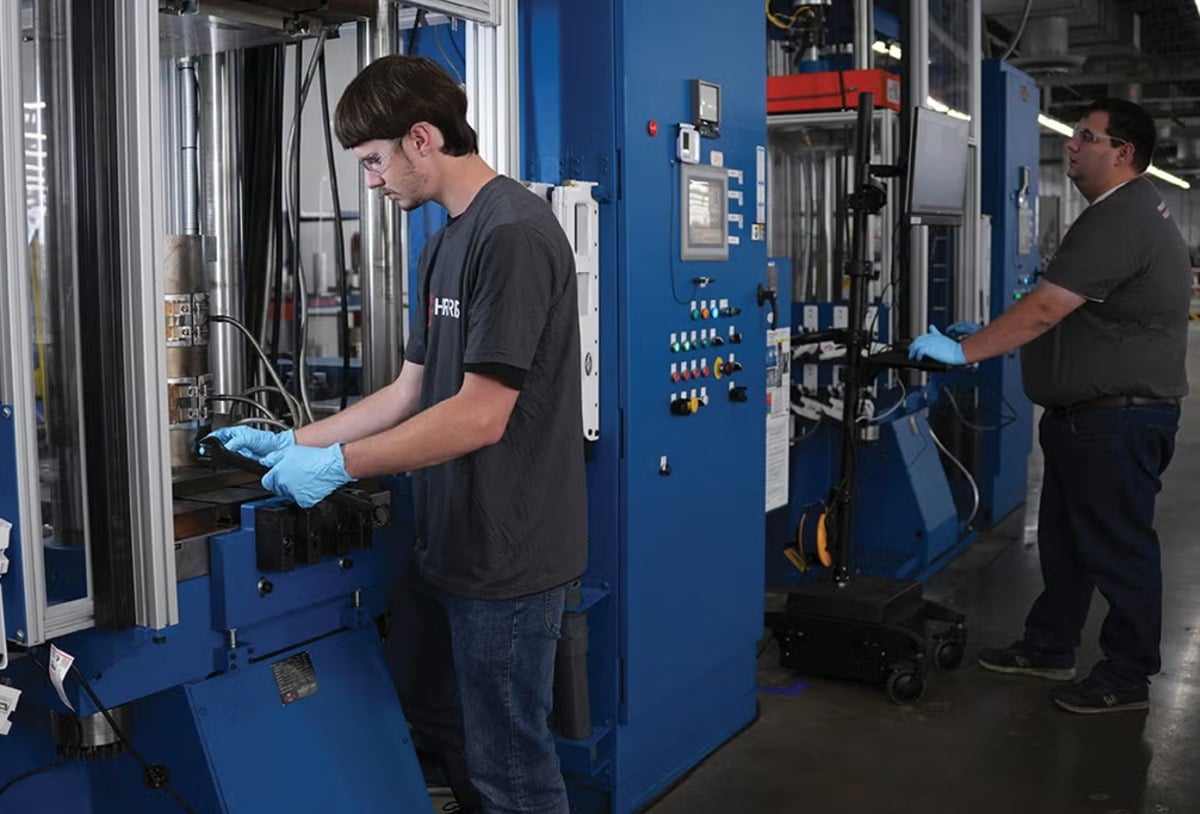
The mixing bowls are massive, capable of blending thousands of pounds of propellant at a time. The air is strictly climate-controlled. Static electricity is the ultimate enemy; a single rogue spark could ignite the entire room. Workers wear specialized clothing, grounding straps on their shoes, and move with a deliberate, unhurried cadence. Speed kills.
But L3Harris is forcing a paradox here: they must speed up the output without rushing the process.
The new infrastructure allows them to parallel-process. Instead of a single pipeline where everything stops if one motor is curing, the new facility creates redundant lines. It means they can manufacture the motors for tactical missiles, air defense interceptors, and hypersonic weapons simultaneously.
By scaling up this specific site, they are trying to solve the capacity problem that has kept military planners awake at night for the past three years. They are inserting resilience into a system that had become terrifyingly fragile.
The Human Cost of the Machine
It is easy to get lost in the romance of technology, to look at a missile slicing through the sky and see only engineering perfection.
But machines do not build machines. People do.
The real gamble L3Harris is making in Alabama is not on the equipment; it is on the local workforce. Huntsville has earned its nickname as Rocket City, but the human capital required to run these plants is incredibly rare. You cannot hire someone off the street and put them in charge of a propellant mixer. It requires a rare blend of chemical engineering expertise, obsessive attention to detail, and a tolerance for working in an environment where a bad day at the office means an explosion.
The regional competition for this talent is fierce. Every major defense prime has a flag planted in Huntsville dirt. They are all fishing in the same small pond for engineers, technicians, and safety inspectors.
This brings us to the uncomfortable truth at the center of the story. The defense industry is trying to reinvent mass production for an era that values software over hardware. For twenty years, the brightest minds graduating from universities wanted to write code in Silicon Valley. They wanted to build apps. They did not want to move to the deep South to mix hazardous chemicals in a concrete bunker.
Reversing that cultural drift takes more than just corporate press releases. It requires creating a sense of gravity around the work.
When you speak to the people who work inside these plants, the tone is rarely celebratory. There is a quiet, heavy focus. They watch the news. They see the same footage of global conflict that everyone else sees, but they look at it through a different lens. They know that if a weld fails, or if a propellant grain cracks, a soldier somewhere in the world pays the price.
That knowledge changes the way a person turns a wrench.
The Mud and the Future
Outside the newly expanded walls, the Alabama rain starts up again, turning the construction site back into that familiar, stubborn red mud.
The $25 million has been spent, the concrete poured, the state-of-the-art mixing equipment bolted to the floor. On paper, L3Harris has checked a box, increased its capacity metrics, and signaled to Wall Street that it is ready to capture a larger share of the Pentagon's booming budget.
But the true test of this investment will not appear on a balance sheet next quarter.
It will happen quietly, years from now, in a moment of crisis that we cannot currently predict. It will be decided when a supply chain manager looks at a spreadsheet and sees a surplus instead of a deficit. It will be proven when a rocket motor, mixed in the Alabama heat, fires flawlessly in the freezing dark of the upper atmosphere, doing exactly what it was built to do.
Until then, the work continues in the quiet country outside Huntsville. The mixers turn. The chemicals blend. The fire is packed into its casing, waiting.