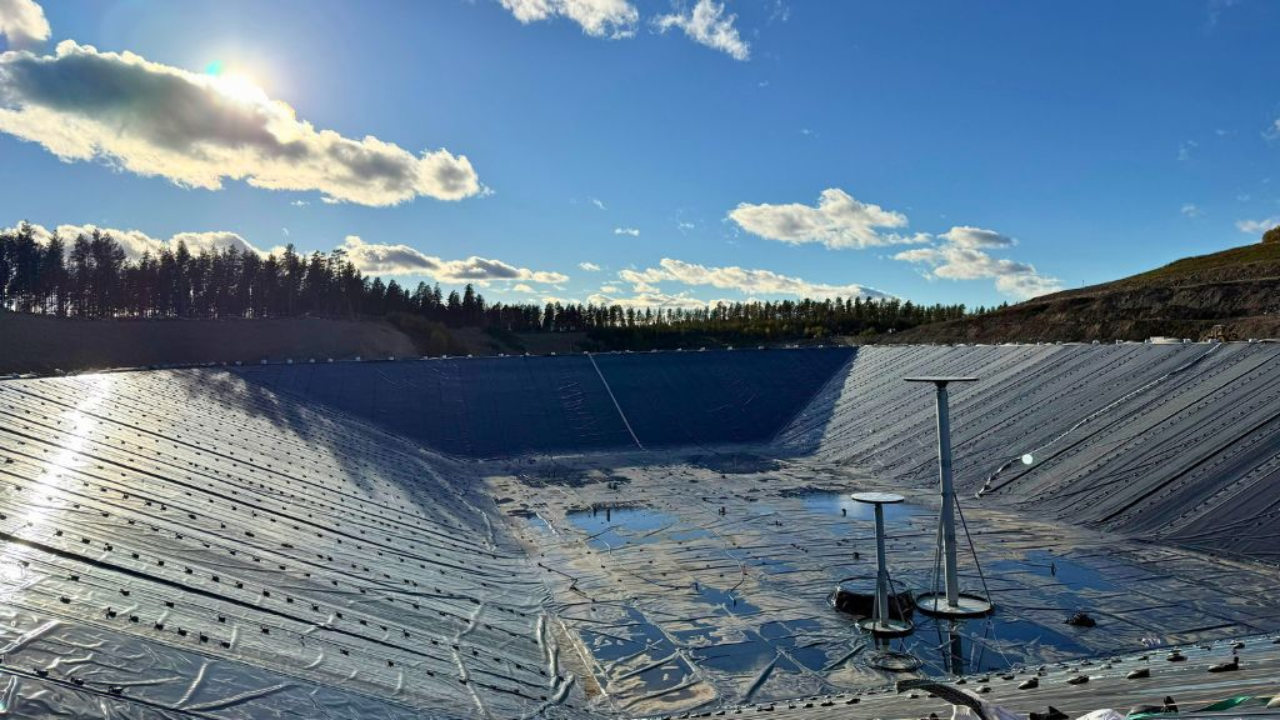
Finland is excavating a 100-million-gallon underground water cavern in Vantaa, a city just outside Helsinki, to store 18,000 megawatt-hours of thermal energy—enough to heat roughly 20,000 homes through the brutal Nordic winter. Built by the local energy utility Vantaan Energia and scheduled for completion later this decade, the Varanto thermal energy storage facility represents the largest subterranean seasonal heat battery ever attempted. Instead of relying on expensive lithium-ion chemical batteries that degrade over time, engineers are blasting solid bedrock to create a massive, insulated thermos that captures surplus summer heat and deploys it six months later when temperatures plummet below freezing.
If you have spent the last twenty years covering the energy transition, you learn to spot the difference between venture-capital theater and hard-nosed infrastructure. Most energy storage headlines fixate on grid-scale lithium farms, solid-state breakthroughs, or green hydrogen pipelines that perpetually remain five years away from commercial viability. Meanwhile, the quietest and most brutal bottleneck in decarbonization sits inside the pipes beneath our cities. Heating accounts for roughly half of global final energy consumption, and in northern latitudes, it is an existential requirement. You cannot run a modern Nordic metropolis on intermittent wind power alone when the sun disappears for months and high-pressure weather systems stall the turbines for weeks at a time.
Vantaan Energia’s cavern is a blunt, unglamorous answer to a thermodynamic nightmare. Water has one of the highest specific heat capacities of any abundant substance on Earth. By heating nearly 400,000 cubic meters of water up to 140 degrees Celsius under pressure—preventing it from boiling into steam—the utility turns basic physics into a multi-month grid stabilizer.
The Brutal Math of Seasonal Energy Storage
Electrical grids operate on a razor’s edge of instantaneous supply and demand. Lithium-ion batteries excel at smoothing out fluctuations over minutes or hours, acting as shock absorbers when clouds pass over a solar array or when millions of people turn on their stoves at six in the evening. They fail catastrophically at seasonal shifting. Storing enough electricity in chemical batteries to heat a medium-sized city from July to January would require capital expenditures that would bankrupt a small nation, alongside mountains of mined lithium, cobalt, and nickel.
Thermal storage sidesteps the electrochemistry entirely. In Vantaa, the cavern will sit roughly 100 meters below the surface, carved directly out of granite bedrock. The rock itself acts as a structural containment vessel and a secondary thermal insulator. Once filled, the system functions as a closed-loop district heating reservoir.
During the summer months, when electricity prices in the Nordic power market frequently drop near zero—or even dip into negative territory due to abundant hydro, wind, and nuclear generation—Vantaan Energia will fire up massive electric boilers. They will also capture waste heat from local data centers, industrial cooling systems, and waste-to-energy incineration plants that would otherwise vent that warmth into the atmosphere. That thermal energy is pumped into the cavern, raising the water temperature steadily over months.
When January arrives and temperatures in southern Finland drop to minus 20 degrees Celsius, the process reverses. Hot water is drawn from the top of the stratified cavern, passed through heat exchangers, and circulated through Vantaa’s existing network of insulated underground pipes to warm apartments, offices, and municipal buildings. Cooler return water is fed back into the bottom of the cavern, maintaining a distinct thermal boundary layer known as a thermocline so the hot and cold zones do not mix.
Why District Heating Is the Unsung Engine of Northern Europe
To understand why a 100-million-gallon pit makes financial sense in Finland while sounding absurd in Texas or California, you have to look at urban plumbing. North American cities largely decentralized their heating infrastructure over the twentieth century, putting a natural gas furnace or an electric heat pump inside every individual basement. Retrofitting those cities for centralized thermal storage requires tearing up every street to lay miles of thick, pre-insulated steel piping.
Nordic cities built those pipes decades ago. In Finland, more than 90 percent of apartment buildings in major urban centers are already connected to municipal district heating grids. The distribution network is a sunk cost.
Because the pipes are already in the ground, utilities like Vantaan Energia can swap out the heat source at the central plant without touching a single radiator inside a resident's living room. For decades, those central plants burned coal, natural gas, and peat—a carbon-heavy fossil fuel harvested from bogs that Finland has been aggressively phasing out. When Russia’s invasion of Ukraine severed European pipeline gas supplies in 2022, the urgency to decouple municipal heating from imported fossil fuels shifted from a climate goal to a national security mandate.
Vantaan Energia has publicly committed to phasing out fossil fuels entirely, and the Varanto cavern is the linchpin of that strategy. Without seasonal storage, eliminating coal and gas means building massive overcapacity in electric boilers and heat pumps just to survive the ten coldest days of the year, leaving that expensive hardware sitting idle for the remaining 355 days. The underground cavern allows the utility to run smaller, cheaper heat-generation assets continuously throughout the summer, banking the thermal output like grain in a silo.
What the Press Releases Leave Out
Every major infrastructure project looks effortless in architectural renderings, yet blasting a cathedral-sized void beneath an active metropolitan area carries severe engineering and financial risks. Industry observers watching the Vantaa project should pay close attention to three friction points that rarely make it into optimistic clean-tech coverage.
Geological Roulette and Excavation Costs
Granite bedrock is ideal for underground caverns, which is why Finland and Sweden have used excavated rock caverns to store strategic oil reserves since the Cold War. Even in stable Precambrian shield rock, however, subterranean excavation is unforgiving. Unmapped fracture zones, groundwater infiltration, and structural fault lines can force engineers to inject thousands of tons of concrete grout to seal leaks, driving up tunneling costs and delaying schedules.
The Physics of Thermal Loss
No thermos is perfect. During the initial years of operation, a substantial percentage of the heat pumped into the Varanto cavern will bleed directly into the surrounding granite. It takes years of continuous cycling to heat up the rock envelope around the cavern until it reaches thermal equilibrium. During that multi-year ramp-up phase, the system’s round-trip efficiency will be noticeably lower than its long-term steady-state projections. Even at full maturity, keeping water at 140 degrees Celsius means fighting constant conductive heat loss into the earth, though the sheer volume-to-surface-area ratio of a 100-million-gallon reservoir keeps percentage losses manageable.
Power Grid Cannibalization
The business model for the cavern relies heavily on buying cheap summer electricity to run electric boilers. That arbitrage works brilliantly when one utility does it. What happens when every municipal utility across Finland, Sweden, and the Baltic states builds giant thermal batteries and simultaneously bids on cheap summer wind power? The price floor rises. While increased demand helps wind and solar developers avoid curtailment losses, it inevitably narrows the wholesale price spreads that utilities count on to pay down the massive upfront capital expenditure of digging the hole.
Comparing Subterranean Thermal Storage Models
Vantaa is not operating in a vacuum. Across Northern Europe, engineers are testing different geological formations to solve the exact same seasonal problem, each with distinct trade-offs in cost, temperature, and scalability.
| Storage Type | Primary Medium | Operating Temp | Geographic Requirement | Key Limitation |
|---|---|---|---|---|
| Rock Cavern (Vantaa) | Pressurized Water | Up to 140°C | Hard, stable bedrock (granite) | High upfront excavation and blasting costs |
| Pit Thermal (Denmark) | Water + Insulated Liner | 60°C – 90°C | Flat land with diggable soil | Requires massive surface footprint and floating lids |
| Borehole Thermal | Solid Rock / Soil | 40°C – 70°C | Deep drillable subsurface | Slow heat extraction rates; requires heat pumps to boost temp |
| Aquifer Thermal | Natural Groundwater | 10°C – 25°C | Confined permeable sand/gravel layers | Strict environmental rules against contaminating groundwater |
Denmark pioneered pit thermal energy storage over the past fifteen years, digging massive trapezoidal trenches in the earth, lining them with heavy-duty polymer sheets, filling them with water, and capping them with floating insulated covers. Those Danish pits—such as the facility in Vojens—work well, yet they consume vast tracts of surface real estate and top out below the boiling point of water because they are unpressurized.
By going 100 meters underground, Vantaa uses the weight of the earth and a column of water to naturally pressurize the reservoir. Higher pressure allows higher water temperatures without boiling. Higher temperatures mean higher energy density—packing 18,000 megawatt-hours into a footprint that leaves the surface land above the cavern completely free for urban development, parks, or industrial facilities.
The Geopolitics of Waste Heat
Look closer at where Vantaa plans to get its thermal energy, and a broader structural shift in industrial economics comes into focus. For decades, heavy industry and tech companies treated heat as a nuisance to be discarded. Data centers spend fortunes running chillers to keep server racks from melting, dumping millions of megawatt-hours of warm air into the sky every year.
In Finland, waste heat has become a traded commodity. Microsoft, Google, and regional colocation operators building massive data center campuses in the Nordic region are increasingly required—both by regulatory pressure and local grid economics—to feed their liquid-cooling loops directly into municipal district heating networks.
A data center generates low-grade heat, typically around 30 to 45 degrees Celsius. That is too cool to heat a radiator in January, so utilities use industrial-scale heat pumps to upgrade that lukewarm water to 90 or 140 degrees before injecting it into the district grid or the underground storage cavern. The cavern acts as a buffer between the constant, year-round heat output of servers and factories and the wildly seasonal heat demand of human populations.
Why You Will Not See This Everywhere
Whenever a mega-project like Varanto captures public attention, commentators inevitably ask why other cold-weather countries—Canada, the northern United States, Germany, or the United Kingdom—are not immediately breaking ground on similar caverns.
The answer has nothing to do with engineering capability and everything to do with institutional friction and urban layout.
First, permitting timelines in North America and Western Europe for subterranean excavation near urban centers often stretch past a decade due to environmental reviews, zoning battles, and liability disputes over subsurface property rights. Finland benefits from streamlined permitting for energy security infrastructure and deep institutional trust in municipal utilities.
Second, geology is destiny. You cannot blast an unlined water cavern beneath Chicago, London, or Berlin because those cities sit atop sedimentary basins, clay, chalk, or fractured limestone that would collapse or drain like a sieve. Lining a 100-million-gallon cavern in soft rock with reinforced concrete and steel would multiply the construction budget several times over, destroying the unit economics of the project.
Finally, capital markets reward quarterly returns, not fifty-year infrastructure horizons. An underground thermal cavern is a classic utility asset: eye-watering upfront capital expenditure, multi-year construction timelines, and slow, steady, regulated returns spread across half a century. Privately owned energy companies facing shareholder pressure rarely have the stomach for projects that take seven years just to reach thermal equilibrium.
The Real Lesson of Vantaa
The obsession with shiny, modular clean-tech hardware often blinds policymakers to the brute-force elegance of civil engineering. You do not always need a new molecule, a rare-earth catalyst, or a software algorithm to decarbonize heavy infrastructure. Sometimes you just need dynamite, granite, pumps, and water.
Vantaa’s underground reservoir will not solve global climate change on its own, nor can it be copy-pasted onto cities built on sand and clay without district heating grids. What it proves is that the hardest problem in renewable energy—surviving the dark, frozen months of winter without burning fossil fuels—already has a mechanically proven, commercially viable solution sitting right beneath our feet, waiting for cities willing to pay the upfront cost to dig.