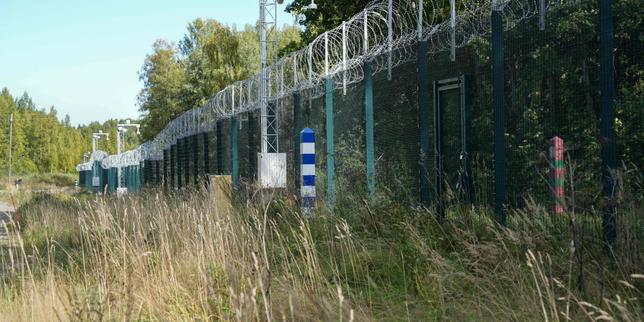
Every major newsroom spent the week hyping up Finland rolling out its shiny new 200-kilometer border fence with Russia, treating it like a masterclass in modern geopolitical defense. It is a comforting visual. Concrete posts, razor wire, high-tech sensors, and the warm blanket of a physical barrier keeping the big bad wolf at bay. Governments love building walls because walls are photogenic. They scream action. They give taxpayers something tangible to point at when politicians want to prove they are doing something.
There is just one glaring problem. It is completely useless against the actual threats of the twenty-first century.
I have spent decades watching states dump billions of dollars into nineteenth-century engineering solutions to solve twenty-first-century problems. I have seen defense budgets torched on physical infrastructure that looks intimidating in press releases while actual threats bypass the perimeter entirely via cyber space, economic warfare, and grey-zone operations. When Finland puts up a three-meter-high wire mesh topped with barbed wire, they are not securing a border; they are building a monument to security theater designed to soothe domestic anxiety rather than alter military realities.
Let us look at what this fence is actually supposed to stop. The official narrative claims it prevents unauthorized crossings, mass migration weaponization, and hybrid threats. But look at modern state-level pressure. When Russia wants to weaponize migration, it does not send battalions of infantry jogging through remote pine forests to scale a fence. It flies people on commercial jets to regional hubs and pushes them through official border checkpoints using administrative pressure points, or it jams GPS signals across the Baltic airspace, or it cuts undersea data cables in the Gulf of Finland.
A fence is brilliant at stopping a desperate asylum seeker or a lost hiker. It is entirely irrelevant against a nation-state actor with cyber capabilities, electronic warfare suites, and long-range precision fires. If a modern military needs to cross a border, a wire fence does not even register as a speed bump. It is a minor landscaping inconvenience.
The lazy consensus in international commentary is that borders are linear boundaries that can be locked down like a suburban backyard. That mindset belongs in the era of trench warfare. In contemporary conflict, boundaries are porous, multi-domain, and deeply interconnected. By focusing national attention and capital on physical steel, policymakers create a false sense of invulnerability. Citizens walk past the fence, see the cameras, and assume the perimeter is closed. Meanwhile, the real vectors of friction are happening invisibly in the digital and economic domains.
Consider how electronic warfare operates in that exact region. Over the past few years, civilian aviation and maritime navigation in the Baltic region have faced constant GPS spoofing and jamming originating from Russian territory. Does a concrete post block an electromagnetic wave? Does razor wire stop a denial-of-service attack on a critical banking infrastructure node? The disconnect between the physical infrastructure being celebrated and the actual vector of friction is staggering.
Defense economists love to point out the cost-to-benefit ratio of these projects. The Finnish border project carries a heavy price tag of hundreds of millions of euros. For that same capital, a nation could scale up decentralized drone manufacturing, expand reserve cyber defense units, harden critical municipal utility grids, or build out redundant supply chains for essential imports. Instead, the money went into buying wire and pouring foundations for cameras that will mostly watch elk and pine trees.
The Mirage of Territorial Defense in the Age of Asymmetry
We need to stop pretending that physical barriers scale in a world of asymmetric threats. For the past thirty years, military strategists have repeated the mantra that geography dictates destiny. They look at maps, measure the width of rivers, calculate the height of mountain ranges, and draw lines where walls should go. It is a comforting mental model because it is static. It stays still while you draw on it.
Real conflict does not stay still.
When Russia retaliated against the Finnish border fence announcement by shutting down the German consulate in Saint-Petersburg, it highlighted a fundamental truth about modern statecraft. Power is exercised through diplomatic leverage, economic strangulation, and asymmetric retaliation, not through who has the sturdiest fence in the taiga. Moscow did not panic and build a counter-wall. They used diplomatic expulsions and consular closures because they understand that bureaucratic and economic pressure cuts deeper than a physical barrier ever could.
Imagine a scenario where a state adversary wants to test a neighbor's resolve. They do not launch a frontal assault against a reinforced concrete post. They stage a coordinated hybrid campaign involving targeted disinformation, localized energy disruptions, and maritime harassment. Against this portfolio of tactics, a border fence is about as useful as a medieval moat against a cruise missile.
Yet, the public appetite for walls remains insatiable. Politicians feed this appetite because nuance does not win elections. Saying "we have invested heavily in multi-domain situational awareness and resilient supply chains" does not make for a great 15-second evening news clip. Saying "we are locking down the border with steel and concrete" plays directly into the primal human desire for a fortress mentality.
We saw the exact same script play out globally. Billions spent on walls that get bypassed by tunnels, drones, boats, or simply visa overstays. The physical barrier becomes a political security blanket. It allows leaders to stand in front of television cameras, point to a fence, and declare that the nation is safe.
What Actually Secures a Modern State
If physical walls are an illusion, what replaces them? How does a nation state maintain sovereignty in an era where borders are routinely transcended by data packets, financial flows, and long-range fires?
First, sovereignty is no longer about keeping things out; it is about resilience under pressure. A truly secure nation is not one that never gets touched. It is one that can absorb a systemic shock, whether a cyberattack on its power grid, an energy embargo, or a regional military escalation, and keep functioning without cascading collapse.
Second, intelligence dominance beats perimeter defense every single time. Knowing what an adversary is planning three months before they execute it in the grey zone is infinitely more valuable than having a three-meter fence that can detect someone shaking a wire mesh. Finland has historically maintained elite intelligence and reconnaissance capabilities, which makes their sudden infatuation with a physical fence all the more baffling. They know better. They built the fence anyway because domestic politics demanded a monument to control.
Third, decentralized redundancy is the only defense against modern attrition. Centralized infrastructure is brittle. A single pipeline, a single data trunk, a single border crossing point—these are all single points of failure. When you funnel security investments into monolithic physical projects like a massive fence system, you are centralizing resources into a static target that can be easily monitored, circumvented, or neutralized.
The real danger of the Finnish border fence is not that it costs money, though the financial waste is real. The danger is the psychological tax it levies on the population. It instills a bunker mentality while fostering complacency about the vectors where actual damage is done. It tells the public that the threat comes from the outside, marching across the snow, when the modern battlefield operates entirely without regard for geographic demarcation lines.
Stop looking at the wire. Start looking at the networks. The next major geopolitical shift will not happen at the fence line. It will happen in places nobody is watching because everyone is too busy staring at a wall.