The asphalt does not warn you when the world is about to split in two.
It was an ordinary afternoon in Buffalo. The sky had that heavy, gray moisture that rolls off Lake Erie, and the traffic moving toward Niagara Falls was a predictable crawl of brake lights and vacationers. Inside the sedan, the atmosphere was light. An Indian family—parents who had arrived from India just two weeks prior, a brother's family from up the road, and a young man helping them navigate the highway—had just finished a weekend of sightseeing. They had eaten, laughed, and taken the mandatory photos against the roar of the falls. If you liked this piece, you should look at: this related article.
Then, the family was dropped off back in Buffalo. The young man went out again alone to run a quick errand. He didn't know the roads well. He relied on a glowing screen on his dashboard, a digital map that recalculates reality in fractions of a second.
But GPS is blind to geopolitics. For another angle on this event, check out the recent update from The Guardian.
A wrong lane selection. A missed exit. A highway that funnels cars with terrifying, architectural certainty toward a bridge. Anyone who has driven near the northern border knows this specific panic: the realization that you are on a ramp where u-turns are illegal, concrete barriers are high, and the green signs overhead suddenly stop listing local street names and start reading Canada.
He did what thousands of panicked drivers do every year. He crossed the span, realized the mistake, and attempted to turn right back around to the American side.
To a vacationing citizen, this is a twenty-minute delay and an embarrassing story to tell at dinner. To an immigrant, it is an administrative trapdoor. When the man reached the U.S. Customs and Border Protection checkpoint to get back into New York, the bureaucratic gears ground to a halt. He was stopped. He was questioned.
Then, he was detained.
Imagine receiving that phone call. Your friend’s voice is thin, distorted by a bad connection and the sterile acoustics of a federal holding facility. He doesn't have much time to speak. He tells you he is being held near the border. He mentions the word deportation. He begs you to find his passport, to drive it up to the border immediately, to prove to the uniforms that he belongs here. And then the line goes dead.
The frantic social media posts that followed in NRI community groups across the region were not written in the language of legal briefs; they were written in the raw prose of terror. We are trying to call him for so long still no response. We don't know how to reach him.
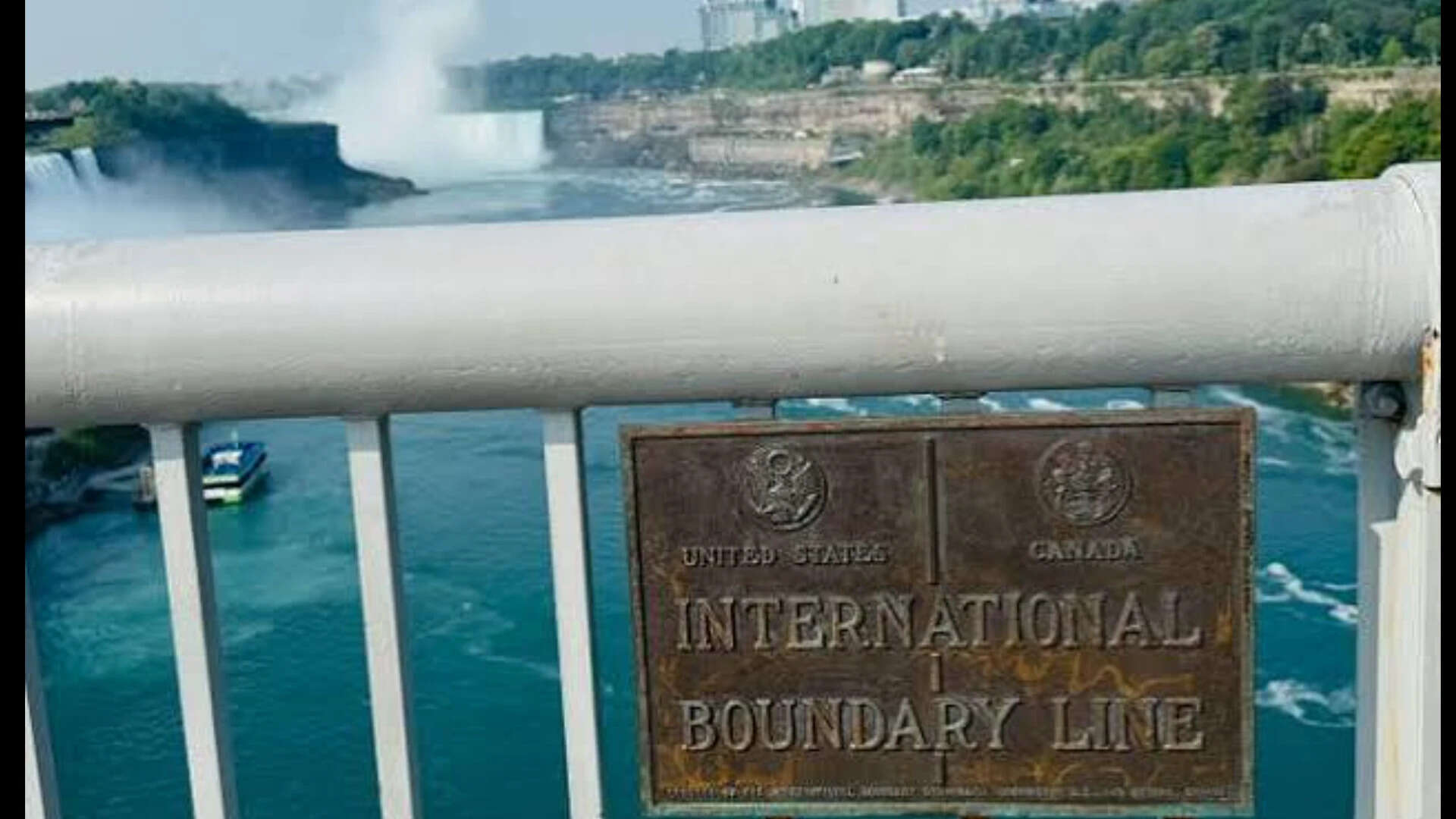
To understand how a wrong turn transforms a human being into a detainee, you have to look at the invisible architecture of the border. For a person of foreign nationality living in the United States—even one with pristine legal status, valid work visas, or pending applications—leaving the country is an act of legal consequence. The moment your tires cross the invisible line in the middle of the bridge, you have exited the United States.
When you turn around, you are not "returning." In the eyes of the law, you are making a brand-new entry.
Consider the paradox of the modern border checkpoint. For the Canadian authorities on the other side, an obvious tourist making a U-turn is a daily nuisance. They routinely turn them back. But when that vehicle hits the U.S. side, the burden of proof shifts entirely to the driver. If you do not have your physical passport, your physical visa documentation, or your original status approvals in the glove box, you are legally an undocumented arrival.
Veteran immigration attorneys describe the Niagara and Buffalo crossings as high-stakes zones. Years ago, a valid driver’s license and a brief explanation might have satisfied a CBP officer. Not anymore. The system operates on absolute verification, and it does not distinguish between a deliberate smuggler and a guy who missed the exit for Interstate 190.
The real tragedy of these cases is the isolation that follows the click of the handcuffs. When an individual is held for secondary inspection or administrative detention, their phone is taken away. The family doesn't get a tracking number. They don't get a status update. They are left sitting in a living room in Buffalo or Chicago or Detroit, staring at a silent smartphone, wondering if a single missed exit has just unraveled a decade of hard work, education, and dreams.
The system moves with a cold, mechanical momentum. Once a case is initiated, resolving it is rarely as simple as a friend showing up at the front gate with a forgotten passport. It requires supervisors, digital verification, and sometimes hours or days of waiting in grey, windowless rooms while the paperwork catches up to the reality of the mistake.
The highway signs near the Peace Bridge and the Niagara crossings do feature warnings. They tell you it is the last exit before the toll. They tell you that passports are required ahead. But when you are driving in a strange city, chatting, or listening to a voice prompt from an app, those signs pass by like a blur.
The concrete remains indifferent. The river flows underneath. And somewhere in a holding room within sight of the highway, a man waits for someone to bring a small blue booklet across the city, hoping the paper will be enough to undo the finality of a wrong turn.


