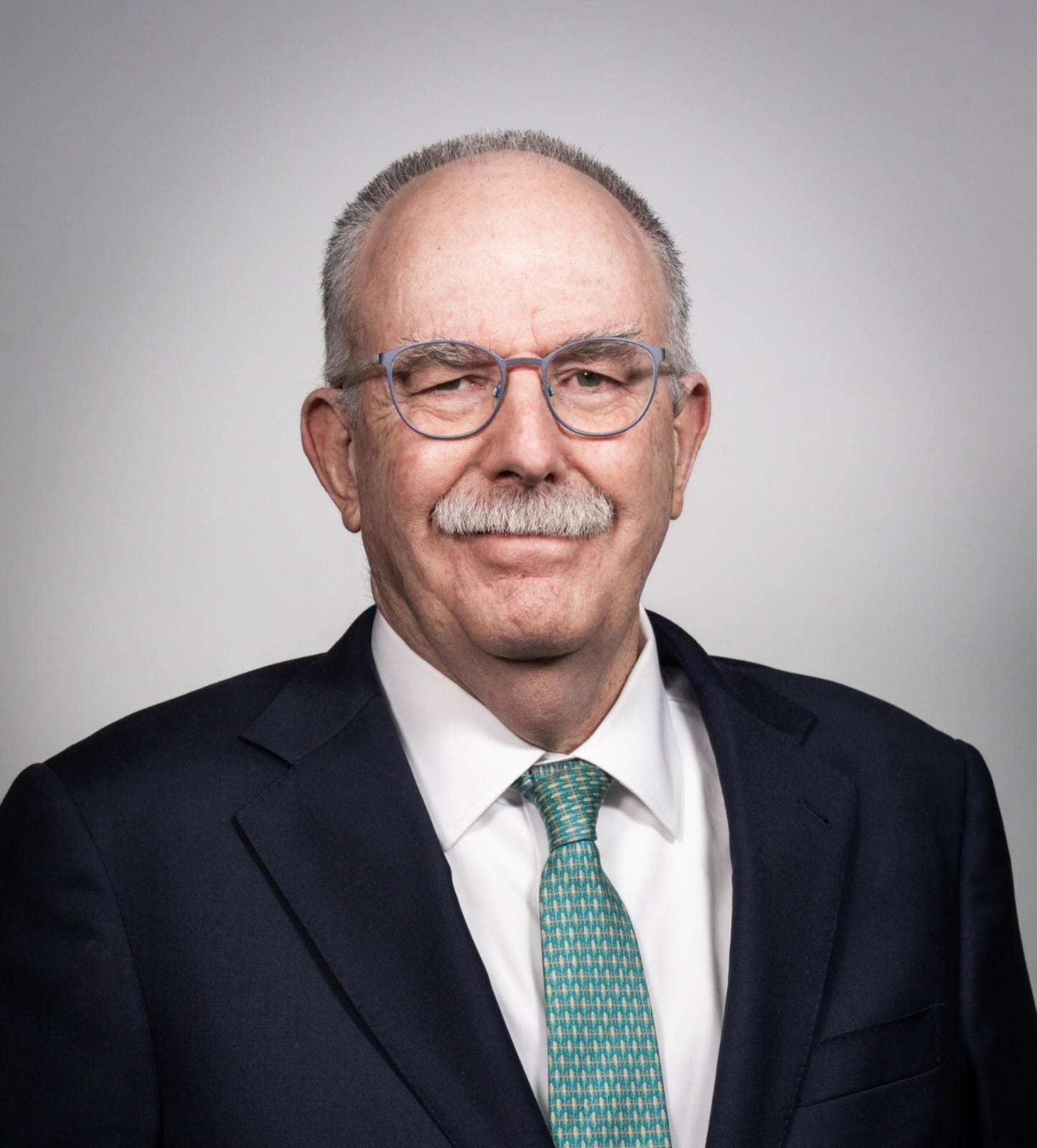
Martin Gugino, the peace activist whose 2020 encounter with the Buffalo Police Department became a global symbol of the friction between civil protest and state force, has died. He was 79. While his passing marks the end of a personal journey defined by a split-second shove and a fractured skull, it leaves behind a legal and social wreckage that remains entirely unresolved. Gugino did not just fall on a sidewalk; he fell into a gap between the constitutional right to assembly and the qualified immunity that protects those who break it.
His death was confirmed by his legal team, closing a chapter for a man who spent his final years seeking a specific brand of accountability that the American judicial system is often designed to deflect. To understand the weight of his passing, one must look past the viral video and into the mechanics of the civil litigation that outlived him. This is not a story about a singular injury. It is a story about the inertia of institutional power.
The Physics of a Viral Moment
On June 4, 2020, during the height of the protests following the death of George Floyd, Gugino approached a line of officers in Buffalo’s Niagara Square. He was a long-time Catholic Worker activist, a man whose resume was built on decades of non-violent agitation for the poor and disenfranchised. Within seconds of his approach, two officers pushed him. He fell backward. The sound of his head hitting the pavement was captured on a journalist's phone, a sickening crack that traveled around the world in hours.
The initial response from the Buffalo Police Department claimed Gugino "tripped and fell." This was a lie. It was a lie debunked by the very footage that forced the department to suspend the officers involved. But the suspension was only the beginning of a bureaucratic defensive maneuver. The subsequent grand jury declined to indict the officers, and an arbitrator later ruled that the use of force was justified under the circumstances of a clearing operation. This divergence between public perception and legal reality defines the Gugino legacy.
The Architecture of Qualified Immunity
Gugino’s primary fight in the years following the incident was a federal civil rights lawsuit. He wasn't just looking for a payout. He was challenging the notion that the state can use physical force against an elderly, unarmed individual under the guise of "maintaining order" during a peaceful demonstration.
The defense hinged on the standard of reasonable force. In the eyes of the law, an officer's actions are often judged not by the outcome—a brain injury and a month in the hospital—but by the split-second perception of the officer at the moment of contact. This creates a high bar for plaintiffs. For Gugino, the challenge was proving that no "reasonable" officer would have thought a shove was necessary to move a 75-year-old man backward.
The legal proceedings dragged on, hampered by motions to dismiss and the slow grind of the Western District of New York’s docket. By the time of his death, the case had become a marathon of depositions and procedural hurdles. The strategy of many municipal legal teams is simple: wait. They wait for the news cycle to turn, for the public to lose interest, and, in some cases, for the plaintiff to simply run out of time.
Beyond the Buffalo Sidewalk
The shove was never an isolated incident. It was an expression of a specific policing philosophy that prioritizes the "clearance" of public space over the preservation of individual safety. When the Emergency Response Team (ERT) moved through Niagara Square that evening, they were operating under a paramilitary mindset. In that framework, anyone standing in the way is an obstacle to be neutralized rather than a citizen to be engaged.
When the two officers were initially charged and suspended, 57 of their colleagues resigned from the ERT in protest. They didn't quit the force; they quit the specialized unit. They did this to show solidarity, arguing that their colleagues were "just following orders." This mass resignation revealed a deep-seated culture of internal loyalty that often supersedes external accountability. It sent a message that if the state cannot protect its officers from the consequences of their actions, those officers will refuse to perform certain duties.
The Activist Who Remained
Gugino himself was an unlikely lightning rod. He was not a firebrand or a professional agitator in the modern, digital-native sense. He was an old-school advocate for social justice, often seen carrying a laptop and wearing a simple backpack. He was a man of faith who believed that his presence on that sidewalk was a moral necessity.
Even after the injury, which left him unable to walk for a significant period and caused permanent neurological damage, he remained remarkably composed. He didn't speak with bitterness. He spoke with the precision of a man who understood the risks of his trade. He knew that the state doesn't give up its monopoly on violence easily.
The Lingering Question of Accountability
With Gugino gone, his estate may continue the lawsuit, but the emotional core of the case has shifted. The goal of civil rights litigation is often to force a change in policy—to ensure that the next time a protest occurs, the "push first" instinct is replaced by something more humane. Buffalo has made some changes to its use-of-force policies since 2020, but critics argue these are cosmetic.
The real issue remains the standard of conduct expected from law enforcement during civil unrest. If an elderly man can be hospitalized by the police on camera and no one is held legally responsible, the message to the public is clear: your safety is secondary to the city's timeline.
The Burden of Proof
Proving a civil rights violation requires more than just a video of a tragedy. It requires dismantling the "good faith" defense that officers almost universally employ. They argue they were tired, the situation was tense, and they feared the crowd might turn. In the Gugino case, the "crowd" was largely dispersed, and he was a lone figure. Yet, the legal machinery still found ways to justify the impact.
This reflects a broader national trend where the threshold for "excessive" force is constantly being moved. What a civilian sees as a brutal assault, a labor arbitrator or a grand jury sees as a technical application of tactical maneuvers. This disconnect is where public trust goes to die. It is the reason why, despite the outcry in 2020, very little has fundamentally changed in the way American streets are policed during times of tension.
The Weight of the Evidence
We often talk about "justice" as if it is a destination. For Martin Gugino, it was a process that he didn't live to see completed. The evidence of what happened to him is archived in millions of pixels and thousands of pages of legal filings. It is undeniable that he was shoved. It is undeniable that he bled from his ear while officers walked past him. It is undeniable that his life was forever altered in that moment.
What remains up for debate is whether the system he challenged is capable of critiquing itself. The Buffalo Police Department has largely moved on. The officers involved returned to work. The city continues to manage its budget and its protests. But the image of an elderly man lying motionless on the concrete remains an indictment of a specific era of American law enforcement.
The tragedy isn't just that Martin Gugino died. It’s that the questions raised by his fall remain as unanswered today as they were four years ago. The sidewalk in Niagara Square has been cleaned, but the stains on the protocol of public safety are permanent.
The case now moves into the hands of executors and attorneys, away from the man who actually felt the concrete. It becomes a matter of discovery motions and settlement negotiations, stripped of the human element that made the world stop and watch for a few days in June.
Power rarely concedes without a demand. Gugino made his demand by standing still. The state responded by moving him. The rest of the story is simply the law trying to find a way to make that movement look like a mistake rather than a choice. It was always a choice.