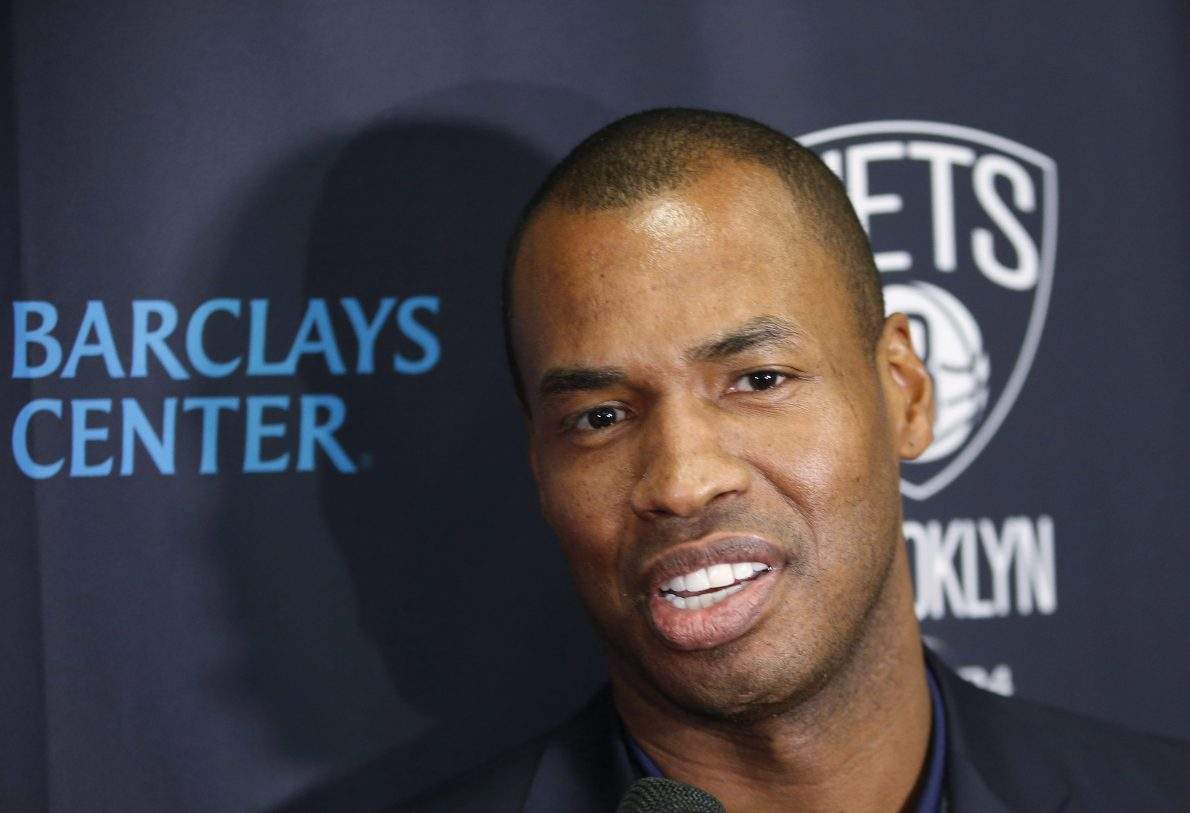
Jason Collins, the bruising seven-foot center who shattered one of the most resilient glass ceilings in American professional sports, has died at age 47. The news marks a somber bookend to a life defined by a singular, tectonic shift in the culture of the locker room. While his stat line—averaging 3.6 points and 3.7 rebounds over thirteen seasons—suggests a standard-issue NBA journeyman, his real impact was measured in the sudden, sharp intake of breath felt across the league on April 29, 2013. On that day, Collins became the first active male athlete in one of the four major North American professional sports to come out as gay.
His death brings an immediate focus back to that moment of courage, yet it also invites a cold-eyed look at what has, and hasn't, changed in the decade since. Collins didn't just open a door; he stood in the doorway and invited the world to look at the machinery of professional masculinity.
The Weight of the Seven Foot Secret
To understand the magnitude of what Collins did, you have to understand the NBA culture of the early 2000s. It was an era of hyper-masculinity, where the "toughness" required to bang bodies in the paint was often conflated with a rigid, narrow definition of manhood. Collins spent twelve of his thirteen seasons living within that construct. He was a "glue guy," the kind of player coaches love because he does the dirty work—setting hard screens, taking charges, and hacking superstars to prevent easy layups.
He played the part perfectly. He was a Stanford graduate, a twin, and a respected veteran who had reached the NBA Finals twice with the New Jersey Nets. Behind that dependable exterior, however, was a man performing a secondary, much more exhausting job. He was managing a secret that the sports world, at that time, seemed largely unready to hear.
When he finally spoke, via a first-person essay in Sports Illustrated, it wasn't a cry for attention. It was an act of exhaustion and integrity. "I didn't set out to be the first openly gay athlete playing in a major American team sport," he wrote. "But since I am, I'm happy to start the conversation."
The Quiet Reality of the Trailblazer
The immediate aftermath of his announcement was a whirlwind of media cycles and public support from figures ranging from Kobe Bryant to Barack Obama. But the investigative reality of his final year in the league is more nuanced. After coming out, Collins remained a free agent for months. Teams were hesitant. The narrative from front offices wasn't necessarily one of blatant homophobia, but rather the fear of a "distraction."
This is the perennial excuse used by management to avoid social progress. They claimed the media circus following Collins would disrupt the delicate ecosystem of a winning team. It was a convenient shield. It took until February 2014 for the Brooklyn Nets to sign him to a ten-day contract, finally bringing the "active gay athlete" from a theoretical concept into a physical reality on the hardwood.
During those final games, Collins did exactly what he had always done. He fouled hard. He boxed out. He communicated on defense. He proved that a player’s orientation had zero bearing on their ability to execute a pick-and-roll. The sky didn't fall. The locker room didn't crumble. In fact, his jersey—number 98, chosen in honor of Matthew Shepard—briefly became the top seller on the NBA’s online store.
The Stagnation of the Movement
If we are being honest about the legacy Collins leaves behind, we have to acknowledge the uncomfortable silence that followed his retirement. Many expected a flood of active players to follow his lead. That didn't happen.
In the decade since Collins retired, the number of active out players in the NBA, NFL, MLB, and NHL can be counted on one hand. Carl Nassib made history in the NFL, but he too has since moved on from the league. The "brave new world" many predicted in 2013 remains a slow, grinding evolution.
The reasons for this are systemic. The professional sports industrial complex is built on "marketability," and there remains a persistent, if unspoken, belief among agents and brand managers that coming out carries a financial risk. They look at the vitriol occasionally directed at the WNBA—a league that has been light-years ahead of the men’s side in terms of LGBTQ+ visibility—and they advise their clients to keep their heads down.
Collins understood this better than anyone. In his post-playing years, he worked as an ambassador for the NBA, traveling the world to preach inclusion. He wasn't naive. He knew that his 2013 announcement was only a beginning, not a mission accomplished. He often spoke about the difference between "acceptance" and "tolerance." The league tolerated him because he was a veteran who knew how to play defense. True acceptance is a different beast entirely.
The Stanford Pedigree and the Intellectual Athlete
Collins wasn't just a physical presence; he was an intellectual one. At Stanford, he and his twin brother Jarron were standout student-athletes. This background gave Jason a unique perspective on his role in history. He approached his advocacy with the same meticulous preparation he used to scout opponents.
He knew that as a Black man in America, he was already navigating one set of prejudices. Adding another layer of identity to that public profile wasn't a light decision. He often discussed how the Black community and the LGBTQ+ community intersected, highlighting the specific challenges of being "out" in a culture that sometimes prizes a traditional, conservative brand of toughness.
The Toll of the Journey
Forty-seven is an age that feels cruelly young for a man of his stature and vitality. While the details of his passing are a private matter for the Collins family, the physical toll of a thirteen-year NBA career is well-documented. Big men in the league carry a specific kind of wear and tear on their hearts and joints.
But there is also the psychological toll of being "the first." Collins carried the hopes, fears, and criticisms of an entire community on his shoulders while trying to keep his spot on a roster. He had to be the perfect representative. He couldn't afford to have a bad night, or an outburst, or a scandal, because he knew his actions would be used to judge anyone who might come after him.
He handled that pressure with a grace that is rarely seen in the modern era of the "main character" athlete. He didn't want to be a martyr; he just wanted to be a basketball player who didn't have to lie at dinner parties.
The Business of Inclusion
From a purely analytical standpoint, the NBA’s handling of Collins was a masterclass in corporate pivot. Once they realized he was going to be a net positive for the brand, the league leaned in. They used his story to bolster their image as the most progressive of the major sports leagues.
However, an investigative look at the current landscape shows that this progressiveness has limits. The league still does significant business in territories where LGBTQ+ rights are non-existent. The tension between the "NBA Cares" marketing and the bottom-line reality of global expansion is a gap that Collins himself had to navigate as an ambassador. He was a diplomat for a league that was often more comfortable with the idea of him than the political realities his existence demanded.
The Myth of the Distraction
The "distraction" argument used against Collins in 2013 has been debunked repeatedly, yet it remains the primary ghost used to haunt players who consider coming out today. When Collins joined the Nets in 2014, his teammates were remarkably consistent in their feedback. They liked him. He helped them win. He was a veteran presence who knew where to be on the floor.
The "distraction" wasn't the man; it was the media’s obsession with the man. Collins proved that if you give a locker room a week or two to get used to the cameras, they will return to their natural state—focused on the game. The fact that more players haven't felt comfortable following him is a failure of the front offices and the surrounding culture, not a reflection of the athletes themselves.
What We Lose with Jason Collins
In losing Collins, the sports world loses its most credible bridge between the old guard and the new. He was a link to an era of basketball that was more physical and less polished, yet he possessed a modern sensibility regarding human rights and personal identity.
He was a man who understood that his legacy wouldn't be found in a trophy case. It was found in the private messages he received from high school kids who saw a seven-foot-tall NBA center and realized they didn't have to choose between their identity and their dreams.
The Unfinished Game
We are currently in a strange period of athletic history. We see rainbow-colored logos every June, and teams host "Pride Nights" with calculated regularity. But the actual presence of out male athletes in the top-tier leagues remains a statistical anomaly. This suggests that the environment Collins tried to build is still under construction, or perhaps the foundation is more fragile than the marketing suggests.
The "Jason Collins effect" wasn't a sudden explosion of change. It was a slow-burn realization that the world did not stop spinning when a gay man stepped onto an NBA court. He removed the fear of the unknown. He replaced a caricature with a human being who happened to be very good at boxing out and setting screens.
The true tribute to Jason Collins won't be found in a moment of silence or a video tribute on a jumbotron. It will be found when a young player in a locker room somewhere feels they can speak their truth without it being a "definitive moment" or a "historic announcement."
Collins did the heavy lifting so that eventually, no one else would have to. He took the charges, he absorbed the hits, and he stood his ground in the paint. That was his job for thirteen years, and he performed it until the very end. The door he opened is still there. It’s just waiting for the next person with enough heart to walk through it.
The silence that follows him now is a reminder that the conversation he started is far from over.