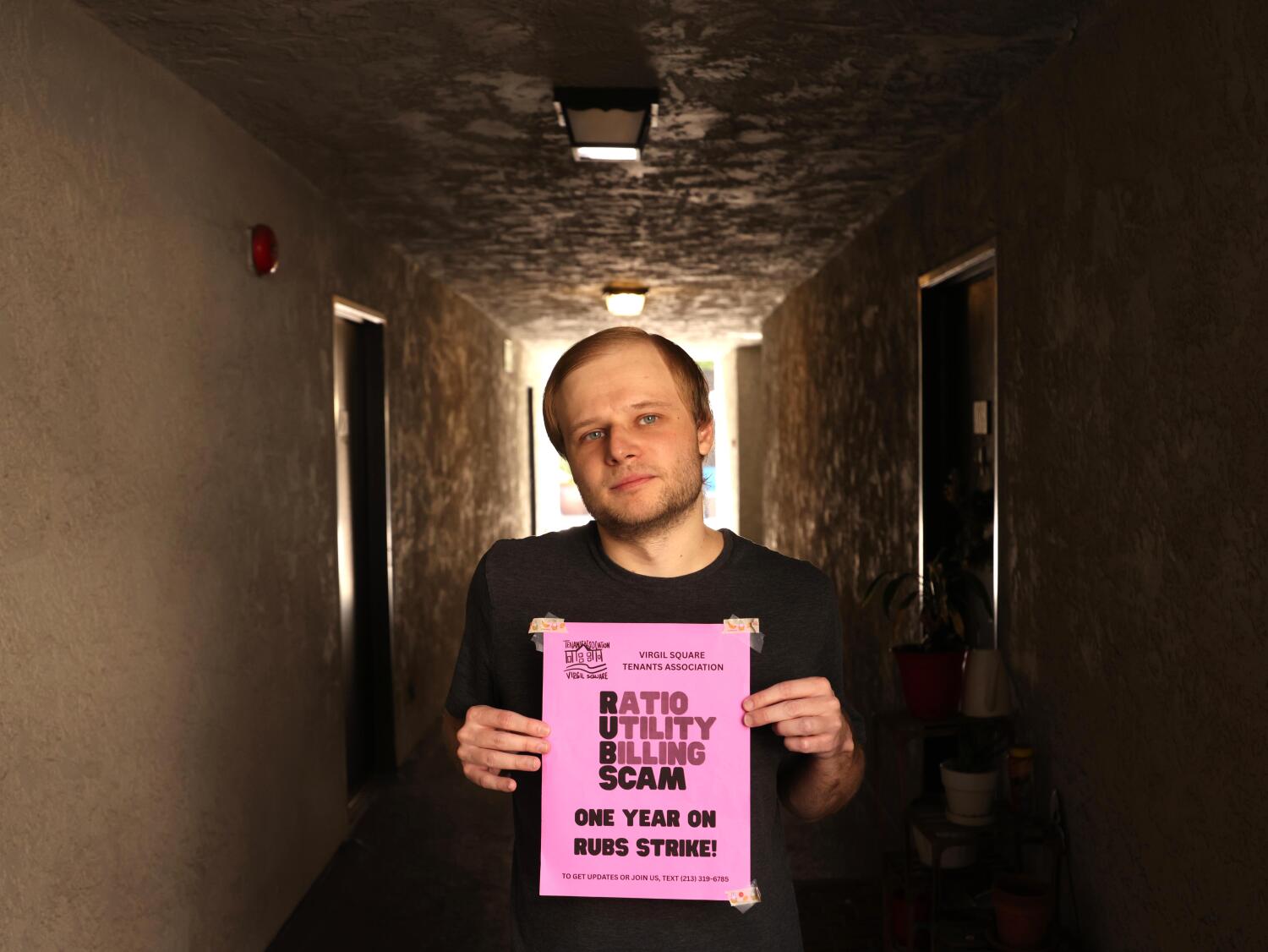
Everybody loves a good crusade against the landlord. Tenants across Los Angeles are currently marching into tenant union meetings, clutching their RUBS statements like sacred scrolls, demanding transparency. They want to see the exact kilowatt-hour breakdowns, the submeter logs, and the cold, hard algorithmic proof of why their shared utility bill spiked forty dollars this month.
They think they are fighting for justice. For a different perspective, consider: this related article.
They are actually fighting for the right to waste their own time on a mathematical dead end.
I have watched property managers stare blankly at tenants demanding line-item transparency for common-area electricity, knowing full well that demanding the math misses the entire structural reality of urban renting. You can audit the spreadsheet until your eyes bleed. You can force the landlord to show you every decimal point of the Ratio Utility Billing System calculation. And at the end of the day, your bill will still be exactly what it is, because your anger is pointed at the invoice when it should be pointed at the lease. Related analysis on this trend has been provided by MarketWatch.
Let us clear up the basic misconception right now. When you sign a lease in a multi-family building using RUBS, you are not buying a fixed amount of a commodity. You are buying a fractional share of an aggregate operational liability.
Transparency advocates argue that if you just see the formula—square footage multiplied by occupancy factor, adjusted for historical consumption—you will somehow regain control. This is an illusion wrapped in a spreadsheet. Seeing the math does not change the math. Knowing that your share of the building exterior lighting and hallway HVAC is 4.2 percent instead of 4.3 percent does not lower your power consumption by a single watt.
The Fallacy of the Itemized Grievance
Imagine a scenario where a tenant successfully drags their property management company to court, demanding an audit of the common-area utility distribution. The landlord complies. Boxes of invoices from the Department of Water and Power are dumped on a conference table. Engineers verify the submeters.
You find out the math is completely, impeccably accurate.
Now what? Your bill is still one hundred and eighty dollars.
The lazy consensus in the tenant advocacy space is that landlords use RUBS as a profit center, a hidden tax tucked away in the fine print. Sometimes that happens. Bad actors exist. But the vast majority of landlords are simply passing through a rising structural cost because maintaining individual meters in retrofitted 1960s apartment stock in Koreatown or Hollywood would cost tens of thousands of dollars per unit in plumbing and electrical overhauls.
If landlords had to front that capital, rental inventory would vanish faster than rent-controlled apartments during a condo conversion. The real cost would come out in higher baseline monthly rents anyway. You are paying for the infrastructure one way or the other. Complaining about the visibility of the math is like yelling at the cashier because the price of milk includes the cost of the delivery truck.
How the System Actually Operates
Let us look at the mechanics of RUBS without the emotional filter. California utility rates under DWP or Southern California Edison are tiered. As total consumption in a building creeps up, the entire property gets shoved into higher, more expensive pricing tiers.
When your neighbor leaves their portable air conditioner running twenty-four hours a day with the windows wide open, they are not just driving up their own localized tab. They are dragging the master meter into a brutal pricing penalty box. Under a shared billing allocation, your apartment absorbs a fractional shockwave of that waste.
That is the hidden tax nobody talks about. It is not landlord greed; it is structural externality.
When tenants demand to see the math, they assume a transparent ledger will give them leverage to negotiate. It does not. Real leverage comes from behavioral arbitrage. If you are sharing a utility pool, your financial health is tied to the collective discipline of everyone living around you. Spending your energy auditing the bill is like arguing about the fuel efficiency of a bus while you are sitting in the back seat instead of learning how to drive.
What You Should Do Instead of Auditing Receipts
Stop wasting hours of your life cross-referencing DWP rate sheets with your lease addendums. If you want to lower your shared utility burden, do not fight the formula. Cheat the game legally.
First, audit your own thermal envelope. RUBS allocations use square footage as a primary multiplier. If your apartment has leaky single-pane windows letting the Los Angeles heat bake your interior, you are paying a higher percentage of the thermal cooling load for the whole building because your square footage is technically less efficient to maintain. Seal your windows. Install blackout curtains. Drop your internal thermal draw so your unit pulls less weight in the building-wide average.
Second, become an aggressive neighborly lobbyist. If you suspect someone is running an illegal commercial laundry operation out of a one-bedroom unit or subletting to ten people, report the lease violations to management immediately. You are subsidizing their underground economy through your utility allocation. Protect your margins by making sure the building enforces occupancy rules.
Third, factor the variance into your housing budget before you sign. Treat the utility allocation not as a fixed bill, but as a variable tax with a twenty percent volatility buffer. If you cannot afford the high end of the shared utility swing during a July heatwave, you are renting an apartment that is too expensive for your cash flow.
The math is not hiding anything from you. It is just telling you the cost of living close to other people. Stop trying to audit the invoice and start managing your exposure.