The air smells of burnt jet fuel, ozone, and the sharp, metallic tang of absolute precision. Down on the tarmac, the afternoon heat rises in wavy, distorting ripples, blurring the sleek lines of multi-million-dollar fighter jets parked side by side.
To an outsider watching from the perimeter fence, military aviation looks like a collection of walled kingdoms. Every country speaks in its own dialect, uses its own proprietary codes, and guards its airspace like a medieval fortress. Different flags painted on the tail fins. Different sovereign commands barking orders through encrypted channels. For an alternative view, see: this related article.
Yet, step inside the briefing room, and something peculiar happens.
Listen closely. Two men in green and gray flight suits lean over a massive map table. One wears the insignia of the German Air Force. The other represents France. They are pointing at a stretch of sky over India, tracing a simulated flight path with grease pencils. Related analysis on the subject has been provided by The Guardian.
They are not stumbling over vocabulary. They are not second-guessing each other’s maneuvers. When they talk about intercept vectors, sensor fusion, and situational awareness, they use the exact same cadence, the exact same mental shorthand.
It feels like home.
That phrase did not come from a public relations handbook. It came from the cockpit.
The Mechanics of Trust at Mach 2
Trust in the military is not built on handshakes or political declarations signed in wood-paneled rooms thousands of miles away. It is forged in the grueling, suffocating pressure of gravitational forces that drain blood from the brain. It is earned during split-second decisions made while screaming through the stratosphere at twice the speed of sound.
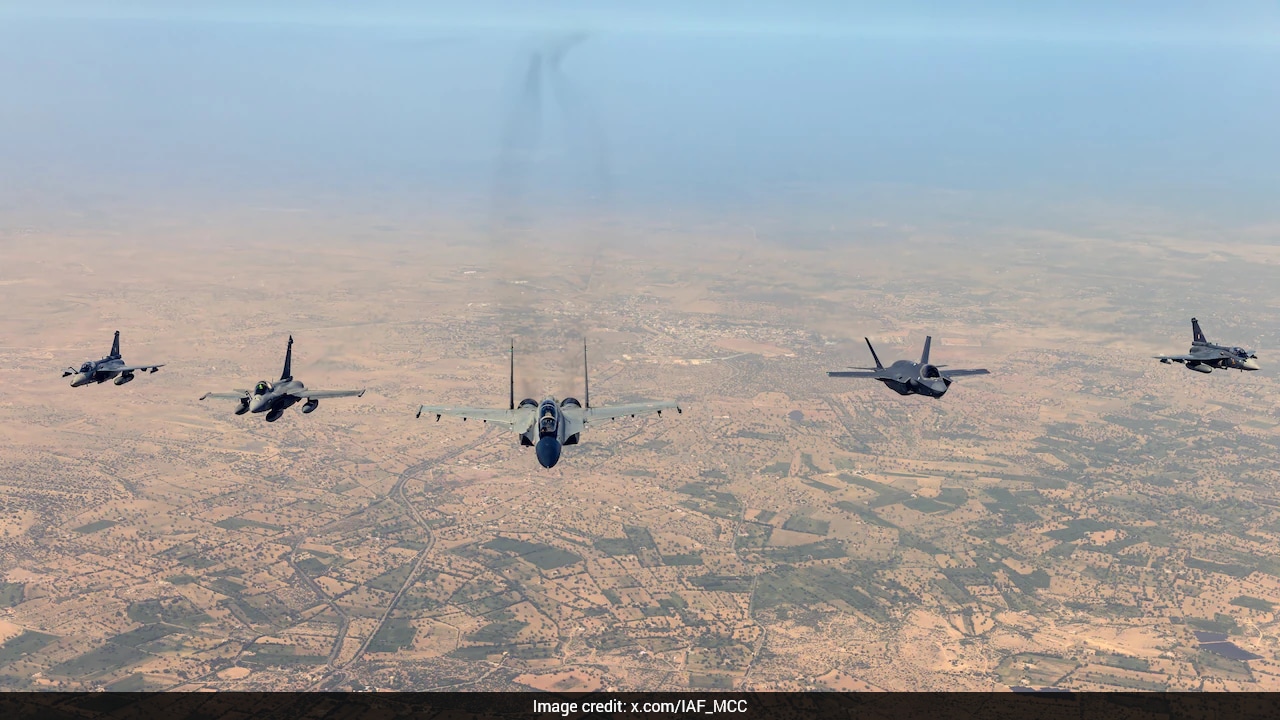
When the Indian Air Force hosted joint exercises involving German and French fighter detachments, military analysts focused heavily on the hardware. They cross-referenced radar cross-sections, thrust-to-weight ratios, and missile range capabilities. They traded spec sheets like baseball cards.
They missed the real story entirely.
Hardware can be bought, sold, or reverse-engineered. Interoperability on paper is easy; a spreadsheet does not care which country built the avionics. But psychological interoperability—the raw, unscripted ability to trust a wingman whose native language you do not speak—is nearly impossible to manufacture.
Imagine sitting in a cockpit. Your altimeter spins wildly. Your radar screens flash warning lights. You are pulling six Gs, your chest compressed into your spine, your vision tunneling at the edges. You look over your shoulder, and twenty feet away, through a canopy smeared with oil and condensation, is another aircraft.
You need to know what that pilot is going to do before they do it.
During exercises like Tarang Shakti, European and Indian aviators discovered a startling truth. Despite thousands of miles of geographic separation, despite different historical doctrines and training cultures, they operated with a shared tactical grammar.
The Unspoken Code
How does that happen? How do pilots trained in Neuburg, Mont-de-Marsan, and Ambala look at the same tactical problem and arrive at the exact same geometric solution?
Part of it is the universal physics of flight. Gravity does not negotiate. Aerodynamics does not care about national borders. A high-angle-of-attack recovery requires the exact same physical inputs whether you trained over the Bavarian Alps or the Thar Desert.
But physics alone does not explain it. The real alignment lies in the evolution of modern air combat philosophy.
For decades, Western air forces built their doctrine around complex, networked operations. They moved away from dogfighting as a solitary art form and turned it into a distributed chess match. Data links chatter constantly between airborne warning systems, ground stations, and multi-role fighters.
When the Indian Air Force integrated its modern fleet into these complex multilateral scenarios, the friction points that military planners secretly feared simply failed to materialize. Communication protocols synced. Tactical pacing matched.
Consider what happens when a formation breaks. In older, legacy frameworks, miscommunication in a multi-national dogfight could lead to catastrophic confusion. Different doctrines regarding radio discipline meant missed calls and dangerous overlaps.
Yet, in these skies, the chatter was sparse, calm, and clinically precise. A single word over the radio. A coordinated roll to the left. Two jets vanished into a cloud bank as one unit.
Beyond the Runway
Military exercises are never just about flying planes. They are diplomatic signals wrapped in titanium and jet exhaust.
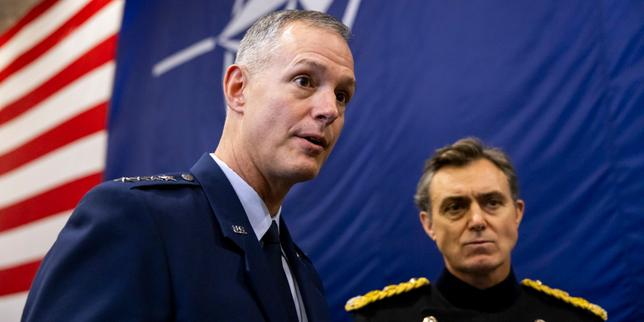
When German and French air chiefs publicly remarked that flying alongside their Indian counterparts felt familiar, they were not just tossing compliments across a podium. They were mapping out a new geopolitical reality.
The global security architecture is shifting beneath our feet. Traditional alliances are being stress-tested by new conflicts, fractured supply chains, and rapid technological advancements in electronic warfare. In this volatile environment, relying solely on historical partnerships is a dangerous gamble.
Military capability is no longer measured strictly by the size of an arsenal. It is measured by adaptability. Can you pack up your ground crews, fly halfway across the globe, land on a foreign runway, and integrate seamlessly into a combat air patrol within forty-eight hours?
India proved it could. Europe proved it could.
The mechanics of this integration required overcoming immense logistical hurdles. Spare parts have different serial numbers. Maintenance logs require translation. Refueling connectors occasionally demand custom adapters. Ground crews spent hours crouched under wings, comparing notes, swapping tools, and laughing through the exhaustion of twelve-hour shifts under a blistering sun.
That human exchange—grease-stained mechanics sharing cigarettes and troubleshooting radar glitches on a tarmac—matters just as much as the sleek jets screaming overhead.
The Horizon
Back in the briefing room, the grease pencil marks are wiped clean from the map. The pilots pull off their helmets, leaving their hair damp with sweat, rubbing the red pressure lines left behind on their foreheads by tight rubber seals.
They walk out onto the flight line together. The setting sun paints the underside of the clouds in deep shades of amber and violet.
Up above, the sky is empty again. But the lines have been drawn. The mental maps have been updated.
Next time, the distance will feel a little shorter. The radio static will clear a little faster. And somewhere twenty thousand feet up, two pilots flying at the speed of sound will glance across the empty air, nod at each other through a glass canopy, and remember that they are never truly flying alone.