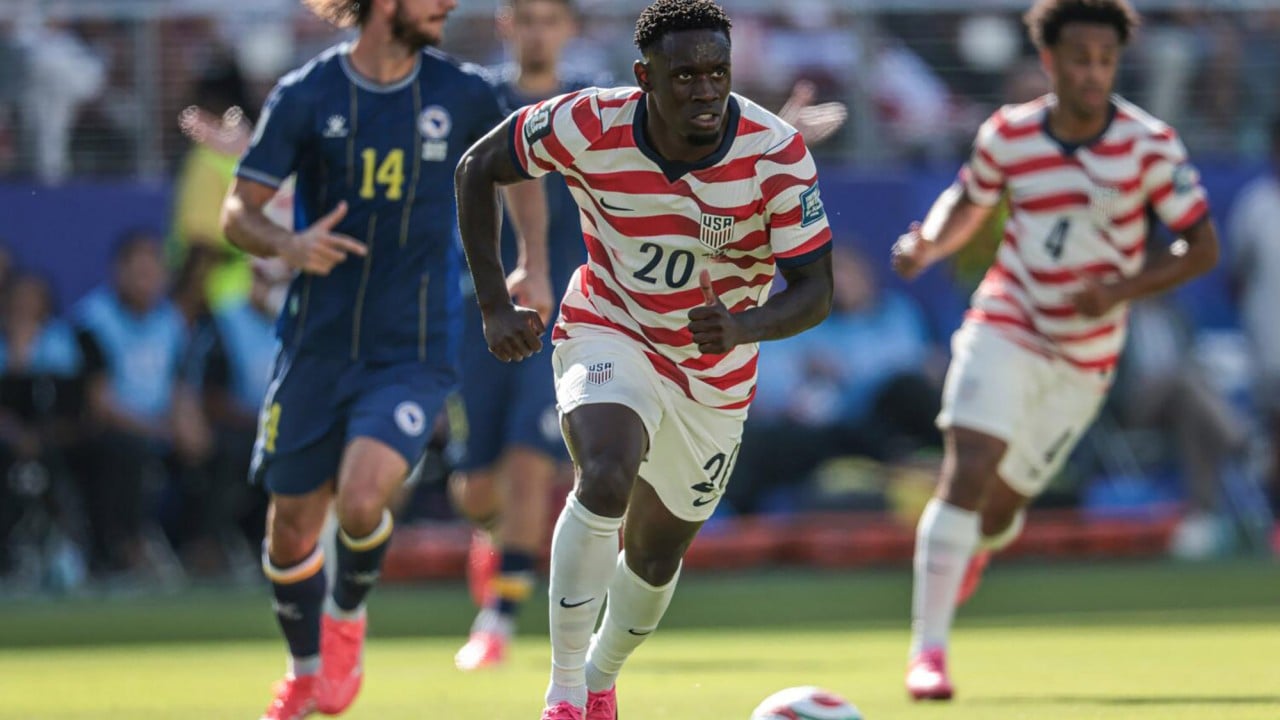
Football has a built-in expectation of absolute certainty. You get a straight red card, you sit out the next match. It's a foundational law of the game, respected from Sunday league mudholes to the pristine pitches of the FIFA World Cup. Except, apparently, when the United States is hosting, the stakes are a spot in the quarterfinals, and the President of the United States picks up the phone.
The stunning announcement that Team USA striker Folarin Balogun will play in the Round of 16 clash against Belgium has sent shockwaves through the sport. FIFA completely upended its own established disciplinary norms by putting Balogun's automatic one-match ban on ice. The global fallout was immediate. European football governing body UEFA labeled the move "incomprehensible," while Belgium manager Rudi Garcia openly mocked it as an April Fools' joke. But look past the touchline theater and you'll find a massive intersection of geopolitical leverage, vague rulebook loopholes, and a desperate host nation trying to keep its tournament narrative alive.
Here is what actually happened behind the scenes, why the rulebook broke, and what it means for the sport moving forward.
The Oval Office Intervention
Let's look at the facts. Balogun was sent off in the 64th minute of the USA's 2-0 win over Bosnia-Herzegovina in Santa Clara. Chasing a loose ball, his cleat caught the ankle of Bosnian defender Tarik Muharemovic. Brazilian referee Raphael Claus checked the VAR monitor and flashed a straight red. By any standard reading of the tournament regulations, that meant an automatic one-game suspension.
Then Donald Trump stepped in.
Speaking directly from the Oval Office, Trump confirmed he called FIFA President Gianni Infantino to complain about the decision. "That wasn't a foul," Trump told reporters, leaning heavily into his signature style. "That wasn't even an infraction. That was two guys running full speed that happened to crash into each other." Trump claimed he merely asked for a review rather than pressuring the governing body, but the optics are terrible. The leader of a host nation calling the head of global football to litigate a refereeing decision violates the spirit of separation between sport and state.
Infantino quickly issued a defensive statement, insisting that FIFA's judicial bodies operate with total independence. But the timing is impossible to ignore. U.S. Soccer officials flooded FIFA with documents, the phone call happened, and by Sunday, the disciplinary committee miraculously discovered a loophole to save the American star.
The Loophole Named Article 27
So how did FIFA legally pull this off without technically erasing the red card? They dug up Article 27 of the FIFA Disciplinary Code.
This specific clause allows a judicial body to fully or partially suspend the execution of a disciplinary measure, putting the player on a probationary period instead. FIFA fined Balogun $40,000 for the red card and for celebrating on the pitch post-match, but they paused the match ban for one year. If he gets another red card during this period, the one-match suspension triggers instantly on top of the new punishment.
It's a clever bureaucratic trick, but it sets a dangerous precedent. Historically, FIFA has fiercely protected the finality of refereeing decisions. World Cup rules explicitly state that no protests can be made against on-field factual calls. By utilizing Article 27 to bypass an automatic red-card suspension during the tournament, FIFA has opened a door they can't easily close.
The historical parallels are incredibly thin. You have to go all the way back to the 1962 World Cup in Chile to find something similar. Back then, Chilean authorities successfully campaigned to let Brazilian legend Garrincha play in the final after he was sent off in the semis. To see FIFA resurrect this level of host-nation accommodation in 2026 is staggering.
Why Europe is Furious
The Royal Belgian Football Association (RBFA) didn't hold back. They immediately launched a legal challenge to throw out the ruling, which a FIFA appeals judge dismissed in under eight hours. The logic? Belgium wasn't a formal party to the initial disciplinary case, so they had no standing to appeal.
The German Football Association (DFB) also weighed in, releasing a sharp statement warning that FIFA's credibility is at stake if the public believes political interference can dictate lineup availability. The anger boils down to a fundamental double standard. If a striker from a smaller, less commercially lucrative footballing nation had picked up that red card, would Infantino take a call from their prime minister? Would Article 27 be dusted off? We all know the answer.
What This Means on the Pitch
Politics aside, Mauricio Pochettino is undoubtedly relieved. Balogun is the Americans' top scorer in this tournament with three goals. He provides a physical focal point that alternative options simply cannot replicate. Replacing him would have meant relying on Ricardo Pepi, who has struggled for clinical form during this run.
With Balogun cleared, the tactical outlook changes entirely. He will lead the line, supported by Malik Tillman and Christian Pulisic. But the pressure on the young forward is now immense. He isn't just carrying the tactical hopes of a nation; he's stepping onto the pitch with a massive target on his back and the eyes of a deeply skeptical global audience watching his every move.
Moving forward, the absolute finality of the referee's whistle at the World Cup is gone. Every major footballing nation now knows that if you have enough political clout, the rules are surprisingly flexible. U.S. fans will celebrate the short-term win, but the long-term institutional damage to the tournament's integrity is already done.


