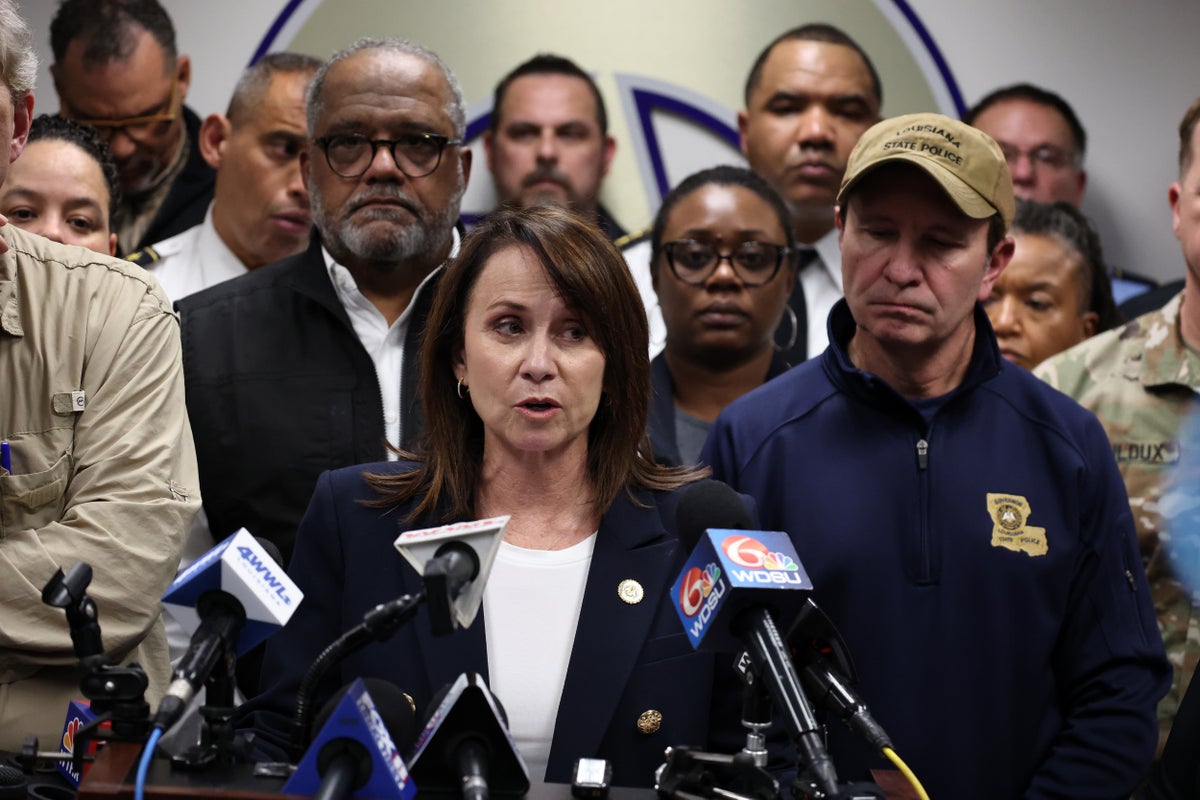
Louisiana politics doesn't do boring. But the whiplash of the past 48 hours has caught even seasoned political observers off guard. On Thursday, an Orleans Parish grand jury handed down a stunning 16-count felony indictment against the state's Republican Attorney General, Liz Murrill. She was accused of public intimidation and malfeasance for threatening the jobs of New Orleans city officials. Bond was set at a cool $400,000.
By Friday morning, the case was on life support.
In a rare, pre-dawn move on a holiday weekend, the Louisiana Supreme Court stepped in and granted an emergency stay of the proceedings. The high court didn't just pause the case; they openly blasted the trial court and the grand jury for "disturbing defects" in how the entire matter was handled. Legal experts are already calling the indictment dead on arrival.
If you're trying to make sense of this chaotic clash between Louisiana's top conservative prosecutor and the progressive leadership of its most famous city, you need to understand the real story behind the headlines. This isn't just a legal dispute. It's an all-out political war over who controls New Orleans.
The Letters That Sparked a Felony Indictment
This entire fight stems from a bitter feud over a New Orleans court clerk's office. The Republican-led state legislature recently passed a law to abolish the Orleans Parish Criminal District Court clerk position and merge it with the civil clerk's office. This wasn't just administrative housekeeping. The move effectively ousted Calvin Duncan, a newly elected clerk who had previously spent nearly three decades in prison before being fully exonerated.
New Orleans officials were furious. Mayor Helena Moreno, District Attorney Jason Williams, and five members of the city council pushed back, arguing that the legislative merger actually created a brand-new, combined elected position. They appointed a retired judge as an interim clerk and started laying the groundwork for a special election to let voters decide who should hold the seat.
That's when Liz Murrill intervened.
Murrill sent formal letters to eight New Orleans officials, warning them to halt the election process immediately. She cited the state's "usurper laws," which penalize anyone who unlawfully holds or attempts to exercise public office. In those letters, Murrill made it clear that if the local leaders didn't stop, her office would take aggressive legal action to strip them of their elected positions.
New Orleans leaders didn't blink. Mayor Moreno went on Instagram to fire back, publicly questioning why the state's top attorney was putting explicit threats in writing. Local officials viewed the letters as blatant criminal coercion. An Orleans Parish grand jury quietly launched an investigation, culminating in Thursday's 16-count indictment: eight counts of public intimidation and eight counts of retaliation, one for each official who received a letter.
A Secret Courtroom and Handcuffed Journalists
The legal drama escalated sharply during the indictment's delivery. Louisiana law is explicit about grand jury returns: they must happen in open court, fully accessible to the public.
Instead, Orleans Parish Criminal District Court Judge Leon Roche ordered the courtroom sealed. Court deputies kicked out journalists who were waiting to report the news. One reporter from WWL-TV was even led away from the building in handcuffs just for trying to do his job.
Murrill’s legal team capitalized on this secrecy immediately, filing an emergency writ to the Louisiana Supreme Court on Thursday night. They argued that the trial court flagrantly violated state law by hiding the proceedings from the public eye.
The strategy worked. The state's highest court agreed, writing on Friday morning that the lower court "violated express provisions of state law requiring that grand jury returns occur in the public eye." Loyola University Law Professor Dane Ciolino noted that an emergency stay in the wee hours of a holiday morning is a highly extraordinary event. In his view, the Supreme Court's aggressive language means the indictment is functionally dead, and the case is being sent back to the lower court simply to be dismissed.
Conflicts of Interest and Political Fallout
The procedural failures in the courtroom are only part of the problem for the prosecution. Murrill's defense team has also raised glaring conflict-of-interest questions regarding the special prosecutor brought in to run the grand jury, retired judge Laurie White.
White previously served as a personal attorney for Calvin Duncan—the very man whose ousted clerk position triggered the entire dispute. To make the web even more tangled, Murrill’s Attorney General office currently represents White in an unrelated, ongoing state lawsuit. Murrill argues it's impossible for White to act as an unbiased prosecutor given these personal and professional entanglements.
Meanwhile, the political response from the state's conservative leadership has been swift and brutal. Governor Jeff Landry immediately took to social media to trash the Orleans Parish legal system, calling it a "circus" and a "kangaroo court." Landry promised that if the case somehow moves forward, he will issue a gubernatorial pardon for Murrill as fast as legally possible. He has also ordered the Louisiana State Police to launch an immediate investigation into the grand jury and the officials who ran it.
Special Prosecutor Laurie White has remained defiant, telling reporters outside the courthouse that she expects an open-and-shut conviction before any pardon can happen. But with a supreme court stay now blocking her path, that conviction looks increasingly unlikely.
What Happens Next
The immediate legal threat against Murrill has been neutralized by the high court's stay, but the political fallout will ripple across Louisiana for months. Here's what to watch for in the coming weeks:
- The Motion to Quash: Murrill's legal team is currently preparing formal motions to quash the indictment entirely based on the procedural defects noted by the Supreme Court.
- Recusal Battles: Expect a wave of filings demanding the formal recusal of both Special Prosecutor Laurie White and Judge Leon Roche due to the alleged conflicts of interest and courtroom closures.
- State Police Investigation: The Louisiana State Police will begin looking into the grand jury proceedings, turning the legal tables back onto the New Orleans officials who initiated the charges.
This case isn't just about letters or clerk offices. It's a textbook example of how criminal statutes are increasingly being weaponized in hyper-partisan fights between deep-blue cities and deep-red state capitols. For now, the state's top attorney has the upper hand, and the New Orleans prosecutors who tried to corner her are the ones facing an uphill battle.