Can a president fire a career federal prosecutor simply because of who her father is? A federal judge just answered that question with a blunt, resounding no.
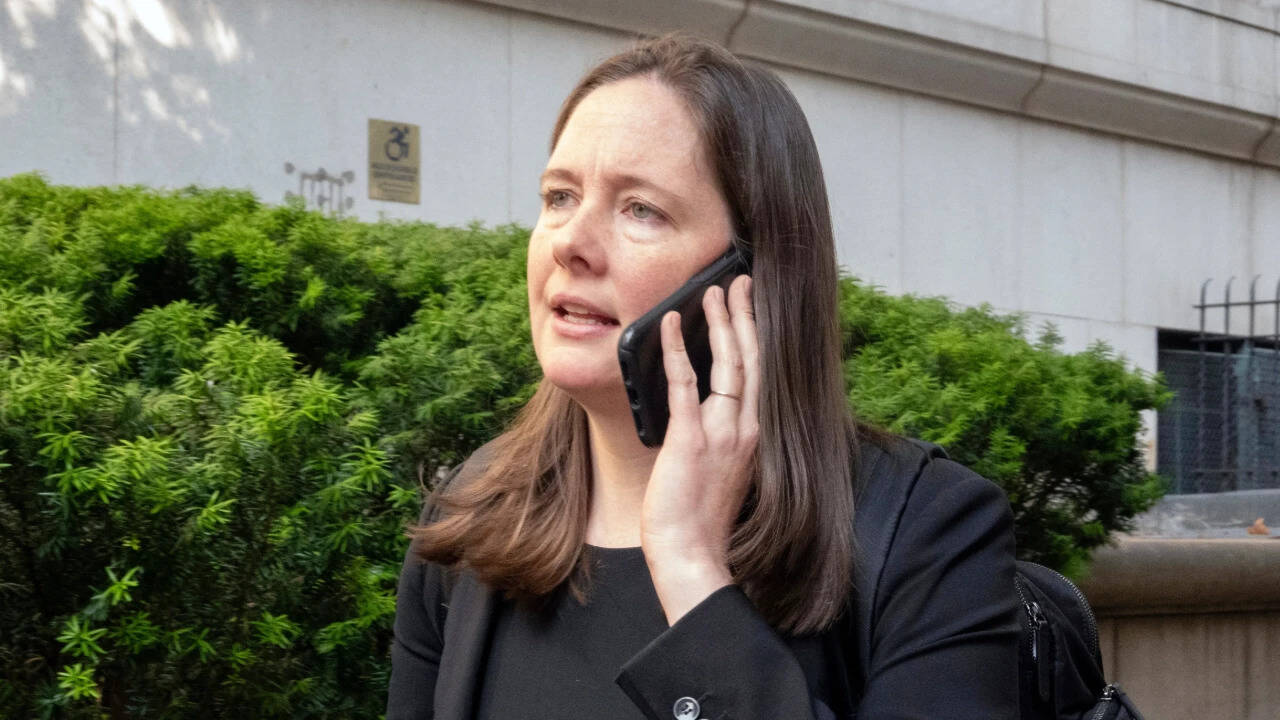
When the Trump administration abruptly terminated Maurene Comey—a veteran Assistant U.S. Attorney in the Southern District of New York and the daughter of former FBI Director James Comey—it sparked an immediate legal firestorm. Now, a federal court has officially ruled that the dismissal was unlawful. The decision isn't just a personal victory for Comey. It's a massive warning shot to any executive branch official who thinks civil service protections are optional. For a different look, consider: this related article.
Let's strip away the cable news noise and look at what actually happened here, why the court stepped in, and what this ruling means for the future of the Department of Justice.
Who Is Maurene Comey and Why Was She Targeted
If you only recognize the last name, you're missing half the story. Maurene Comey wasn't some political appointee riding her father's coattails into a cushy government desk job. She spent roughly a decade in the trenches of the Southern District of New York (SDNY), arguably the most demanding prosecutor's office in the country. Further coverage on the subject has been provided by USA Today.
Her track record speaks for itself. She served as a lead prosecutor on the high-profile sex trafficking cases against both Jeffrey Epstein and Ghislaine Maxwell. Those aren't cases you hand to a lightweight. Career prosecutors in SDNY earn those assignments through grueling hours, sharp courtroom instincts, and strict adherence to Department of Justice protocols.
Yet none of that mattered when the political winds shifted.
Donald Trump's public feud with James Comey is well-documented, stretching back to the 2016 election, the Russia investigation, and James Comey's own firing as FBI Director in May 2017. For years, Trump and his allies have treated the Comey name as shorthand for what they call the "deep state." When the administration moved to oust Maurene Comey from her post in Manhattan, critics immediately pointed out the obvious. She wasn't fired for poor performance. She was fired for her DNA.
Breaking Down the Unlawful Dismissal Ruling
When Maurene Comey challenged her termination, the legal battle centered on a fundamental pillar of American administrative law. Career civil servants—including Assistant U.S. Attorneys—aren't supposed to serve at the personal whim of the White House.
Unlike U.S. Attorneys, who are Senate-confirmed political appointees that routinely resign or get replaced when a new president takes office, Assistant U.S. Attorneys are career professionals. They're protected by federal statutes designed to keep criminal prosecutions free from partisan revenge.
The judge presiding over Comey's challenge looked closely at the administration's justification—or lack thereof. Under federal law, specifically the Civil Service Reform Act and Merit Systems Protection Board (MSPB) guidelines, an agency can't just wake up and boot a career prosecutor without cause, proper notice, and procedural due process.
Even more damaging for the government's case was the sheer transparency of the motive. You can't claim a firing is about "office restructuring" or "efficiency" when the target has stellar performance reviews and the White House has spent years publicly attacking her family. The court found that bypassing statutory protections to punish an employee over perceived political disloyalty or familial ties violates the law flat out.
It's a classic administrative blunder. Administrations often assume executive power gives them a blank check over every employee in the executive branch. Judges regularly remind them it doesn't.
Why Civil Service Protections Exist in the First Place
To understand why this ruling matters so much, you have to look back at why Congress created these rules. Before the Pendleton Civil Service Reform Act of 1883, the federal government ran on the "spoils system." Every time a new president won, thousands of competent workers were dumped onto the street to make room for political donors and loyalists.
It was a disaster. Corruption exploded, basic government functions ground to a halt, and justice depended entirely on who you knew in Washington.
Congress eventually realized that if you want a functioning country, you have to separate political appointees from career specialists. Today, there are roughly 2.2 million federal civilian employees. Over 99 percent of them are career civil servants, not political hires.
In the Department of Justice, that firewall is doubly critical. Imagine a justice system where every line prosecutor knows they'll be fired tomorrow if they investigate the wrong person, or if their cousin criticizes the president on television. Prosecutors wouldn't follow the evidence anymore. They'd follow the polls.
By ruling Maurene Comey's firing unlawful, the court reinforced that exact boundary. A president gets to pick the Attorney General. A president gets to pick the U.S. Attorney for the Southern District of New York. A president does not get to reach down into the rank-and-file to settle personal scores.
Common Misconceptions About Executive Firing Power
Whenever a story like this hits the headlines, social media fills up with bad legal takes. People hear "executive branch" and assume the president is basically the CEO of a private company who can walk onto the floor and yell "you're fired" at anyone on the payroll.
That's just wrong. Here is what most people get completely backward about federal employment law.
The At-Will Employment Myth
In the private sector, almost everyone works "at-will." Your boss can fire you because they don't like your shoes, because you're related to their ex-spouse, or for no reason at all, as long as it doesn't violate specific anti-discrimination laws. Federal civil servants do not work at-will. Once a career prosecutor finishes their probationary period, they acquire a legally recognized property interest in their job. Taking that job away requires documented cause—like misconduct or documented failure to perform—and a formal appeals process.
Schedule F and Executive Orders Aren't Magic Wands
You've probably heard debates about efforts to reclassify thousands of career federal workers into political categories (often referred to as Schedule F or similar initiatives) to make them easier to fire. Even when an administration tries to change those classifications, they can't simply ignore existing statutory protections overnight without triggering massive litigation. Courts look at the actual duties of the job, not just whatever label an agency slaps onto a personnel file.
Prosecutorial Independence Isn't Optional
Some folks argue that because the Constitution vests executive power in the president, any restriction on firing an executive branch employee is unconstitutional. While the Supreme Court has expanded presidential removal power regarding heads of certain independent agencies—like in Seila Law LLC v. Consumer Financial Protection Bureau—those rulings apply to senior agency leaders wielding massive policymaking authority. They do not strip away due process rights from rank-and-file prosecutors handling individual criminal dockets.
The Real-World Consequences for the Justice Department
So, a judge calls the firing unlawful. What actually happens now?
First, rulings like this typically trigger remedies ranging from reinstatement and full back pay to expungement of the termination from the employee's permanent personnel record. For Maurene Comey, it clears a stain that never should have been placed on her career in the first place.
Second, it creates a massive headache for government lawyers who have to defend similar personnel moves across other agencies. Every time the administration loses one of these cases, it establishes fresh precedent that makes the next politically motivated firing even harder to defend in court.
Honestly, the biggest impact is cultural. Career prosecutors across the country watch these cases closely. When they see a colleague get thrown overboard for political reasons, morale tanks and experienced talent heads for the exits—usually straight to private law firms where they can triple their salaries overnight. When a federal judge steps in and says "no, the law still protects you," it gives those career attorneys a reason to stay and do their jobs without looking over their shoulders.
How You Can Track Federal Civil Service Cases Yourself
If you want to follow how this case—and similar battles over executive power—unfold without relying on partisan spin, you don't need a law degree. You can read the primary documents directly.
Start by checking CourtListener, a free legal research database run by the non-profit Free Law Project. You can search by party name ("Maurene Comey") to pull up actual dockets, motions, and judicial orders as soon as they're filed. Reading the judge's actual opinion takes ten minutes and tells you infinitely more than a two-minute cable segment ever will.
You should also keep an eye on decisions from the Merit Systems Protection Board (MSPB) and the U.S. Court of Appeals for the Federal Circuit. That's where the vast majority of federal employment disputes are hashed out. If you work in the public sector—or if you just care about how checks and balances actually function when tested—paying attention to those dockets will show you exactly where the lines of presidential power are being drawn in real time.