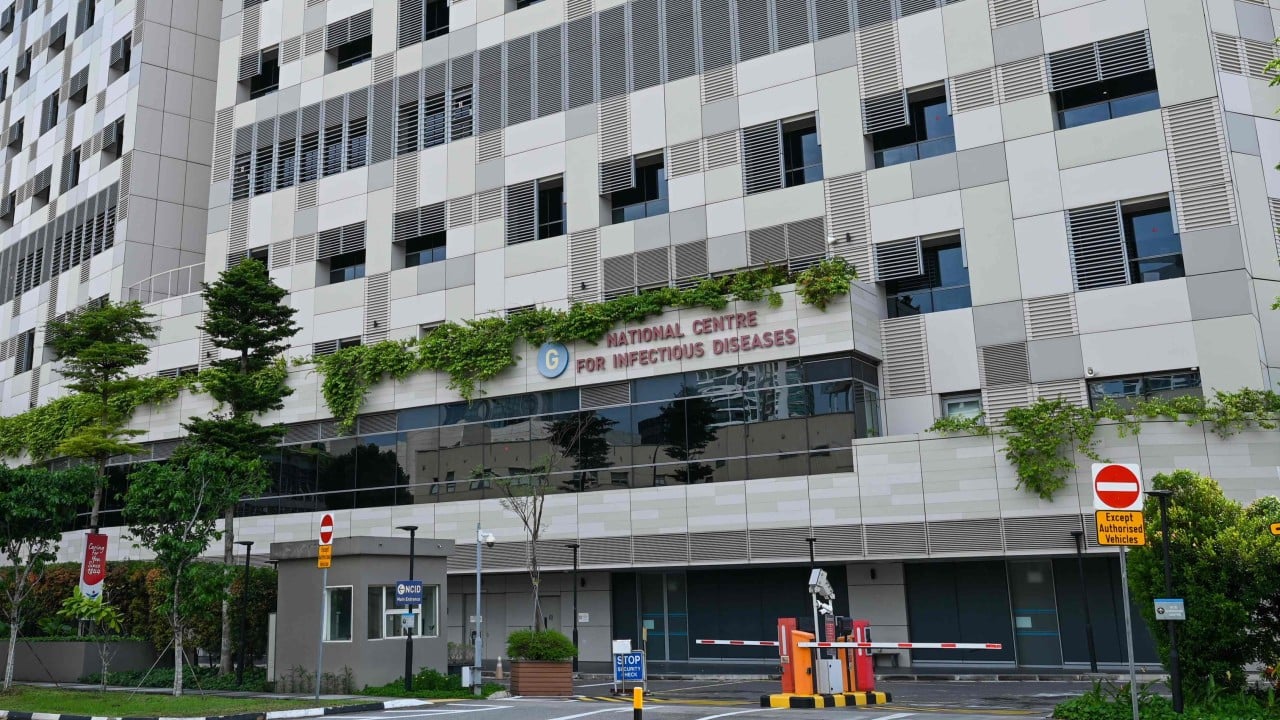
Panic is the easiest commodity to trade. When the news cycles broke with headlines about a Singaporean pair testing negative for hantavirus following a cruise ship scare, the collective sigh of relief was as predictable as it was misguided. The media wants you to focus on the "bullet dodged." They want you to obsess over the negative test result as if it validates the current global health surveillance apparatus.
It doesn’t. In fact, focusing on two negative test results on a cruise ship ignores the massive, systemic failure in how we actually quantify and understand zoonotic risks in urban hubs. We are currently trapped in a cycle of "outbreak theater," where we celebrate the absence of a virus that was statistically unlikely to be there in the first place, while completely ignoring the biological realities of how these pathogens move.
The Rodent in the Room
The hantavirus narrative usually follows a tired script: a dusty cabin, a rural setting, and a specific species of rodent. When you transplant that fear onto a luxury cruise ship docking in Singapore, the logic falls apart. Hantaviruses are not a monolith. Most "scare" coverage fails to distinguish between Old World hantaviruses, which cause Hemorrhagic Fever with Renal Syndrome (HFRS), and New World strains like Sin Nombre, which lead to Hantavirus Pulmonary Syndrome (HPS).
If you are on a cruise ship in Southeast Asia, you aren't looking at a "cabin in the woods" scenario. You are looking at a complex logistical chain. The obsession with testing individuals who show vague symptoms is a reactive, low-IQ approach to public health. It provides a false sense of security. If these passengers had tested positive, the panic would have been global. Since they tested negative, the story dies. But the underlying vulnerability of high-density travel remains unaddressed.
I have spent years analyzing the intersection of maritime logistics and infectious disease. I have seen cruise lines spend millions on "sanitization protocols" that are essentially cosmetic, designed to appease passengers rather than mitigate actual microbial risks. We are scrubbed into a state of clinical delusion.
The Fallacy of the Negative Test
A negative test result for two people is not a victory for Singapore’s health ministry. It is a statistical irrelevance.
When people ask, "Is it safe to travel after a hantavirus scare?" they are asking the wrong question. The premise itself is flawed. "Safety" in the context of international travel is an illusion maintained by the lack of testing, not the results of it. We focus on hantavirus because it has a high mortality rate and sounds terrifying. We ignore the fact that the surveillance systems in place are almost entirely reliant on symptomatic reporting—the least effective way to stop a spread.
Consider the biological mechanics. Hantavirus is typically transmitted through the inhalation of aerosolized droppings. On a modern cruise ship with advanced HVAC systems, the transmission dynamics change entirely. Yet, the public health response remains stuck in the 1990s. We treat a cruise ship like a static building when it is actually a floating, breathing ecosystem.
- Logic Gap 1: The incubation period for hantavirus can range from one to eight weeks. Testing someone the moment they feel "feverish" is a coin flip.
- Logic Gap 2: We assume "negative" means "clean." It often just means "below detectable viral load at this specific hour."
Stop Worrying About the Wrong Pathogen
The "lazy consensus" in health reporting is to treat every potential outbreak as the next "Big One." This creates a boy-who-cried-wolf effect. By the time an actual threat emerges, the public is exhausted by the false alarms of hantavirus scares and localized flu clusters.
We need to stop looking at these incidents through the lens of "outbreak vs. no outbreak." Instead, look at the Resiliency Gap. The Singapore incident showed that our response is entirely performative. Two people get sick, the ship is scrutinized, tests are run, and everyone goes back to the buffet.
Real health security would involve a complete overhaul of maritime environmental DNA (eDNA) monitoring. We should be sampling the air and surfaces of these ships 24/7 for a broad spectrum of pathogens, not just reacting when someone starts coughing. But that costs money. It’s cheaper to run a couple of PCR tests and release a press statement.
The Brutal Reality of Urban Hubs
Singapore is often lauded as the gold standard for public health, and for good reason. Their contact tracing is aggressive. Their labs are top-tier. But even the best system in the world is a sieve if the underlying data is garbage.
If you want to stay healthy while traveling, ignore the headlines about specific virus scares. They are distractions. The real risk isn't a rare rodent virus; it’s the massive "immunological soup" created by mixing five thousand people from sixty different countries in a closed loop for ten days.
The hantavirus scare was a gift to the travel industry. It allowed them to demonstrate "vigilance" without actually changing anything about the high-risk, high-density model of modern cruising. It’s the TSA of healthcare—security theater that makes you feel better while the real threats walk right through the gate.
The Actionable Truth
You are being lied to about what makes a trip "safe." A negative test result for a stranger in Singapore has zero impact on your personal risk profile for your next flight or cruise.
- Dismantle the "Clean" Illusion: High-end environments (lounges, suites, first-class cabins) are not biologically safer than the "dirty" ones. They often have less air turnover than you think.
- Verify the HVAC: If you are traveling, the only question that matters is the air exchange rate and the filtration grade (HEPA vs. MERV). Most travel providers won't give you this data. Why? Because it’s usually subpar.
- Assume the Pathogen is Present: The moment you stop relying on "outbreak news" to dictate your behavior is the moment you actually start practicing real bio-security. Use barriers, wash your hands, and stop touching your face. It’s boring, it’s not a headline, but it’s the only thing that works.
The next time you see a "negative test result" headline, don't celebrate. Recognize it for what it is: a data point in a failing system that prioritizes optics over actual prevention. We are one mutation away from a disaster, and we are still staring at a mouse in a corner while the roof is on fire.
Stop looking for reassurance in the news. It isn't there.