Shares of Akeso Inc. dropped as much as 31.8% in Hong Kong trading on November 16, 2026, touching HK$56.1—their lowest point since February 2025—after the U.S. Food and Drug Administration rejected ivonescimab. That single regulatory decision wiped out billions in combined market value across Akeso and its U.S. partner, Summit Therapeutics, whose stock tumbled roughly 26% to close at $10.50.
Wall Street treated the news like the death of a billion-dollar drug class. Honestly, that reaction misses what actually happened inside the FDA's Complete Response Letter.
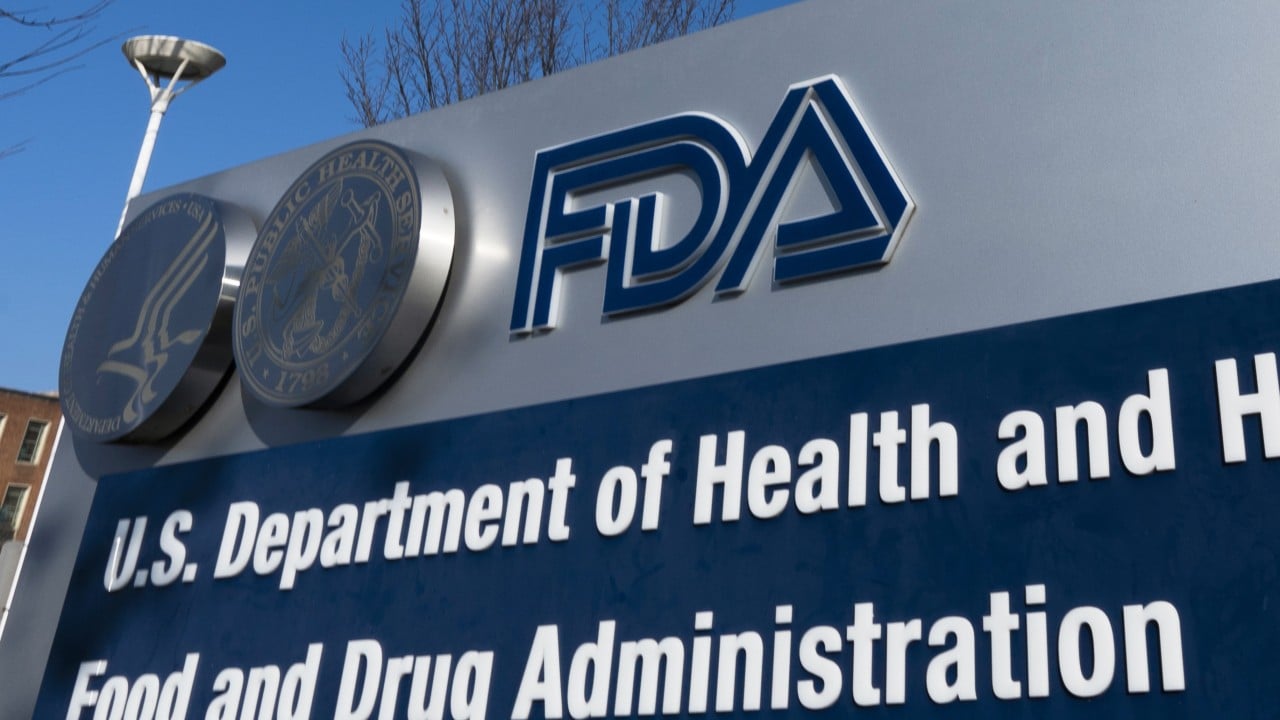
The agency did not declare ivonescimab ineffective or broken. Regulators rejected Summit's marketing application for second-line EGFR-mutated non-small cell lung cancer (NSCLC) because the supporting Phase 3 trial leaned too heavily on Chinese patient data and missed statistical significance on its primary overall survival endpoint. If you hold shares in Akeso (9926.HK), Summit (SMMT), or any rival chasing PD-1xVEGF bispecific antibodies, separating the clinical reality from the market panic is the only way to avoid making a terrible trade.
Why Akeso Shares Plummeted After the FDA Setback
When a biotech stock loses nearly a third of its value in a single morning, you expect to hear about a toxic side effect or a total trial failure. Neither happened here.
On Sunday, November 15, 2026, Summit Therapeutics disclosed that the FDA had issued a Complete Response Letter (CRL) declining to approve ivonescimab combined with platinum-based chemotherapy. The proposed indication covered patients with locally advanced or metastatic EGFR-mutated NSCLC whose cancer had progressed after treatment with an EGFR tyrosine kinase inhibitor.
Because Akeso originally invented ivonescimab and licensed commercial rights in the U.S., Canada, Europe, and Japan to Summit in a 2022 deal worth up to $5 billion, the Hong Kong market punished Akeso immediately when trading opened on Monday. Even after paring some early losses to finish the session down around 22% at HK$63.95, Akeso's stock had shed roughly 44.8% of its value year-to-date, vastly underperforming the broader Hang Seng Index.
Investors had priced ivonescimab for perfection. Ever since Akeso's China-based HARMONi-2 trial showed ivonescimab beating Merck's mega-blockbuster Keytruda (pembrolizumab) on progression-free survival in first-line lung cancer, media headlines routinely labeled the drug a "Keytruda killer". Summit's valuation ballooned on the assumption that U.S. approval was a formality.
The FDA proved otherwise.
Inside the FDA Complete Response Letter
Two days after Summit announced the rejection, the FDA published the full text of the Complete Response Letter—a level of transparency that exposed just how preventable this stumble was.
Regulators cited three specific flaws in the application:
- Missed Overall Survival (OS) Endpoint. While the Phase 3 HARMONi trial met its primary endpoint for progression-free survival (PFS)—meaning the drug delayed tumor growth longer than chemotherapy alone—it failed to show a statistically significant improvement in overall survival at the pre-specified final analysis. The FDA explicitly called the PFS gain "modest" when weighed against added side effects.
- Over-Reliance on Chinese Patient Data. The FDA flagged serious concerns about the high proportion of Chinese patients enrolled in the final dataset, questioning whether the clinical results accurately represented American patients.
- VEGF Toxicity Trade-Offs. Ivonescimab is a bispecific antibody designed to block two targets simultaneously: the immune checkpoint PD-1 and the blood-vessel growth factor VEGF. Adding VEGF inhibition introduces known cardiovascular and bleeding risks alongside immune-related toxicities. Without a clear survival advantage, FDA reviewers concluded the benefit-risk profile did not justify approval.
Here is the kicker. None of this should have surprised Summit's leadership.
According to the published letter, FDA officials warned Summit twice—first in March 2023 and again during a May 2025 pre-filing meeting—that the trial's demographic makeup might not satisfy U.S. regulatory standards. Summit filed anyway, hoping that a post-hoc survival update submitted in September 2026 would tip the scales.
Regulators treated those post-hoc numbers as purely exploratory. In plain English, the FDA told Summit to run a new, properly balanced multiregional clinical trial.
The Clinical Data Isn't Dead—Just Trapped in Regulatory Limbo
If you only read the stock tickers, you'd assume ivonescimab doesn't work in Western patients. Look closer at the longer-term follow-up data from HARMONi, and a much messier picture emerges.
When Summit first released overall survival numbers for the Western patient subgroup back in April 2025, the hazard ratio sat at 0.98 after a median follow-up of 9.2 months—basically a coin flip. By September 2025, with 13.7 months of follow-up, that hazard ratio improved to 0.84. By June 2026, at a median follow-up of 23.2 months, the Western subgroup hazard ratio reached 0.76, signaling a 24% reduction in the risk of death.
That trend suggests the drug is helping Western patients live longer, just on a slower timeline than the initial statistical cutoff captured.
The FDA doesn't grade on a curve for late-breaking post-hoc trends. Under the agency's Project Orbis and strict multiregional trial guidance established over the past few years, U.S. regulators refuse to rubber-stamp cancer drugs whose pivotal data comes predominantly from a single foreign country. Eli Lilly and Innovent Biologics learned this exact lesson in 2022 when the FDA rejected sintilimab for relying solely on Chinese trial data. Summit tried to thread the needle with a hybrid dataset and got burned.
For Akeso, the domestic reality looks completely different. Ivonescimab is already approved and commercialized in China, where Akeso retains 100% of the commercial rights and revenue. Between Akeso and Summit, the drug has posted positive results across five Phase 3 studies in China. The U.S. rejection delays Western royalty checks and milestone payouts for Akeso, certainly, but it does zero damage to the company's existing Chinese commercial engine.
Winners and Losers Across the Oncology Sector
Biotech doesn't exist in a vacuum. The moment ivonescimab stumbled at the FDA, the competitive math across lung cancer shifted overnight.
Competitors Getting Breathing Room
In second-line EGFR-mutated non-small cell lung cancer, doctors have limited options once targeted pills stop working. Ivonescimab was supposed to grab immediate market share. With Summit sent back to the drawing board, rival drugmakers developing antibody-drug conjugates (ADCs) just gained at least two to three years of clear runway:
- AstraZeneca and Daiichi Sankyo gain breathing room for Datroway (datopotamab deruxtecan), their TROP2-directed ADC targeting previously treated lung cancer.
- Merck and Kelun-Biotech face less near-term pressure on sac-TMT (sacituzumab tirumotecan), another TROP2-targeting contender in the same setting.
- Bristol Myers Squibb gets extra time to advance iza-bren, its dual-targeting EGFRxHER3 bispecific ADC.
- Merck's Keytruda franchise avoids an immediate U.S. challenger, even though Keytruda itself struggles in EGFR-mutated tumors.
The Broader PD-1xVEGF Bispecific Wave
Ivonescimab's stumble also casts a shadow over every pharma giant that spent hundreds of millions licensing rival PD-1xVEGF bispecifics from Chinese biotechs over the last two years. Companies like BioNTech (which acquired Biotheus for its candidate BNT327) and Instil Bio are now on notice.
The lesson is brutal and simple. You cannot shortcut Western clinical enrollment. Any company attempting to bring a China-originated bispecific antibody to the U.S. market must enroll a robust, statistically powered cohort of North American and European patients from day one—and prove overall survival, not just tumor shrinkage or progression-free survival.
How to Evaluate Biotech Stocks After an FDA Rejection
If you invest in clinical-stage biotech or cross-border pharma partnerships, Akeso's 32% plunge is a textbook case study in regulatory risk. Use these three checks before buying the dip—or panic-selling—after any FDA Complete Response Letter:
- Read the actual Complete Response Letter if published, or demand exact wording. Watch for the difference between a manufacturing delay, a statistical technicality, and a fatal safety signal. A demand for a new multiregional trial means a 2-to-4-year delay and massive cash burn, not permanent failure.
- Check the regional trial breakdown before Phase 3 readouts. Whenever a biotech touts glowing Phase 3 data from a single country, look at the geographic enrollment split. If U.S. and European patients make up a small fraction of the study, discount the probability of first-pass FDA approval heavily.
- Separate partner risk from core business value. Akeso's stock crashed in Hong Kong because investors priced in massive U.S. milestone payments from Summit. Yet Akeso's domestic sales in China and its broader pipeline of bispecific antibodies remain intact.
Watch Summit's upcoming trial updates for HARMONi-3 and HARMONi-7, which are enrolling higher proportions of Western patients in first-line lung cancer settings. Those studies—not the rejected second-line filing—will ultimately decide whether ivonescimab becomes a multi-billion-dollar global franchise or remains a regional success story in China.