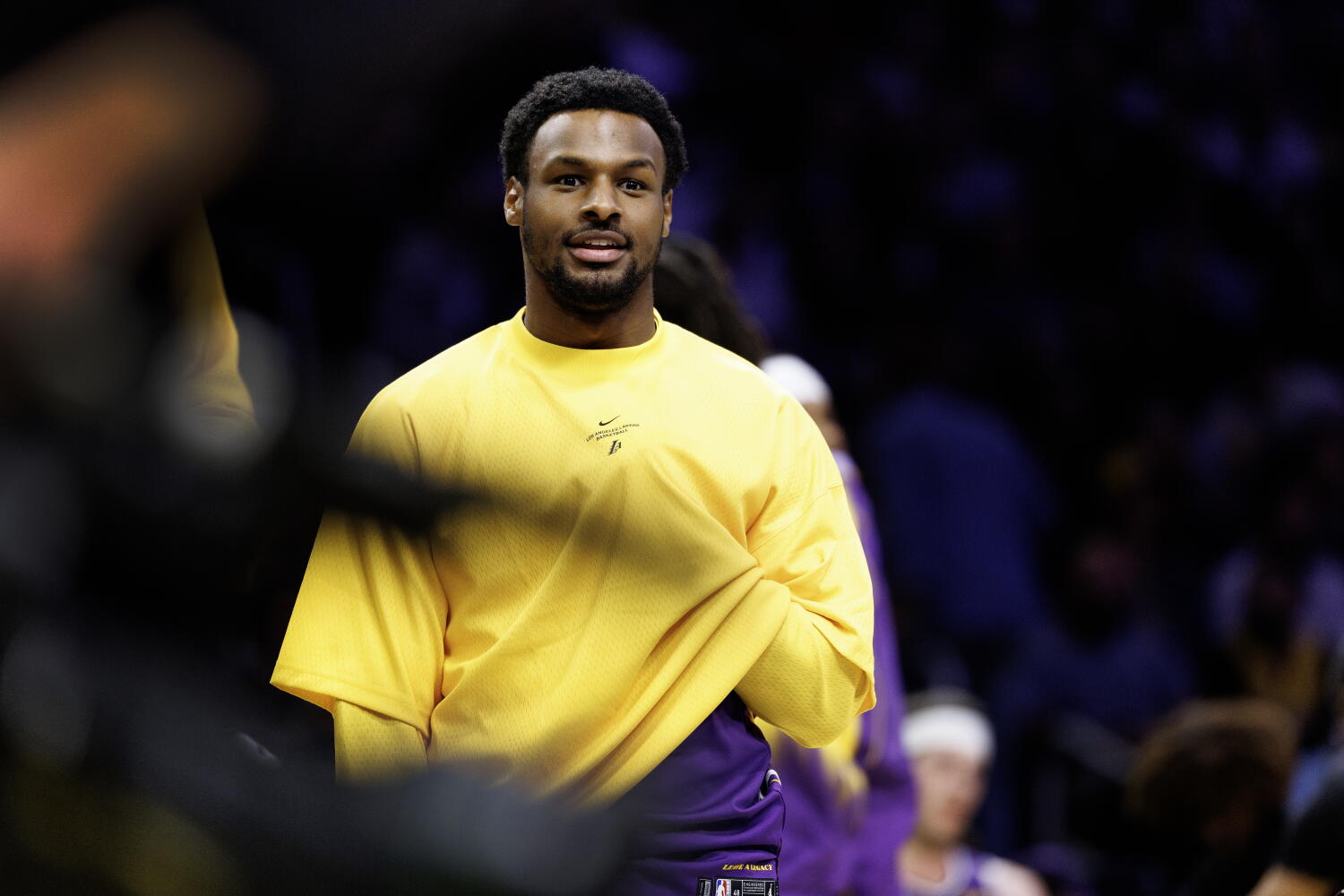
Every single time the Los Angeles Lakers send a young player down to El Segundo, social media loses its mind. It happens like clockwork. When the front office officially assigns Bronny James and Cameron Carr to the South Bay Lakers, the loudest voices online immediately treat it like a demotion, a failed experiment, or a sign that the roster is in trouble.
Honestly, they couldn't be more wrong.
Assigning Bronny James and Cameron Carr to the G League isn't a punishment, and it certainly isn't panic. It's basic, smart roster management for a franchise trying to survive a grueling 82-game NBA schedule while actually developing young guards instead of letting them rot at the end of the bench. If you've ever watched how modern NBA front offices operate, you know that rotting on the varsity bench during a playoff push is the absolute worst thing for a young guard's career.
Let's break down what's actually happening behind closed doors in Los Angeles, why both players need these minutes right now, and what this move tells us about the Lakers' bigger plans.
Why the South Bay Lakers Assignment Makes Total Sense
Sitting in street clothes or warmups for 46 minutes a night doesn't make anyone better at basketball. Practice time during the NBA regular season is practically nonexistent once the travel schedule kicks into high gear in November and December. Teams do walkthroughs, watch film, get treatment, and hop on a charter flight.
That's it.
For a young player like Bronny James or an athletic wing like Cameron Carr, the only way to build real NBA habits is live game speed against grown men fighting for their livelihoods. In the G League, nobody is coasting. Every single player on the floor at the UCLA Health Training Center is auditioning for a ten-day contract, a two-way spot, or a lucrative deal overseas. The pace is frantic, the physicality is real, and mistakes get punished immediately.
When the Lakers assign Bronny James and Cameron Carr to South Bay, they're buying them twenty-five to thirty minutes of high-leverage reps instead of two minutes of garbage time when the game is already decided by twenty points. Garbage time teaches bad habits. Real G League minutes teach spacing, defensive rotations, and shot selection under pressure.
What Bronny James Actually Needs in the G League
We all know the circus that follows Bronny everywhere he goes. Being LeBron James's son means every missed jumper gets clipped and posted to millions of followers within thirty seconds, while every decent defensive possession gets blown out of proportion by stans. It's exhausting.
Strip away the last name and look at the actual basketball player. Bronny is an undersized guard—listed around 6-foot-2—who survives on defensive intensity, lateral quickness, and connective passing. At USC, following his cardiac arrest and recovery, he never got the chance to establish an offensive rhythm or handle primary ball-handling duties. He was playing catch-up all year.
In South Bay, the training wheels come off. The coaching staff can put the ball in his hands during pick-and-roll sets and force him to make reads against drop coverage and aggressive blitzes.
Fixing the Offensive Hesitation
The biggest flaw in Bronny's game at the NBA level has been hesitation. When you're afraid of making a mistake next to LeBron James and Anthony Davis, you pass up open corner threes and over-dribble into traffic. You play not to mess up rather than playing to impact the game.
Down in the G League, nobody cares if he goes 2-for-9 from three as long as he takes the open shots when the offense creates them. He needs volume. He needs to feel what it's like to run an offense for an entire quarter, manage the shot clock, and figure out how to finish at the rim against seven-footers without getting his shot pinned to the backboard.
His point-of-attack defense already translates. He fights over screens, uses his low center of gravity to wall off drives, and communicates well on switches. Nobody doubts his effort on that end. What determines whether he sticks in the NBA for eight years or washes out in three is whether he can hit spot-up threes at a 36% clip and punish teams when they help off him. You can't develop that confidence sitting next to the assistant coaches in Staples—or rather, Crypto.com Arena.
Where Cameron Carr Fits Into the Equation
While Bronny sucks up 99% of the media oxygen, Cameron Carr is quietly one of the more intriguing developmental projects in the Lakers' orbit. If you haven't paid close attention to Carr's path, you're missing out on a classic modern NBA wing archetype.
Carr brings legitimate positional size, length, and explosive vertical athleticism that the Lakers' varsity roster is constantly desperate to find. Coming out of Tennessee, he showed flashes of perimeter shooting and transition finishing, even if his college minutes were inconsistent behind a veteran-heavy Volunteers rotation.
That's why this G League stint is arguably even more important for Carr than it is for Bronny.
Building Consistency Without the Spotlight
Carr doesn't have to deal with national television cameras dissecting his pregame layup lines, which is a massive blessing. He gets to work in relative peace. For a player with his physical tools, the G League is a laboratory for three specific things:
- Defensive discipline: Athletic wings love gambling for steals and chasing highlight blocks. South Bay coaches will drill him on staying down on pump fakes and keeping his hands up without fouling.
- Off-ball movement: In the Lakers' system, wings don't get fifteen isolations a game. Carr has to master cutting along the baseline, relocating along the three-point arc, and crashing the offensive glass.
- Physical strength: Surviving an 82-game grind requires core stability so you don't get bumped off your spot by bigger forwards.
If Carr puts those pieces together in El Segundo, he becomes the exact kind of low-cost, high-energy rotation piece that championship contenders spend first-round picks trying to acquire at the trade deadline.
The Logistical Advantage Nobody Mentions
People outside Southern California often forget how massive a built-in advantage the Lakers have with their G League setup. Some NBA teams have their affiliates hours away by plane—the Minnesota Timberwolves send guys to Iowa, and the Miami Heat ship prospects down to Sioux Falls, South Dakota. Moving players back and forth is a logistical nightmare.
The South Bay Lakers play in the exact same building where the varsity team practices.
Literally downstairs.
When the Lakers assign Bronny James and Cameron Carr to the G League, nobody is packing a suitcase for a week in the Midwest. Both players sleep in their own beds, lift with the same strength and conditioning staff, eat the exact same nutrition plan, and run the exact same defensive terminology as JJ Redick's varsity squad.
If an injury hits the main roster at 10:00 AM on a Tuesday, either guy can be recalled, handed a jersey, and sitting on the bench by tip-off that night without missing a beat. That geographic proximity turns the G League from an exile into a seamless extension of the main roster's daily workflow.
Why Fans Misread NBA Roster Transactions
Part of the confusion comes from how sports media covers transaction wires. A one-sentence tweet from an insider saying "The Lakers have assigned Bronny James and Cameron Carr to the South Bay Lakers" sounds final and dramatic. It reads like a pink slip.
In reality, NBA teams use G League assignments like a yo-yo all season long. A player might get assigned on a Tuesday morning, play a G League game that night, get recalled Wednesday morning for a varsity practice, and get assigned again on Friday.
Here's what actually happens behind those transactions:
- Practice body management: Sometimes the main squad needs extra bodies for a five-on-five scrimmage, so they recall guys for four hours and send them right back down afterward.
- Home-heavy schedule windows: The Lakers rarely send high-profile prospects on long G League road trips early in the season, preferring to keep them around for South Bay home games where the coaching staff has total control over the environment.
- Load monitoring: Because both teams share medical staff, trainers track every sprint and jump across both leagues so young players don't hit a wall in February.
Stop treating transaction alerts like permanent verdicts on a player's career. They're scheduling updates, nothing more.
How to Actually Evaluate Their Progress
If you want to watch South Bay Lakers games—most of them stream easily on ESPN+, Tubi, or the G League's official site—don't just look at the box score points column. Scoring 25 points in the G League doesn't guarantee an NBA role. Plenty of guys drop 30 a night in the minors because they take 24 shots and play zero defense, and they never sniff a real NBA rotation.
Instead, watch the boring stuff.
Watch how Bronny navigates ball screens in the third quarter when his legs are tired. Is he dying on picks, or is he fighting over the top and forcing the ball handler into help? Watch his catch-and-shoot mechanics when the ball swings to him on the weak side. Does he catch it ready to fire, or does he bring the ball down to his waist and give the defender time to close out?
With Cameron Carr, watch his rebounding positioning and his closeouts. When he sprints out to contest a three-point shooter, does he fly past the guy out of control, or does he chop his feet and force a contested mid-range pull-up? That single skill separates NBA rotation wings from guys who spend their careers in Europe.
What Comes Next for Both Players
Expect this back-and-forth rhythm to continue right through the All-Star break. Neither Bronny James nor Cameron Carr is going to suddenly take over a starting spot on the varsity roster next week, and nobody inside the Lakers' building expects them to.
The goal for this season is simple. By March, the coaching staff wants to know whether Bronny can survive five to eight minutes in an emergency playoff scenario without hurting the team's spacing, and whether Carr's athleticism has caught up to the mental speed of the pro game.
Next time you see that transaction alert pop up on your phone, ignore the hot takes in the replies. Pull up the South Bay box score, look at their plus-minus, check their three-point attempt rate, and watch how they defend without fouling. That's where the real story of their NBA future is being written.