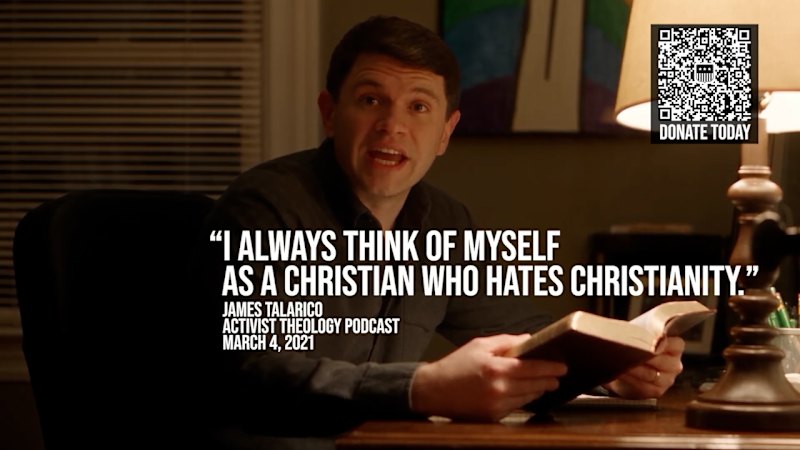
Someone used generative artificial intelligence to fabricate a video of Texas State Representative James Talarico tearing pages out of a Bible. It never happened. Yet the clip spread across social media feeds like wildfire, triggering outrage from voters who didn't pause to check if the footage was real before hitting the share button.
This isn't just another dirty trick in a state known for bare-knuckle politics. It's a warning flare for anyone paying attention to how political campaigns operate right now. When a synthetic attack ad targets a politician whose entire public identity is rooted in his Christian faith, the goal isn't persuasion. The goal is visceral, immediate disgust.
I've spent years analyzing political media and digital disinformation campaigns, and the speed at which synthetic media has moved from a tech novelty to a standard opposition research weapon is staggering. Let's break down what actually happened with the James Talarico AI attack ad, why the creators chose this specific imagery, and how you can spot these fabrications before they hijack your feed.
Anatomy of the James Talarico AI Attack Ad
If you follow Texas politics, you know James Talarico doesn't fit the standard partisan mold. Representing parts of the Austin area, the former middle school teacher and Presbyterian seminarian frequently quotes scripture on the House floor to argue for public education funding, healthcare access, and LGBTQ rights. That background makes him a prime target for ideological opponents who want to paint his progressive policies as anti-Christian.
Enter the AI-generated attack ad.
Instead of debating his voting record on school vouchers or tax policy, the creators went straight for the jugular. They generated synthetic visuals depicting Talarico physically defacing a Bible. No nuanced policy critique. Just raw, manufactured blasphemy designed to short-circuit critical thinking.
Why did it work so well on social platforms? Because algorithmic feeds reward outrage above everything else. When a voter sees a clip that confirms their worst suspicions about a politician from the opposing party, dopamine hits and logic shuts down. By the time fact-checkers or the campaign itself can issue a statement proving the video is fake, the clip has already racked up hundreds of thousands of views in private group chats and partisan echo chambers.
Why Religious Imagery Makes the Ultimate Deepfake Bait
Political operatives don't pick visual themes at random. They test what triggers the strongest emotional reaction. Desecrating a sacred text sits right at the top of that list, especially in Texas.
If an attack ad claims a politician voted for a bad tax bill, voters yawn. You have to explain brackets, revenue projections, and fiscal impact. Nobody shares a spreadsheet on Facebook.
Show a guy ripping up a Bible? Instant fury.
The creators of the Talarico fake understood that visual proof overrides verbal defense. For decades, human brains operated under a simple rule of thumb: if you see it on video, it happened. Generative AI broke that rule permanently, yet our instincts haven't caught up. Even when a disclosure label is slapped onto the corner of a screen in tiny font—or omitted entirely by bad actors—the visual memory sticks in the viewer's mind long after they forget the caveat.
How Synthetic Media Bypassed Traditional Campaign Guardrails
You might wonder how an ad like this even sees the light of day without triggering immediate legal or platform shutdowns. The reality is that digital campaign laws were written for television broadcasts and glossy mailers, not generative video models that can spit out a convincing smear in thirty seconds for twenty bucks.
Traditional political ads go through broadcast standards departments at local TV stations. Networks carry liability for defamatory content from non-candidate groups, which means Super PACs historically had to back up their claims with citations—even if those citations were wildly out of context.
Social media operates like the Wild West.
An anonymous account, a pop-up political action committee, or an overseas troll farm can upload a fabricated clip directly to X, TikTok, or Instagram. Platform moderation teams are chronically understaffed and rely heavily on automated detection tools that constantly lag behind the latest video generation models.
Texas actually passed legislation aimed at curbing deepfakes in elections—specifically Senate Bill 751 back in 2019, which made it a misdemeanor to create and distribute deceptive deepfake videos within 30 days of an election with the intent to injure a candidate. On paper, that sounds tough. In practice, enforcing it is a nightmare.
First, you have to prove who made the video. Good luck tracing a burner account routed through a VPN. Second, you have to prove intent to deceive, which bad actors dodge by claiming their video is "satire" or "parody." Satire enjoys broad First Amendment protection in the United States, creating a massive loophole that political operatives drive trucks through every single election cycle.
The Psychological Trap of the Liar's Dividend
The damage from the James Talarico AI attack ad extends far beyond one Texas legislative race. Every time a high-profile deepfake circulates, it feeds a phenomenon researchers call the liar's dividend.
Coined by legal scholars Bobby Chesney and Danielle Citron, the liar's dividend describes what happens when the public realizes anyone can fake anything. Once voters know AI can fabricate a video of a politician defacing a Bible, corrupt politicians gain a superpower. They can dismiss real, damning evidence—actual audio recordings, genuine surveillance footage, authentic leaked documents—as "just another AI fake."
It erodes the baseline of shared reality. When everything looks potentially synthetic, people stop trusting their eyes and start trusting only their tribal leaders. If your preferred candidate says a video is fake, you believe them. If the opposing candidate says a video is fake, you assume they're lying. Truth becomes entirely dependent on team loyalty.
Spotting AI Political Smears Before You Share Them
Platform labels aren't going to save you. Major tech companies routinely roll back trust and safety initiatives, and automated watermarks are ridiculously easy to strip out by simply screen-recording a video and re-uploading it. If you want to avoid getting played by synthetic propaganda, you have to build your own verification habits.
Here is what actually works when you encounter a shocking political clip online:
- Check the hands, edges, and physics. Generative video has improved massively, yet it still struggles with complex physical interactions. Watch how fingers interact with objects. In a clip showing someone tearing paper, look closely at how the pages bend and separate. Real paper creases, casts dynamic shadows, and reacts to air resistance. AI paper often melts, morphs, or passes through fingers like a ghost.
- Look at the lighting and reflections. Synthetic faces frequently have an unnatural, overly smooth sheen, almost like plastic under studio lights. Check the eyes. Do the catchlights in both pupils match the light source in the room? If the background shows an outdoor sunny day, the lighting on the subject's face shouldn't look like a fluorescent office.
- Listen to the audio cadence. Even if a video uses a real voice clone, the emotional inflection often feels flat or weirdly rhythmic. AI voices rarely nail the messy, imperfect breathing patterns of a human speaking under stress or anger.
- Trace the source account. Click on the profile that posted the clip. Was the account created three weeks ago? Does it have a string of random numbers in the handle? Legitimate news organizations and official campaigns don't drop bombshell footage from anonymous burner accounts.
- Run a reverse image search. Take a screenshot of the most dramatic frame in the video and run it through Google Lens or TinEye. If the footage is real and involves a sitting state representative, reputable local journalists—like reporters at The Texas Tribune or major metro papers—will have covered it within hours. Silence from real reporters is a massive red flag.
What Needs to Change in Political Advertising
Waiting for Washington to pass comprehensive federal AI legislation is a fool's errand. Partisan gridlock ensures that any meaningful regulation gets stalled while tech companies lobby to protect their liability shields.
Real accountability has to come from voters and local media ecosystems calling out bad actors immediately. Campaigns across the political spectrum also need to adopt voluntary pledges against using generative AI to fabricate opponents' actions. Some state parties have floated these agreements, though enforcement remains entirely reliant on public shame.
Thankfully, public shame still carries some weight when voters actually pay attention. When an attack ad is exposed as a complete fabrication, the backlash often boomerangs onto the group that pushed it. Voters hate feeling manipulated, especially when someone tries to weaponize their religious beliefs to trick them into casting a ballot.
Next time an outrageous video pops up on your timeline showing a politician doing something unthinkable, pause for ten seconds before touching that share button. Question who benefits from your anger, look closely at the pixels, and demand real proof before letting a machine tell you who to hate.