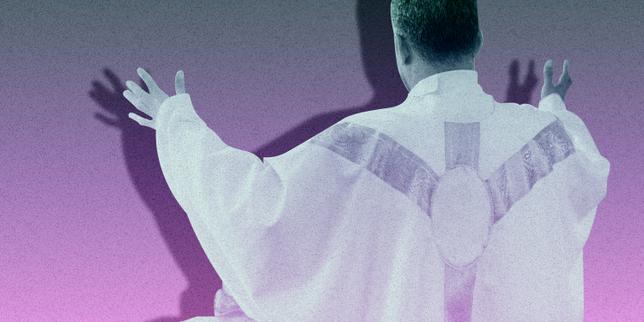
The stone of the cathedral is cold even in June. If you stand long enough in the dim hush of the nave, beneath arches built by hands that turned to dust centuries ago, you can almost hear the ghosts of an older argument. It is the argument over who belongs. Who is in, and who is cast out into the rain.
In France, that ancient argument has found a sharp, modern edge. It wears the tailored suit of a political manifesto and speaks in the crisp, measured cadence of identity politics. Across the country, a distinct faction within the Catholic fold has begun drawing heavy, black lines around the faith. To hear them tell it, Christianity is not a boundless well of grace, but a gated community. A border wall made of dogma, heritage, and exclusion.
Pope Francis looked at this rising tide and called it by its name. He warned that a faith reduced to tribalism, a faith that wraps itself in the flags of nationalism and cultural purity, ceases to be Christianity at all. It becomes something else entirely. A club. A fortress. A weapon.
To understand why this friction matters, you have to step away from the theological journals and into the pews of a quiet parish in provincial France.
Imagine Marie. She is seventy-two, with arthritic hands that grip her rosary beads like a lifeline. Her family has knelt in the same wooden pew since the Third Republic. For Marie, the church is the anchor of a vanishing world. When she hears the modern cultural landscape shifting around her—hear languages she does not recognize in the street, sees traditions she loved pushed to the margins—she feels a cold panic. The world is slipping away.
When a movement comes along and tells her that the faith is the final bastion, the last redoubt of identity, she listens. It feels protective. It feels like someone finally locking the front door against a storm.
But the Gospel Marie heard as a child tells a radically different story. It is a story about a wandering rabbi who ate with tax collectors, touched lepers, and told parables where the hero was a despised outsider. Jesus did not build walls. He crossed them. He looked at the anxious, defensive piety of the religious gatekeepers of his day and called them whitewashed tombs.
This is the collision at the heart of the modern French church. On one side stands a vision of faith tethered to blood and soil, where being Catholic is shorthand for being culturally French, fiercely protective, and deeply suspicious of the stranger. On the other stands the core, radical demand of Christian love: radical hospitality.
The nationalists argue that a nation must preserve its civilizational roots at all costs. They use the vocabulary of heritage to justify a politics of exclusion. They look at the arrival of refugees, the changing demographics of European cities, and the secularization of the public square not as a human reality to be engaged, but as an existential invasion. In this view, the church is the last trench.
Yet, history whispers a warning. Whenever the cross has been welded to the sword of nationalism, the cross has invariably been broken.
Consider what happens when a spiritual tradition becomes an ethnic or political club. Grace evaporates. Mercy becomes conditional. You are welcome here, the subtext reads, only if you look like us, talk like us, vote like us, and remember our history. But a conditional grace is not grace at all. It is a transaction.
The papal critique cuts precisely to this rot. To reduce the faith of the Gospels to a cultural accessory or an ideological shield is to miss the entire point of the narrative. It is like taking a living, breathing river and pouring it into a plastic bottle, sealing the cap tight, and calling it sacred. You keep it clean, yes. You protect it from the dust. But it dies.
The tension is visible in the streets of Paris, Lyon, and Marseille. It simmers in diocesan meetings and echoes in online forums where young traditionalists trade Latin mass schedules and anti-immigrant memes with equal fervor. They are searching for meaning in a fragmented century, grasping for certainty in an era that feels unmoored. You can understand the human impulse behind it. Fear makes people clutch their belongings tighter. Fear makes tribes.
But faith was never meant to be a bunker.
The alternative—the one articulated by Francis and rooted in two millennia of prophetic witness—requires a terrifying amount of courage. It asks believers to drop their weapons, unlock their doors, and trust that truth does not need a guard dog. It demands that the stranger be welcomed not as a threat to identity, but as Christ in disguise.
This is not a naive political platform. It is a spiritual earthquake. It turns the logic of the world upside down.
When the history of our current era is written, the debate over identity and faith in Europe will not be remembered as a clever theological nuance. It will be marked as a test of soul. Did the faithful choose the narrow comfort of the tribe, or the dizzying, dangerous expanse of universal love?
The cathedral doors remain open. Outside, the rain falls on the just and the unjust alike. Inside, the ancient stones wait to see who will walk through them next, and whether they bring with them a shield, or empty hands.