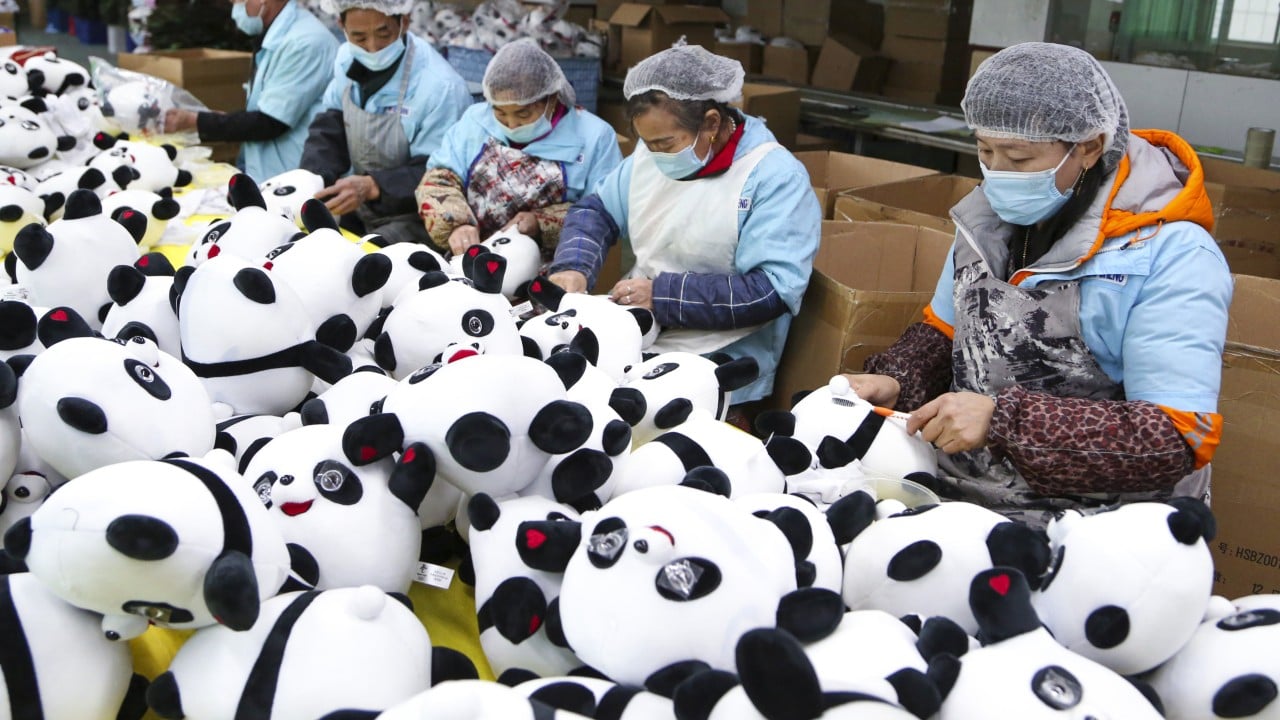
The air inside the Shenzhen assembly plant smelled of hot flux and cooling solder. It was three o'clock in the morning, and Chen Wei was tracing the jagged edge of a profit margin that had turned as thin as razor wire. On his desk sat a translated brief regarding a newly signed tariff agreement negotiated thousands of miles away, across oceans and time zones, between Washington and Beijing.
For months, politicians had traded threats like poker chips. Then came the handshakes, the solemn press conferences, and the quiet easing of punitive duties that had choked trans-Pacific shipping lanes for years. To a casual observer reading the morning papers, the crisis was over. The trade war was thawing. The prodigal manufacturing machine could finally come home.
Chen did not pack up his bags. He did not call his shipping brokers to cancel his expansion orders across the South China Sea. Instead, he stared at a ledger entry for a warehouse lease in an industrial park outside Ho Chi Minh City and smiled a tired, knowing smile.
The diplomats believed trade was a light switch. Flip it one way, the current flows back to where it started. They did not understand that once a supply chain learns how to walk on two legs, it forgets how to crawl.
To understand why Chinese factories will not abandon Southeast Asia simply because a tariff ledger gets rewritten, you have to step down from the macroeconomic podium and look at the actual grease on the factory floor. You have to trace the journey of a single lithium-ion battery pack or a molded plastic housing unit.
Years ago, the exodus began not as an ideological crusade, but as a survival mechanism. American and European buyers, squeezed by mounting import taxes on goods stamped "Made in China," delivered an ultimatum to their suppliers: find another port or lose the contract. Chen remembered the panic in his boardroom when his largest US client threatened to walk.
That panic birthed a migration. It was messy, expensive, and chaotic. Entire production lines were disassembled in Guangdong, packed into rusty containers, bounced across choppy gulfs, and reassembled in humid provinces where English and Mandarin collided with Vietnamese, Bahasa, and Thai.
In Penang, Siti stood on a freshly polished assembly floor watching automated surface-mount machines click into rhythm. She was a senior line supervisor who had spent six years helping transform a dusty patch of Malaysian rubber plantation into a humming node of precision electronics. When asked if her plant feared a sudden reconciliation between the world's two largest superpowers, she laughed softly.
"The politicians write treaties on paper," Siti said, gesturing to the multi-layered circuit boards gliding down her conveyor belt. "We build our foundations in concrete and human skill. You cannot pack a million trained hands into a suitcase and ship them back across the ocean just because a prime minister signs a document."
The core reality is that Southeast Asia stopped being a mere emergency exit years ago. What began as a defensive hedge—the infamous "China Plus One" strategy—morphed into an independent economic organism.
Consider the economics of labor and geography. China’s coastal manufacturing hubs have grown wealthy, educated, and expensive. The demographic clock has ticked loudly; birth rates have plummeted, and younger generations of workers increasingly shun the monotonous rigor of assembly lines for the service economy, digital commerce, or advanced tech sectors. Finding reliable floor labor in Shenzhen or Dongguan has become a grueling, costly endeavor.
Meanwhile, nations like Vietnam, Indonesia, and Thailand offer a different demographic reality. Millions of young, eager workers enter the labor force annually, ready to master technical trades. The wages are lower, yes, but more importantly, the talent pool is expanding rather than contracting. A tariff deal negotiated in a sterile conference room cannot alter the stark math of population pyramids.
Furthermore, the supply chains have localized. In the early days of the Southeast Asian migration, every single screw, gasket, and microchip had to be shipped in from suppliers back in mainland China. It was a fragile, expensive relay race. But time cures isolation. Local component makers sprouted around the major export hubs. Chemical suppliers, metal stampers, and packaging innovators set up shop within a fifty-mile radius of the assembly plants.
An intricate ecosystem took root. Today, a factory in Thailand can source its raw aluminum locally, its circuit boards from a neighboring facility, and its packaging from down the road. It no longer relies on a continuous umbilical cord stretching across the Taiwan Strait. Severing that relationship now would be economic suicide for the Chinese firms that spent millions building it.
Yet, a deeper psychological shift occurred alongside the physical one. Chinese manufacturing conglomerates discovered something liberating in geographic diversification. They were no longer just regional exporters; they were becoming multinational empires.
By operating production facilities across multiple ASEAN nations, these companies insulated themselves not only from American trade policy, but from domestic economic shocks, rising local rents, and environmental regulations at home. A factory in Vietnam or Indonesia became a strategic chess piece, allowing firms to pivot effortlessly depending on where demand flared or where regulations tightened.
When a trade deal alters the tariff rates, it changes the short-term cost calculus on a spreadsheet. It does not rewrite the fundamental desire for operational resilience. In a world defined by climate disruptions, political volatility, and sudden logistical bottlenecks, putting all your manufacturing eggs into a single geographic basket is viewed by modern executives as an act of corporate malpractice.
Imagine a massive cargo ship navigating a narrow, storm-tossed strait. For years, the captain had only one steering wheel and one engine. When the weather turned foul, the ship nearly foundered. Building a secondary engine in Southeast Asia was terrifying and expensive, but it gave the captain control over the vessel again. Even if the storm clouds part and the water turns glassy and calm, no sane captain disables the backup engine. They keep both running, synchronized, ready for the next squall.
This is why Chen Wei remains committed to his Vietnamese operations. The tariff deal in Washington is a welcome reprieve, a temporary lowering of the temperature in a high-stakes trade war. It puts money back into his profit margins today. But tomorrow is an entirely different country.
The factories did not move south just to dodge a tax. They moved south because the center of gravity of global manufacturing was shifting, widening, and breathing out.
As the sun began to peek over the horizon in Shenzhen, casting a pale orange glow over rows of shipping containers waiting at the port, Chen closed his ledger. His phone buzzed with a status update from his plant manager in Ho Chi Minh City. Night shift ending. Day shift beginning. The machines never stopped. They had learned too much, grown too fast, and found too many new homes to ever truly turn back.