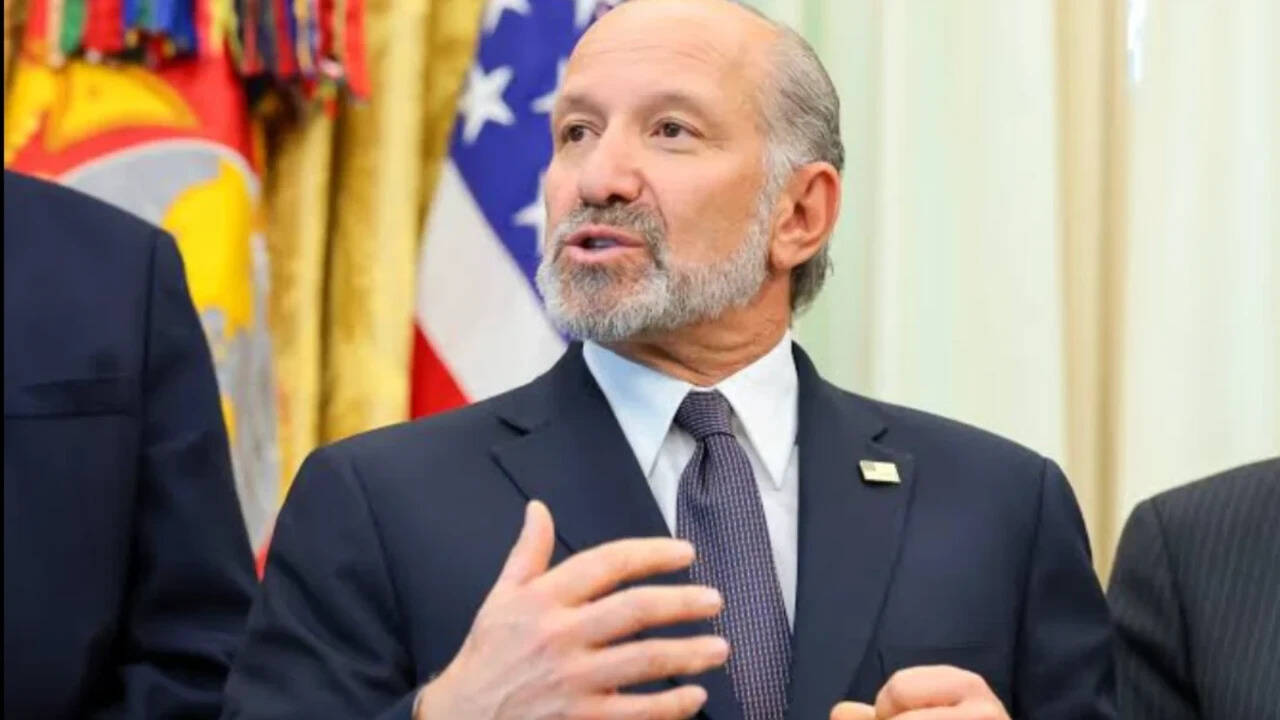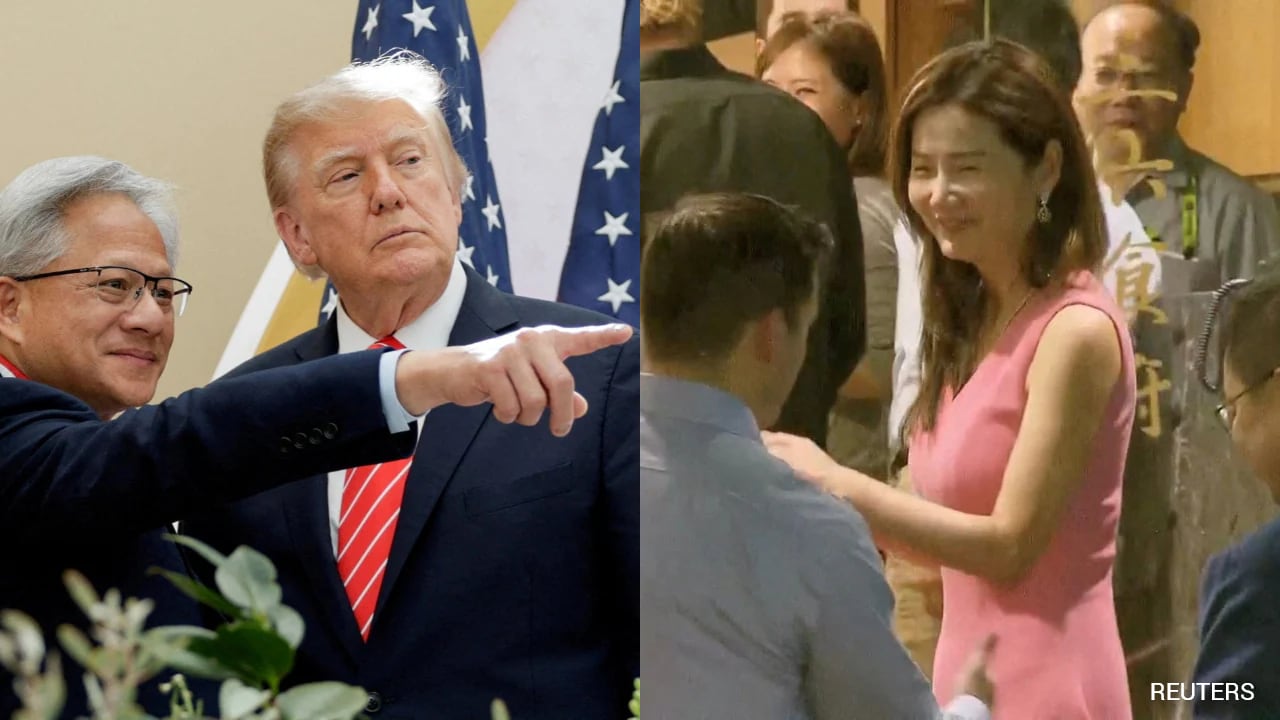
The eleven-day exile and sudden reinstatement of Nvidia CEO Jensen Huang exposes a structural collision between corporate governance, export control enforcement, and executive branch intervention. Media coverage focusing on President Donald Trump's remark that any attractive woman from China is labeled a spy misses the underlying institutional failure. The real crisis is not a tabloid scandal involving Alice Huang, a former executive at Singapore-based data center operator Megaspeed, nor is it a debate over diplomatic stereotyping. It is a live stress test of what happens when a single corporation's market capitalization becomes so intertwined with national economic output that standard fiduciary and national security guardrails fail to hold.
To understand the mechanics of this crisis, one must separate the confirmed intelligence timeline from the political theater surrounding it. Between late October and November 23, 2026, a sequence of disclosures forced Huang out of Nvidia, triggered state and federal investigations, and ultimately resulted in his return following direct intervention from the White House. Analyzing this event requires breaking down the competing incentive structures of the three primary actors: the U.S. intelligence community, Nvidia's board of directors, and the executive branch.
The Architecture of the Intelligence and Export Control Problem
Public commentary has conflated two distinct legal and security issues: personal counterintelligence vulnerability and corporate export control evasion. Treating them as a single narrative obscures how federal investigators evaluate risk.
First, there is the counterintelligence vector. U.S. intelligence agencies monitored Alice Huang's contacts for over a year prior to the public scandal. According to reporting from the Wall Street Journal and Reuters, intelligence officials documented communications between Alice Huang and an officer of China's Ministry of State Security (MSS) during the period of her extramarital relationship with Jensen Huang. Investigators also scrutinized her business partner, Kang Wei, for alleged ties to the MSS. However, a critical evidentiary boundary exists in the public record: intelligence officials have not presented proof that Alice Huang was formally tasked by Beijing to extract proprietary technical secrets or national security information from Nvidia's chief executive. In counterintelligence operations, proximity and unvetted communication channels create latent vulnerability even without proven exfiltration.
Second, and operationally more urgent for national security regulators, is the hardware diversion vector. Megaspeed, the Singaporean firm where Alice Huang served as an executive, has been under federal investigation for suspected violations of U.S. semiconductor export restrictions. Secretary of State Marco Rubio previously circulated warnings alleging that she was involved in procuring Nvidia's most advanced processors for smuggling into China. Separately, licensing data reviewed by the House Foreign Affairs Committee showed Nvidia had applied to sell over 40,000 H200 chips to a Hong Kong subsidiary of Century Litong, though Nvidia stated no shipments occurred.
When a chief executive maintains an undisclosed personal relationship with an executive from a major customer under federal investigation for chip diversion, the risk profile changes immediately. The problem is no longer merely espionage; it is governance compromise and potential regulatory blind spots regarding end-user verification.
The Three Failure Modes of Corporate Governance
Nvidia's board of directors faced an acute principal-agent problem when these allegations surfaced. Under Delaware corporate law and standard public company charters, a board's primary duty is to protect long-term shareholder value while ensuring legal compliance. Between November 11 and November 23, 2026, the board executed three contradictory maneuvers that illustrate the limits of traditional governance when confronted with an indispensable founder.
- The Delayed Disclosure Deficit: Jensen Huang acknowledged his relationship with Alice Huang and subsequently admitted to the board that he had engaged in additional extramarital affairs, including one with a direct report. Undisclosed relationships with subordinates violate standard corporate codes of conduct because they distort internal reporting lines and create acute litigation exposure. Undisclosed relationships with counterparties tied to sanctioned or investigated entities compound that failure by concealing material operational risks from the board's audit and risk committees.
- The Premature Containment Exit: On November 12, following a board meeting to discuss his ouster, Nvidia announced Huang's resignation as CEO, president, and board member, naming Chief Financial Officer Colette Kress as interim CEO. The board simultaneously initiated an internal investigation. In standard crisis management, removing the compromised executive isolates the institution from the individual's legal and reputational liabilities.
- The Political Reversal: Eleven days later, on November 23, the board reversed course, reinstating Huang to all three roles and dropping its internal investigation. The board cited satisfaction with Huang's candor and assurances from senior U.S. government officials that his return posed no national security threat. This reversal occurred after President Trump publicly urged Nvidia to bring Huang back and personally pressured board members via telephone.
This sequence demonstrates a structural breakdown in independent oversight. A board cannot credibly claim to enforce strict internal compliance standards when an external political actor can override a disciplinary removal within two weeks.
The Economics of "Too Big to Discipline"
President Trump's dismissal of the espionage warnings—characterizing the scrutiny of Alice Huang as a reflexive assumption that any attractive Chinese woman is a spy, while describing Jensen Huang as an honorable genius who must be protected—reflects a deliberate policy calculation rather than mere casual commentary.
In industrial policy, this phenomenon is best understood as Systemic Key-Person Dependency. When a single enterprise accounts for the foundational hardware layer of global artificial intelligence infrastructure and anchors a massive share of domestic equity market valuation, political leadership begins treating the firm's chief executive as a strategic national asset rather than a replaceable corporate officer.
The administration's calculus relies on three specific assumptions:
- Market Capitalization Protection: Removing a founder-CEO of Huang's stature introduces severe valuation volatility. In an economy heavily reliant on AI capital expenditure to drive growth, preserving equity stability takes precedence over strict adherence to corporate ethics norms.
- Commercial Mercantilism: As Trump explicitly stated regarding chip sales, the administration prioritizes revenue capture ("we want to make money") alongside technological dominance. Retaining a CEO who successfully navigates global commercial demand aligns with an aggressive export-revenue posture, even when it creates friction with export-control hawks inside the State Department and Congress.
- Executive Risk Absorption: By publicly floating the option of a presidential pardon ahead of Huang's scheduled testimony before the House Foreign Affairs Committee, the White House signaled that it is willing to absorb legal and political blowback to keep Huang operational.
This posture creates an immediate rift within the executive branch itself. While officials such as Deputy Attorney General Todd Blanche conveyed to Vice President JD Vance that Huang posed no security threat, Secretary of State Marco Rubio was reportedly excluded from the reinstatement discussions and caught off guard by the decision. When national security enforcement becomes subject to ad-hoc executive overrides, compliance regimes lose their deterrent power.
The Unresolved Legal and Fiduciary Tail Risks
Reinstating Huang solved Nvidia's immediate leadership vacuum, but it left the company exposed to compounding legal liabilities that executive branch backing cannot neutralize. Presidential assurances do not bind state attorneys general, federal courts, or institutional shareholders.
First, Nvidia faces active state-level enforcement. On November 19, California Attorney General Rob Bonta subpoenaed the company to determine whether advanced AI chips or confidential data reached China and whether Nvidia misled investors regarding those risks. State securities and corporate governance statutes operate independently of federal executive branch priorities. A presidential pardon applies solely to federal offenses; it offers zero protection against state enforcement actions or civil liability.
Second, shareholder derivative litigation is already underway. Institutional investors have filed suit alleging that Huang and Nvidia failed to disclose material national security and reputational risks tied to his personal relationships. In securities law, materiality is determined by whether a reasonable investor would consider the omitted fact significant in making an investment decision. Given that the disclosure of the affair directly triggered a CEO resignation and multiple government inquiries, plaintiffs have a straightforward evidentiary path to establishing materiality.
Third, legislative oversight is intensifying. Bipartisan lawmakers criticized the reinstatement, and Huang faces questioning before the House Foreign Affairs Committee. Congressional committees possess broad subpoena power over corporate communications, internal compliance audits, and licensing applications. Even if Huang avoids criminal jeopardy, public testimony detailing lapses in executive oversight or informal channels with investigated buyers will damage Nvidia's standing with enterprise customers and allied governments.
Tactical Risk Mitigation for Institutional Stakeholders
For institutional investors, corporate boards, and compliance officers operating in dual-use technology sectors, the Nvidia crisis establishes a clear operational precedent: founder indispensability does not insulate a firm from regulatory fragmentation. Organizations managing similar geopolitical and key-person exposures must implement structural safeguards rather than relying on informal political alignment.
- Decouple Executive Authority from Export Compliance: Boards must strip chief executives of unilateral override authority on customer onboarding and licensing reviews involving high-risk jurisdictions. Export control compliance officers should report directly to an independent board risk committee with mandatory whistleblowing protections.
- Enforce Mandatory Counterparty Conflict Audits: Executive disclosure policies must expand beyond direct financial holdings to include personal relationships with executives, consultants, or intermediaries affiliated with top-tier customers, suppliers, or distributors. Annual attestation must be backed by independent background verification for key commercial partners.
- Institutionalize Succession Architecture: Relying on a single irreplaceable leader creates existential valuation risk. Boards of systemically important technology firms must maintain an active, board-vetted succession slate with documented operational handoff protocols so that executive discipline does not trigger a market panic.
- Price Regulatory Divergence into Valuation Models: Analysts evaluating semiconductor and AI infrastructure equities must discount the value of informal White House support. Federal executive leniency cannot prevent state-level subpoenas, congressional sanctions, or foreign regulatory retaliation.
The strategic trajectory for Nvidia over the next two quarters is predictable. Huang will retain operational control in the near term due to White House backing, but the company will be forced to surrender governance autonomy through formal consent decrees, enhanced third-party export monitoring, and costly civil settlements to resolve state and shareholder litigation. In high-stakes geopolitics, political protection delays accountability; it rarely eliminates the bill.