The footage loops endlessly on cable news. A car boxed in, federal agents with weapons drawn, a sudden volley of gunfire, and a city erupting into rage. The consensus from the pundit class is immediate and predictable. One side screams about lawless federal stormtroopers terrorizing sanctuary streets; the other invokes gang ties and the absolute primacy of border enforcement.
Both sides are selling you a comforting fiction. They want you to view this through the flat, frictionless lens of partisan theater because nuance requires actual thought, and outrage pays the bills.
I have spent years watching urban enforcement operations turn into tactical disasters. What happened on the streets of New York was not an anomaly of bad luck or a sudden failure of training. It was the predictable mathematical outcome of a structural collision between federal mandate and municipal defiance, engineered by political incentives that reward chaos over competence.
The Myth of the Controlled Urban Operation
Every time an enforcement action goes sideways in a densely populated metro area, the official post-mortem blames rogue actors or split-second tactical errors. This is a convenient lie designed to protect institutional egos.
Urban environments like New York are fundamentally hostile to high-stress, low-signature federal enforcement. When you drop immigration agents into an environment where local police forces are politically estranged, coordination collapses. Federal agencies operate with a federal directive to execute warrants, but they lack the localized terrain mastery of beat cops who understand every alley, traffic bottleneck, and civilian density pattern.
To believe that you can quietly execute high-risk vehicle stops in Marble Hill without triggering a localized powder keg is institutional delusion. The lazy consensus is that better de-escalation training or stricter supervisory memos will fix the friction. It will not. When two sovereign levels of government treat each other as hostile occupying forces, violence is a design feature of the system, not a glitch.
The Performance of Outrage
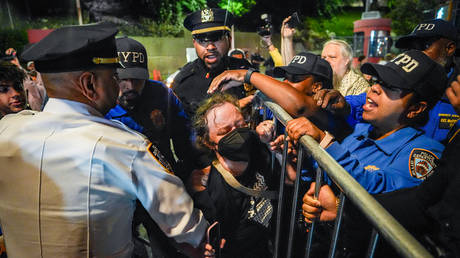
Look at the political choreography that followed the shots fired. Within hours, the narrative machinery spun into high gear. Elected officials rushed to hospital barricades, megaphones in hand, transforming a localized tactical catastrophe into a referendum on the existence of federal agencies.
This is where the public is being played. The loudest voices on both extremes do not want structural reform. A functioning, boring, bureaucratic system of immigration enforcement does not raise campaign funds. Absolute polarization does.
When mayors threaten legal action over parking lots and federal departments double down on aggressive urban sweeps, they are engaged in a mutual survival pact. The chaos justifies the budget increases for the feds; the resistance justifies the political branding for the local officials. The collateral damage—taxpayers, local communities, and the individuals caught in the crossfire—are merely extras on a cinematic stage built for cable news ratings.
Stop Asking the Wrong Question
The pundits keep asking whether local police should assist federal agents or whether federal operations should be banned from city limits entirely. This is the wrong question. It assumes that the current architecture of internal immigration enforcement is structurally sound if we just tweak the governance knobs.
It is not.
Expecting a federal agency structured for rapid, militarized detention to operate safely inside a sanctuary city of eight million people without local integration is like trying to fly a fighter jet down a crowded subway tunnel. The physics do not work. Either you accept that urban enforcement will inevitably produce chaotic, violent spectacles that tear communities apart, or you completely rethink how federal-local jurisdiction is negotiated.
The hard truth that neither Washington nor City Hall wants to admit is that accountability cannot exist in a vacuum of institutional warfare. Until local authorities and federal agencies share a unified chain of command for public safety—or until the federal government stops treating American neighborhoods as tactical battlefields—the next video of shattered car windows and screaming crowds is already in production.
Stop looking for the hero in this standoff. There are only actors playing their parts in a tragedy that everyone involved is too cowardly to actually solve.