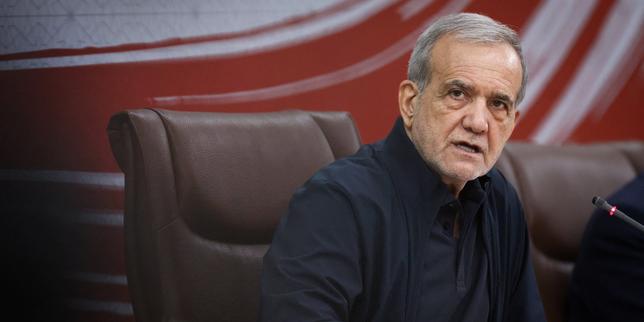
The conventional media narrative loves a neat, comforting script. When Iranian President Massoud Pezeshkian steps up to announce that Tehran is ready to wrap up hostilities with Washington because it holds the upper hand, the lazy consensus in Western newsrooms treats it as a standard face-saving maneuver. Analysts nod knowingly, sipping their lukewarm coffee, assuming a cornered regime is simply spinning a desperate military stalemate into a rhetorical triumph.
They are missing the entire chessboard.
Peeling back the standard geopolitical theater reveals a starkly different reality. Tehran is not projecting false confidence to mask structural collapse; rather, Western foreign policy establishments are clinging to obsolete containment playbooks while the actual financial and strategic ground shifts beneath their feet. Understanding the modern Middle Eastern power dynamic requires abandoning the fairy tale that economic sanctions alone can shatter a hardened state apparatus possessing deep regional asymmetric leverage.
The Myth of Absolute Isolation
For decades, the standard playbook taught in Washington think tanks relied on a singular dogma: squeeze the valve on oil exports, choke off foreign currency reserves, and watch the adversary implode from within. This model worked reasonably well in the twentieth century. It fails entirely in a multipolar twenty-first-century financial ecosystem.
When the United States treasury ramps up restrictive measures, calling them maximum pressure, official circles act as though the global market operates under a unipolar monopoly. It does not. Alternative trade corridors, non-dollar bilateral settlement systems, and heavy energy hungry neighbors ensure that absolute economic isolation is a phantom. Beijing openly rejects secondary enforcement mechanisms, telling Western envoys that pressure tactics solve nothing.
Imagine a scenario where a shopkeeper tries to boycott a supplier while three larger merchants across the street are buying up every available crate of goods. The boycott becomes a minor inconvenience rather than an existential threat. That is the exact trap Washington finds itself caught in. Pezeshkian calling for an end to open conflict is not an admission of exhaustion; it is an assertion of survival past the expiration date of Western economic coercion.
Redefining the Position of Strength
Let us clear up the core misconception regarding military parity. Mainstream commentators assume that because the United States military possesses unmatched kinetic projection capabilities, any opponent surviving an exchange must be losing. This confuses tactical dominance with strategic outcome.
Strategic strength in asymmetric conflicts is measured by endurance, supply chain resilience, and the cost inflicted on the aggressor's political stability. Iran spent decades decentralizing its defensive posture, embedding missile infrastructure deep underground, and cultivating a network of aligned actors capable of disrupting critical maritime chokepoints like the Strait of Hormuz. When infrastructure takes hits, the state absorbs the blow, adjusts, and continues functioning. Conversely, the political cost inside democratic capitals climbs with every spike in global shipping insurance rates and energy volatility.
Téhéran’s calculation is brutally pragmatic. The war has dragged on past the political timeline of Western patience. By offering a diplomatic off-ramp while explicitly framing it as a position of power, the administration forces Washington into a corner. Refuse the exit, and Washington owns an indefinite, expensive quagmire with diminishing returns. Accept it, and Tehran validates its narrative of having weathered the storm.
The Cost of Strategic Complacency
I have watched policy wonks blow millions of man-hours and billions of taxpayer dollars chasing the ghost of regime collapse through sanctions, only to marvel when the target adapts and solidifies its domestic control. This is the definition of insanity: repeating the same bureaucratic punishments while expecting a different behavioral outcome from a sovereign adversary.
The real danger is not that Iran is bluffing about its capacity to endure. The danger is that Western leadership believes its own press releases. When decision-makers mistake propaganda for analysis, they walk straight into strategic dead ends.
Stop looking at Pezeshkian's statements through the lens of surrender or weakness. Recognize them for what they are: a calculated demand to freeze a conflict that the West is no longer winning on points or endurance. Until policymakers wake up to the structural limits of unipolar leverage, they will keep fighting ghosts while the world moves on without them.