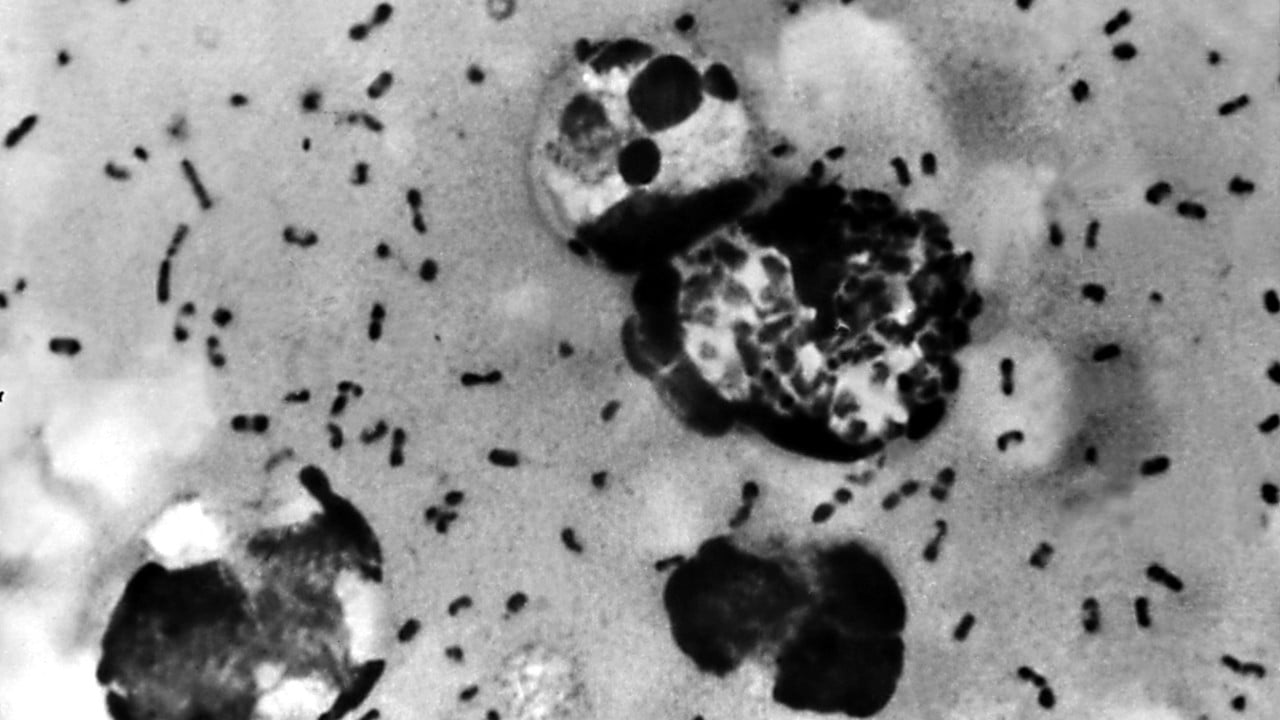
You probably think the black death started in the middle ages. Most history books tell that exact story. They point to flea-ridden rats on merchant ships in 1347, painting a picture of a sudden medieval nightmare.
That narrative is completely wrong.
Geneticists tracking ancient DNA have shattered this timeline. The plague didn't start with medieval hygiene issues. It didn't even start with the Romans or the ancient Greeks. Yersinia pestis, the deadly bacterium responsible for the bubonic plague, was hunting humans thousands of years earlier than anyone previously realized.
We now have proof that our ancestors fought this exact pathogen during the stone age. A team of international scientists isolated the oldest known strain of the plague from the remains of a 5,000-year-old hunter-gatherer. This single discovery fundamentally changes how we view human migration, the collapse of early European civilizations, and the evolution of infectious diseases.
The 5000 Year Old Patient Zero
Archaeologists uncovered the skeleton of a twenty-something man in a region of present-day Latvia. Dubbed RV 2039, this hunter-gatherer lived during the Neolithic period. He wasn't buried in a mass grave. He didn't die during a massive city-wide panic. He was buried carefully, laid to rest alongside others of his tribe near a river.
When researchers from the University of Kiel and the Max Planck Institute for the Science of Human History analyzed his teeth and bones for ancient pathogens, they found something shocking. The genetic blueprint of Yersinia pestis was everywhere in his system.
It wasn't a modern contamination. The degradation patterns of the DNA proved the bacteria belonged to the skeleton. The sheer volume of the pathogen suggests the man died from a massive blood infection. He was literally crawling with the plague when he breathed his last breath.
This shifts the timeline back by millennia. Think about that for a second. While humans were just beginning to experiment with agriculture and early metalworking, the world's most notorious killer was already perfectly capable of taking down a healthy young adult.
What the Ancient Killer Was Missing
The most fascinating part of this discovery isn't just that the bacteria existed. It's what the bacteria couldn't do yet.
Modern bubonic plague relies on a specific survival mechanism to cause mass terror. It hitches a ride in the guts of fleas. The fleas bite rats, the rats live near humans, and the disease spreads like wildfire. For this to work, Yersinia pestis needs a specific gene called ymt. This gene allows the bacteria to survive inside a flea's stomach without being digested.
When scientists mapped the genome of the Latvian hunter-gatherer's plague, they looked specifically for this gene. It wasn't there.
The 5,000-year-old strain lacked the mutation needed for flea transmission. It also lacked the genes that allow the modern variant to hide from the human immune system so effectively. This means the earliest version of the plague wasn't the hyper-contagious monster that wiped out half of Europe in the 14th century.
How did RV 2039 catch it? He likely got bit by a rodent. Perhaps a beaver or a squirrel. In the Neolithic era, hunting brought humans into constant close contact with wild animals. A single scratch or bite from an infected carrier was enough to pass the bacteria directly into the bloodstream. It was a localized danger, not a global pandemic.
Rethinking the Decline of Early Europe
For decades, historians have argued over a massive historical mystery known as the Neolithic Decline. Around 5,500 years ago, large, thriving human settlements across Europe suddenly vanished. Population sizes cratered. Villages were abandoned.
Many researchers pointed the finger at aggressive migrations of pastoralists from the Eurasian steppe. The theory was that these newcomers rode in on horses and wiped out the peaceful farming communities.
This new genetic data offers a much more nuanced explanation. The plague was already lingering in the background.
If the disease was spreading through direct animal contact, it would hit dense settlements first. Early farmers lived packed together with domesticated animals. Hygiene was minimal. Even without the flea mutation, a respiratory version of the plague could easily tear through a crowded village if the bacteria mutated slightly to spread through coughing.
Instead of a massive military invasion destroying early Europe, the invisible hand of a primitive pathogen might have done the heavy lifting. The migrant populations from the steppe didn't necessarily conquer through brute force. They might have simply walked into empty lands left behind by communities decimated by early forms of Yersinia pestis.
Why Evolutionary Biology Matters Today
Looking at old bones might feel like an academic exercise with zero relevance to modern life. That's a dangerous mindset.
Understanding how Yersinia pestis evolved from a mild, localized blood infection into a flea-borne apocalyptic threat tells us exactly how modern pathogens behave. Viruses and bacteria don't stay static. They adapt to human behavior.
The Neolithic plague took thousands of years to acquire the mutations necessary to spark a global pandemic. In our interconnected world, modern pathogens face different evolutionary pressures. We pack millions of people into mega-cities and fly across oceans in a matter of hours. The timeline for a localized virus to learn how to travel efficiently is shrinking.
Scientists studying RV 2039 showed us that a pathogen doesn't need to be highly contagious to be lethal. It just needs to find a way into the bloodstream.
Tracking the Next Ancient Threat
The discovery in Latvia proves that the dirt beneath our feet holds the real history of human suffering and survival. If you want to understand where the next health crisis might come from, you have to look at how old ones evolved.
Keep an eye on the field of paleogenomics. Researchers are constantly pulling DNA from frozen permafrost and ancient burial sites. As global temperatures shift and northern soils thaw, we will likely find even older strains of diseases we thought we understood.
Don't just read about history as a series of battles and treaties. Pay attention to the microscopic world. Read the scientific papers coming out of institutions like the Max Planck Institute. Track how ancient DNA mapping is rewriting our understanding of human migration. The real story of humanity is written in our pathogens, and we are only just beginning to decode the first few chapters. Know the past, keep an eye on genetic research, and never assume a modern disease is a modern invention.


