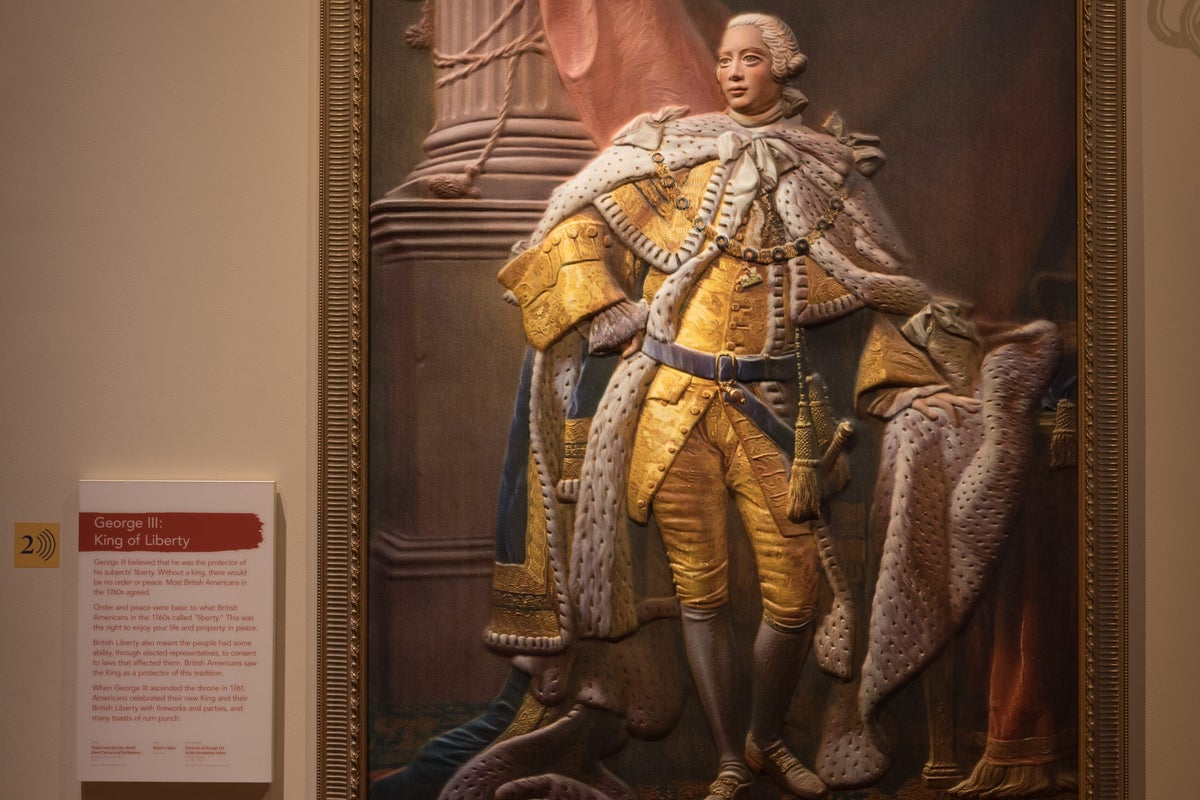
You know the story. Thomas Jefferson wrote it into the Declaration of Independence. Lin-Manuel Miranda set it to a catchy show tune. King George III is America’s ultimate villain, a tyrannical madman who sneered as he taxed your tea and sent redcoats to terrorize early American citizens.
Except that story is completely wrong. You might also find this related coverage insightful: The Sound of Silence After the Sirens Stop.
Historians are finally rewriting the script on Britain's longest-reigning king. Thanks to the massive Royal Archives digitization project at Windsor Castle, which opened up hundreds of thousands of George III’s personal papers, essays, and letters to the public, we are getting a look at the real man. He wasn't a despot. He didn't hate America. He was actually an enlightened, intensely bureaucratic leader who got stuck handling a political mess he didn't create.
If you want to understand the American Revolution, you have to stop looking at it through 1776 propaganda. The real King George III is far more interesting than the cartoon villain we created. As extensively documented in latest coverage by Associated Press, the effects are widespread.
The Myth of the American Tyrant
Walk into any American high school history class and you will hear that George III ruled with an iron fist. The Declaration of Independence literally lists 27 specific grievances against him, calling him a prince "unfit to be the ruler of a free people."
But British history shows a totally different reality. George III was a constitutional monarch. He didn't have the power to just pass laws or impose taxes on a whim. Parliament did that.
The Stamp Act, the Townshend Acts, the Tea Act? Those weren't the king's personal pet projects. They were passed by British prime ministers like George Grenville and Lord North to pay off the massive debt from the Seven Years' War. Britain spent a fortune defending the American colonies from the French. The British government thought it was only fair that the colonists chipped in for their own defense.
George III actually saw himself as a defender of the British constitution, not a destroyer of it. He believed he was protecting the rule of law. When colonists protested "no taxation without representation," George couldn't just give them seats in Parliament. The British political system didn't work that way back then, even for people living in Manchester or Birmingham.
A Monarch of the Enlightenment
The caricature of George III completely ignores his massive intellect. This wasn't a bloodthirsty warlord. He was a nerd.
He was the first British king to study science seriously. He established a personal observatory at Richmond. He loved agriculture so much that his critics mocked him with the nickname "Farmer George." But he wore that title proudly. He wrote articles for agricultural journals under a pen name, trying to find better ways to grow crops and feed his people.
Look at his personal library. He collected over 65,000 books. That collection eventually formed the foundation of the British Library. He funded the Royal Academy of Arts. He spent his own money to buy astronomical instruments and clocks. He was a man of the Enlightenment, deeply interested in progress, structure, and knowledge.
His personal papers reveal an astonishingly meticulous mind. He wrote essays on music, cataloged his own coins, and kept detailed notes on military tactics. He wasn't a madman screaming in a corner during the American Revolution. He was a middle manager trying to organize an empire from a desk in London.
The Tragic Reality of His Illness
We can't talk about George III without talking about his mental health. For centuries, people assumed he lost the colonies because he was insane.
Modern medical historians view his condition differently. He suffered his first brief bout of illness in 1765, but his major, prolonged breakdowns didn't happen until 1788—years after the American Revolution ended. He was completely sane during the war.
When the illness did hit, it was devastating. He suffered from severe physical pain, visual hallucinations, and periods of continuous, manic talking. For a long time, researchers blamed porphyria, a genetic blood disorder. Today, many doctors and historians believe he actually suffered from bipolar disorder or severe chronic mania, exacerbated by the intense stress of his job.
The treatment he received was horrific. His doctors used straightjackets. They blistered his skin with hot cups. They isolated him from his family. It wasn't madness that drove his policies; it was a tragic medical condition that made his later years a living hell. Yet, despite his suffering, he remained deeply dedicated to his duties whenever he was lucid.
How He Actually Reacted to Losing America
If George III was the vengeful monster of American mythology, you would expect him to be bitter about losing the colonies. He wasn't.
His private writings show he was devastated by the war, but mostly because he hated seeing British subjects killing each other. Once the Treaty of Paris was signed in 1783, he accepted the outcome with incredible grace.
The real test came in 1785. John Adams arrived in London as the first official American minister to Great Britain. It could have been an incredibly tense, awkward meeting. Instead, George III welcomed Adams with dignity.
The king told Adams that he was the last to consent to the separation, but now that it was done, he would be the first to meet the friendship of the United States as an independent power. He explicitly stated that he wanted to build a strong relationship based on shared language and commerce. That is not the behavior of a tyrant. It is the behavior of a statesman.
Rewriting history for yourself
It is easy to blame a single guy for a massive historical shift. Thomas Jefferson knew that an abstract fight against a distant Parliament wouldn't rally the public. Americans needed a face for the enemy, and George III fit the bill.
If you want to get past the propaganda and see the real history, stop relying on old textbooks. You can actually read his digitized personal letters through the Georgian Papers Programme online. Look at his actual handwriting. Read his notes on government budget reports. You will quickly see a man who was deeply flawed, overwhelmed, but ultimately trying his best to do his duty.
The next time you watch a movie or play that turns George III into a comedic villain, remember the guy who loved farming, built a massive library, and greeted his former enemies with open arms. History is always messier than the myths we create.