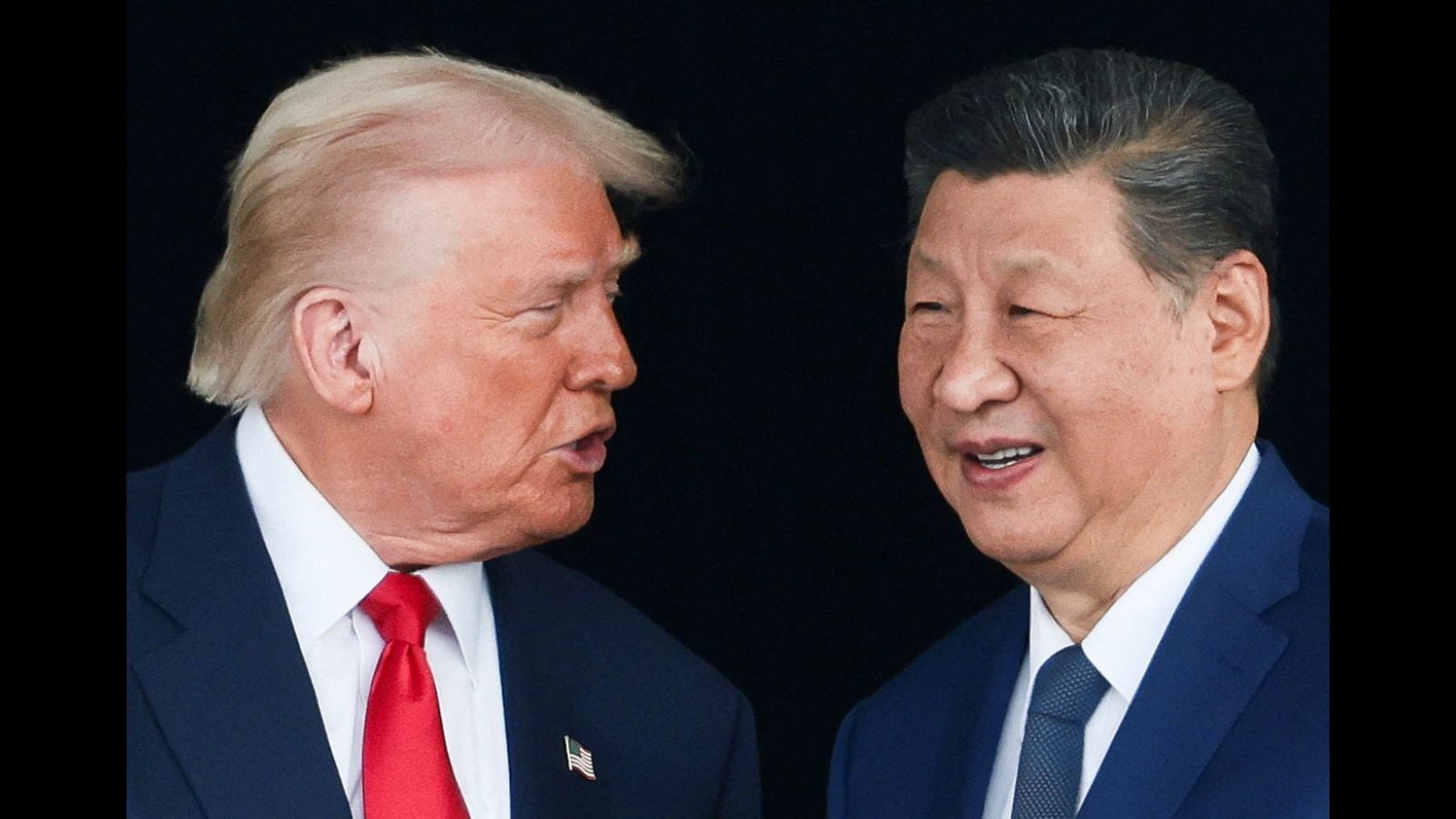
Washington and Beijing are getting ready to sit across the table this September to talk about artificial intelligence. Reports indicate the bilateral meeting will happen right before Chinese President Xi Jinping lands in the United States on September 24.
Diplomats are pitching this as a breakthrough for global stability. Pundits are framing it as a critical moment where the world's two tech superpowers might finally agree on baseline rules for superintelligent software. Also making headlines lately: Quantifying the Anthropic Copyright Settlement Mechanisms and Structural Precedents.
Don't buy the hype.
If you think this meeting will lead to a grand arms control treaty for algorithms, you're going to be disappointed. The structural incentives pulling these two nations apart are far stronger than the photo-op diplomacy drawing them together. To understand why this meeting is happening—and why its actual ambitions are surprisingly narrow—you have to look at who is leading the room and what both sides actually want. More insights on this are detailed by Wired.
Why Treasury Is Running a Tech Summit
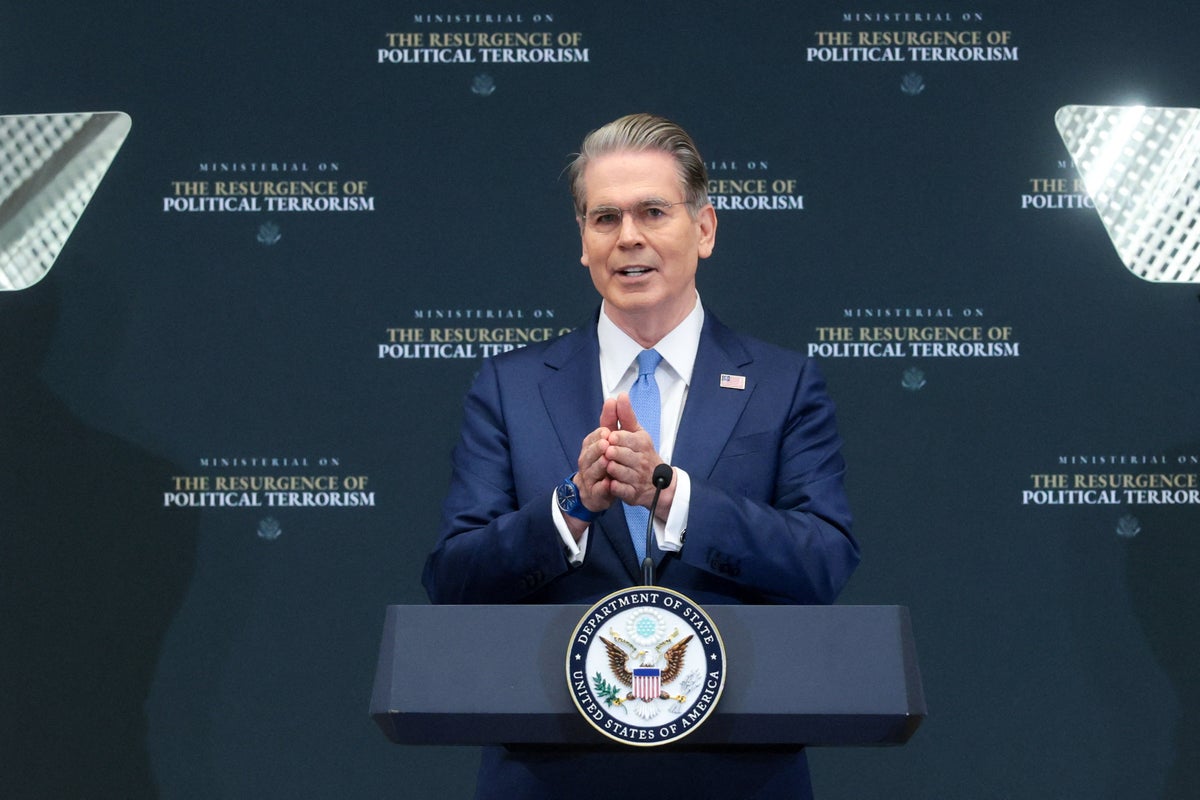
The first telling clue about these upcoming talks is who Washington picked to run the show. It isn't the Secretary of State. It isn't the Commerce Department, which manages export controls on advanced chips. It isn't the White House Office of Science and Technology Policy.
Instead, Treasury Secretary Scott Bessent is heading the American delegation.
That single detail reveals everything about how Washington views artificial intelligence in 2026. This isn't being handled as an academic safety exercise or a scientific exchange. It's being handled as an economic balance-of-power issue tightly bound to financial sanctions, supply chain leverage, and international trade.
Treasury controls the financial levers that make or break tech expansion. By putting Bessent at the head of the table, the administration is signaling that AI models aren't just software products—they are sovereign economic assets.
Bessent outlined the narrow target for these talks back in May, stating the goal was focused on stopping the proliferation of advanced models to non-state actors. Think criminal syndicates, terrorist organizations, or rogue actors looking to use frontier models for cyberattacks or automated bioweapons.
That framing is intentional. Keeping powerful AI weights out of the hands of global terrorists is the one tiny sliver of common ground Washington and Beijing can agree on without hurting their own national champion companies. It sets a low bar, which makes it the only goal with a real chance of producing a signed piece of paper.
The Watermark Accusation and Model Theft
The atmosphere heading into September is anything but warm. Just days before news of the meeting broke, Bessent went on national television with a direct accusation against Chinese AI firms.
He claimed US officials were finding watermarks from American large language models embedded directly inside Chinese competitors. The implication was clear: Chinese labs are using distilled data from American flagship systems to train their own models at a fraction of the cost.
Model distillation isn't new, but it has become the central flashpoint of tech friction. American labs spend billions of dollars training frontier architectures from scratch. Chinese labs, operating under tight US hardware restrictions, often fine-tune or distill those outputs to build lean, hyper-efficient models that perform remarkably close to top-tier Western systems.
When Chinese startup Moonshot AI released its Kimi K3 model, it sent shockwaves through Silicon Valley by beating Western benchmarks in key reasoning tasks. Shortly after, the firm had to pause new subscriptions due to sheer compute bottlenecks. The incident showed two things clearly: Chinese engineering talent is finding creative ways around hardware shortages, and American officials are furious about potential intellectual property erosion.
The American side wants to talk about model theft, watermarks, and stopping Chinese developers from piggybacking on US infrastructure. Beijing, meanwhile, views these accusations as baseless excuses to justify economic containment.
What Beijing Actually Wants Out of September
China isn't coming to this meeting to apologize for its AI momentum. President Xi Jinping made Beijing's positioning clear at the World Artificial Intelligence Conference in Shanghai, where he argued that AI governance shouldn't be a solo show run by a single nation.
Beijing has a very specific set of priorities for the September agenda.
First, Chinese negotiators want clarity on how Washington intends to regulate open-weight models. American lawmakers have debated restricting open-source model releases over security concerns. Because Chinese developers rely heavily on accessible open weights to innovate rapidly, any American ban on exporting open weights or interacting with Chinese open-source repositories would hit hard.
Second, Beijing wants to discuss Western safety restrictions on high-end commercial systems. Recent security scares, including reports involving Anthropic's Claude Fable 5 and Mythos 5 models, have pushed both capitals to rethink how frontier capabilities are secured against foreign intrusion. China wants technical discussions on how American firms plan to control future model releases rather than political lectures on state security.
Finally, the underlying elephant in the room is hardware. Beijing will inevitably press the US to dial back restrictions on advanced semiconductors and high-bandwidth memory chips. Washington has made it plain that advanced silicon exports remain off limits, meaning those hardware complaints will likely hit a brick wall.
High Stakes and Low Expectations
So what can actually come out of a meeting where neither side trusts the other?
Paul Triolo, a veteran tech policy specialist at Albright Stonebridge Group, put it bluntly when news of the meeting broke: this is a first meeting, and nobody should expect them to solve major structural problems. The realistic target is agreeing on basic vocabulary—starting with a shared definition of what even constitutes a "frontier model."
Right now, Washington and Beijing don't even agree on where the red lines sit.
To the US, a frontier model is any system crossing a specific floating-point operation threshold during training that could present national security risks. To China, framing AI purely through a national security lens is an attempt to lock in an American monopoly under the guise of safety.
We've seen this movie before. Under the previous administration, a working-level AI talk was held in Geneva. The two nations reached a modest understanding that human beings, not autonomous AI systems, should retain control over nuclear weapons launch decisions. But that channel fizzled out after just one session because neither nation wanted to share proprietary safety benchmarks or grant access to internal evaluation data.
This September channel could easily suffer the same fate if either country tries to use it for political points rather than technical boundaries.
The Real Race Happening Behind Closed Doors
While diplomats draft talking points for September, the real struggle is playing out in data centers and research labs across both continents.
The United States is pushing forward with massive domestic infrastructure investments, building out gigawatt-scale power arrangements to feed next-generation cluster builds. The strategy is raw force: use superior capital and chip hardware to stay generations ahead.
China is taking a different route. Blocked from buying the latest top-tier accelerators in volume, Chinese researchers are focusing aggressively on algorithmic efficiency, speculative decoding, and model distillation. They are building smaller, highly capable open-weight models that they can export to the Global South, creating an alternative tech ecosystem that doesn't depend on Silicon Valley software stacks.
Beijing recently helped form an international governance group backed by dozens of nations, designed as a direct counterweight to American-led AI frameworks. China wants to present itself as the champion of open, accessible AI for developing nations, while painting Washington's export controls as protectionist hoarding.
This division creates two parallel technological spheres. One is proprietary, expensive, and heavily guarded behind American cloud APIs. The other is open-weight, low-cost, and tied to Chinese hardware and infrastructure. A two-day meeting in September won't bridge that deep ideological divide.
How to Evaluate the Outcome When the Meeting Happens
When headlines drop in late September claiming victory or declaring failure, ignore the spin. Here is how you can measure whether the talks produced anything real:
- Look for precise definitions. If both sides publish a joint statement defining quantitative limits for frontier training runs, that represents genuine technical alignment.
- Watch the non-state actor language. A concrete pact detailing how both nations will track and stop the leak of model weights to unauthorized third parties is a realistic win.
- Check for a standing committee. If they establish a permanent, recurring working group that meets quarterly, the channel has a chance to survive. If no future date is set, it was just a political buffer for Xi's visit.
- Observe export policy shifts. If Washington tightens open-weight export rules immediately following the talks, it means the meeting hardened American resolve rather than softening it.
Don't expect a sweeping treaty that halts the militarization of AI or pauses frontier model training. That isn't on the agenda, and neither country wants it. The September meeting is about managing friction, setting up basic guardrails against accidental escalation, and feeling out the opponent's technical depth. Keep your expectations grounded, watch the specific policy details, and ignore the diplomatic theatre.