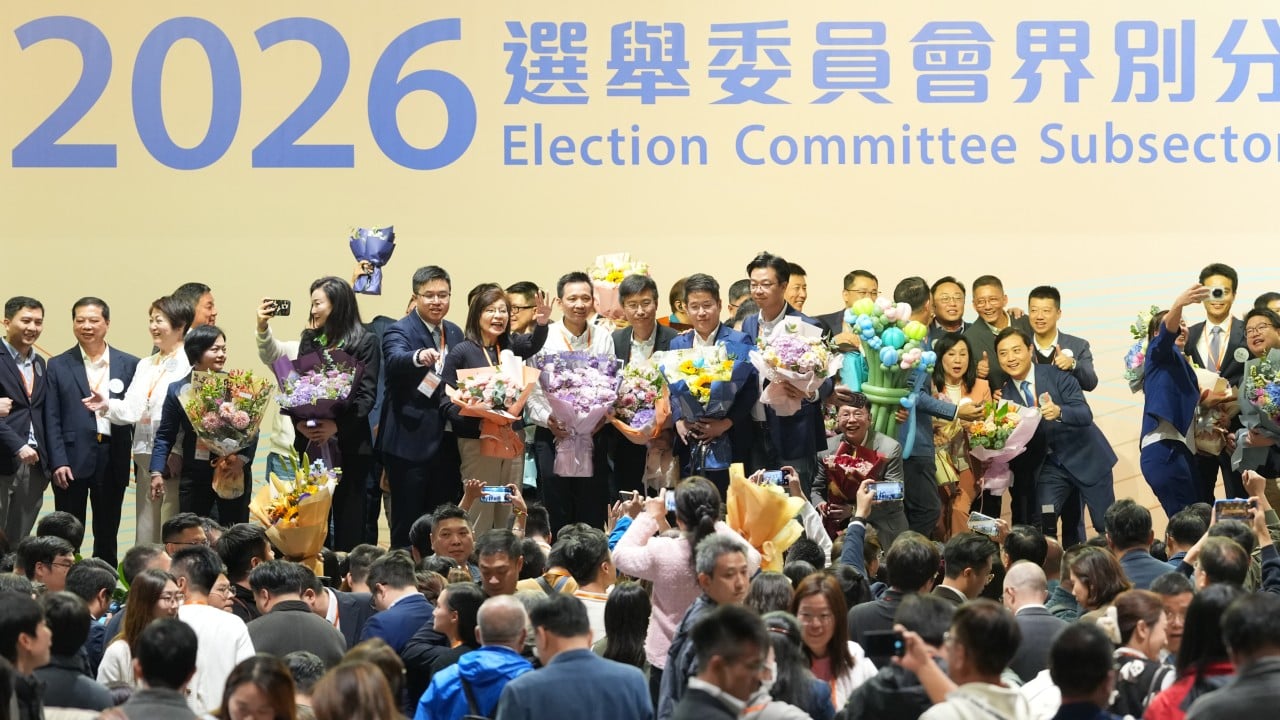
Every major wire service just ran the exact same lazy script. Beijing celebrates a "patriots-only" Election Committee poll in Hong Kong. Western correspondents copy-paste talking points about the death of pluralism. Local state outlets trumpet a triumph of stability. Both sides are reading a press release instead of reading the balance sheet.
Stop looking at the ballot boxes. Look at the capitalization tables.
If you treat Hong Kong's revamped Election Committee as a simple ideological purge, you are missing the actual structural overhaul taking place inside Asia's premier financial hub. Having spent fifteen years advising cross-border institutional funds and family offices across the Pearl River Delta, I have watched sovereign risk analysts burn millions of dollars mispricing Hong Kong political headlines. They treat Beijing's electoral engineering like an emotional crusade. It is not. It is a cold, calculated corporate restructuring designed to break the stranglehold of Hong Kong's entrenched property cartels while locking in administrative predictability.
The mainstream coverage fails because it asks whether Hong Kong's electoral system is becoming more or less democratic. That question was settled years ago. The only question that matters for capital, governance, and regional power is who holds veto power over the city's economic bottlenecks—and why Beijing just diluted its oldest local allies to get it.
The Myth of the Monolithic Loyalist Bloc
Lazy journalism paints the 1,500-seat Election Committee as a uniform wall of rubber-stamping yes-men. That framing is factually illiterate.
Under the pre-2021 framework, Hong Kong's political economy was functionally held hostage by a tiny circle of hyper-wealthy real estate developers and traditional business tycoons. For decades, these conglomerates controlled the functional constituencies and dominated the subsectors that picked the Chief Executive. Beijing tolerated this arrangement under the assumption that keeping the tycoons rich kept the city stable.
That assumption collapsed in 2019. Beijing realized that a governing model reliant on property oligarchs had priced an entire generation out of housing, choked off industrial diversification, and left the administration paralyzed whenever land reform came up for a vote.
When Beijing overhauled Annex I of the Basic Law, it did not merely screen out opposition activists through the Candidate Eligibility Review Committee. It systematically fractured the old business establishment's monopoly inside the Election Committee.
Look at the mechanical changes to the subsectors:
- Elimination of corporate voting in key tiers: Beijing stripped away thousands of corporate votes held by shell companies controlled by legacy conglomerates, replacing them with individual votes or state-aligned association seats.
- Creation of the Fifth Sector: A brand-new 300-seat bloc was carved out specifically for Hong Kong deputies to the National People's Congress, members of the Chinese People's Political Consultative Conference, and representatives of national organizations.
- Dilution of the Commercial and Industrial subsectors: Traditional tycoon strongholds lost their decisive swing-vote status. They can no longer threaten to withhold nominations to extract land concessions or regulatory favors from the Chief Executive.
Calling this a simple "patriots-only" victory misses the bloodletting happening behind closed doors. Beijing used national security vetting to clear the streets, then used subsector redistricting to defang the local oligarchs who thought they owned the boardroom.
Why High Turnout Metrics Are a Distraction
Competitor articles love to obsess over voter turnout percentages in these subsector polls—either bragging about near-universal participation among eligible electors or mocking the tiny size of the electorate itself. Both obsessions are amateur hour.
An Election Committee subsector poll is not a plebiscite. It is a shareholder proxy vote.
In institutional corporate governance, nobody measures the legitimacy of a board restructuring by asking how many retail pedestrians walked past the building. You measure it by tracking which institutional blocks gained voting shares and which ones got diluted. When state media hails a 90-percent-plus turnout among a curated pool of roughly 4,000 to 8,000 registered subsector voters, they are signaling internal discipline to mainland cadres. When Western commentators sneer at the small denominator, they are grading a closed corporate board election using the rubric of a municipal town hall.
Consider how the nomination mechanics actually work now. To run for Chief Executive, a candidate must secure at least 188 nominations, including a minimum of 15 from each of the five sectors. That 15-per-sector floor is the real story. It guarantees that no single faction—not the old-guard Hong Kong real estate dynasties, not the local civil service bureaucracy, and not even a rogue provincial business clique—can field a candidate without explicit clearance from the Fifth Sector's national representatives.
I have sat in boardrooms in Central where seasoned managing directors still operate under the illusion that local business chambers can lobby the Chief Executive's office the way they did in 2012. They cannot. The transmission belt of influence has been rewired straight through Shenzhen and Beijing.
Dismantling the Wrong Questions About Hong Kong Governance
When institutional investors, executives, and policy watchers search for what the Election Committee results mean, they routinely fall into three analytical traps.
Does the patriots-only system guarantee policy competence?
No. And anyone telling you otherwise is selling propaganda.
Removing legislative filibusters and street protests eliminates political gridlock, which is a massive operational advantage for passing budgets and infrastructure bills. However, eliminating opposition also eliminates early-warning systems. When every legislator and committee member owes their seat to ideological vetting and institutional patronage, bureaucratic groupthink becomes the primary operational risk.
Without adversarial scrutiny in the Legislative Council or critical pressure from independent civic groups, bad policy proposals sail through unchallenged until they hit market reality. You trade the risk of chaotic paralysis for the risk of unforced administrative error. Smart operators in Hong Kong do not assume the government will always get policy right; they assume the government will execute whatever policy it chooses with zero domestic friction.
Will Hong Kong lose its status as an international financial center?
Stop confusing Western electoral democracy with common-law commercial predictability. Capital does not require universal suffrage to compound; it requires enforceable contracts, an independent commercial judiciary, low taxes, and unrestricted capital flows.
Singapore proved this decades ago. Dubai is proving it right now.
Hong Kong's currency peg to the US dollar remains intact. Its common-law courts still adjudicate complex cross-border commercial disputes with high predictability. What has changed is the city's strategic mandate. Hong Kong is no longer positioning itself as an agnostic bridge between the West and China. It is retooling as the offshore capital-raising, wealth-management, and renminbi-clearing engine for the Greater Bay Area and Belt and Road economies.
If your business model relies on Western sovereign pension funds allocating blind capital into Hong Kong equities without geopolitical compliance hurdles, you are facing structural headwinds. If your business model involves managing private Asian family wealth, structuring mainland outbound corporate debt, or listing Chinese tech and biotech firms blocked from New York, the streamlined governance structure actually reduces your execution risk.
Are local Hong Kong tycoons completely finished?
Not finished, just domesticated.
Imagine a scenario where a major Hong Kong developer attempts to hoard agricultural land in the New Territories for another decade, waiting for government infrastructure to inflate its valuation before selling. Under the old Election Committee math, that developer controlled enough subsector votes to make the Chief Executive think twice about invoking the Lands Resumption Ordinance.
Under the current math, that leverage is gone. The administration can seize underutilized land for public housing or the Northern Metropolis tech hub with minimal political blowback from the business elite. The tycoons still hold massive balance sheets and prime commercial real estate, so they remain essential partners for capital deployment. They have simply been demoted from co-rulers of the territory to heavily regulated contractors.
The Real Power Map Inside the New Committee
To navigate Hong Kong's commercial and regulatory environment today, you have to stop reading political commentary and start mapping institutional incentives. The table below breaks down how the power centers shifted between the pre-2021 system and the current architecture.
| Dimension | Legacy System (Pre-2021) | Current Architecture | Operational Reality for Business |
|---|---|---|---|
| Primary Veto Holders | Local property conglomerates and fragmented functional constituencies | The Fifth Sector (NPC/CPPCC delegates) and Beijing's Liaison Office | Lobbying local trade associations no longer blocks unfavorable regulation. |
| Policy Execution Speed | Slow; bogged down by legislative filibusters and street opposition | Rapid; executive-led bills pass within weeks | Regulatory changes hit the market fast; compliance timelines are shorter. |
| Land and Housing Policy | Driven by developer margins and restricted land supply | Driven by state industrial goals and public housing targets | Land banking is dead; participation in Northern Metropolis projects is expected. |
| Legislative Scrutiny | Adversarial, theatrical, and publicly confrontational | Internal, technocratic, and behind closed doors | Public hearings are formalities; real policy shaping happens in pre-consultation briefings. |
| Capital Alignment | Balanced between Western institutional capital and mainland flows | Heavily tilted toward mainland state enterprises and Asian private wealth | Alignment with national five-year plans determines access to state-backed deals. |
How Operators Should Actually Play This Environment
If you run a business, manage capital, or lead regional strategy in Hong Kong, clinging to outdated political nostalgia will destroy your returns. Equally dangerous is swallowing state triumphalism whole and ignoring real compliance friction.
- Audit your government relations playbook immediately. Stop paying hefty retainers to legacy local PR firms whose primary asset is drinking buddies in traditional Hong Kong business chambers. Shift your institutional engagement toward mainland-linked industry associations, Greater Bay Area municipal liaisons, and technocratic advisory bodies tied to the Fifth Sector.
- Align capital allocation with state industrial policy. In a system where the Election Committee and Legislative Council answer to national strategic priorities, fighting the tape is futile. Sectors tied to cross-border fintech, green finance, biotech commercialization, and Northern Metropolis infrastructure receive fast-tracked regulatory approvals and subsidized land grants. Legacy rent-seeking sectors face shrinking margins and rising regulatory scrutiny.
- Price in execution speed, not gridlock. In the old Hong Kong, you had years to prepare for tax tweaks, environmental mandates, or labor rule changes because the legislature moved at a glacial pace. Today, once the Chief Executive's Policy Address announces an initiative, the votes are already locked in. Build agile compliance systems that can absorb regulatory shifts in months rather than years.
- Separate geopolitical headlines from commercial law. Western media will continue to publish breathless obituaries for Hong Kong every time a political milestone passes. Use those headline-driven selloffs to acquire undervalued commercial assets or talent, provided your cash flows are insulated from US-China sanctions crossfire. Never confuse a loud newspaper editorial with an actual change to the Inland Revenue Ordinance.
The Downside Nobody in Beijing Will Admit
Every concentrated governance model carries a built-in structural flaw, and pretending otherwise is bad risk management.
By purging genuine political opposition and subordinating the local business elite, Beijing solved Hong Kong's short-term governability crisis. Yet in doing so, it stripped away the city's organic feedback loops. Great financial centers thrive on messy, unfiltered information flow—the ability of market participants, journalists, and civic critics to call out flawed assumptions before capital is misallocated.
When loyalty becomes the primary filter for public office, subordinates inevitably tell superiors what they want to hear. Bad economic data gets massaged. Unpopular social policies fester quietly instead of venting through controlled political channels. Capital flight becomes silent—executed via quiet wire transfers to Singapore or Tokyo rather than noisy protests on Nathan Road.
The greatest threat to Hong Kong's future is no longer street chaos or legislative paralysis. It is the quiet complacency of an administration surrounded exclusively by people who passed the same test.
Beijing got the absolute control it demanded, and the wire services got their predictable headlines. Now comes the hard part that no Election Committee can vote into existence—proving that a command-and-control political machine can still nurture a world-class free market.