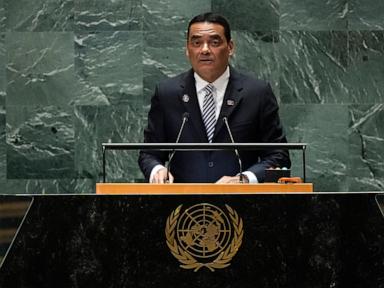
Every few months, a diplomat steps up to a mahogany podium in New York, delivers a blistering, highly rehearsed retort to an adversary, and the internet loses its collective mind. Social media algorithms choke on the clips. Pundits foam at the mouth about historic burns and masterclasses in geopolitical dominance. It feels good. It scratches an itch for national pride.
It is also an absolute waste of air.
The lazy consensus in international relations coverage treats these floor speeches as actual battlefields where wars of words alter the balance of power. If an Indian diplomat issues a sharp reply to Pakistan at the United Nations General Assembly, domestic media treats it like a knockout punch in a heavyweight title fight. The assumption is that verbal aggression moves the needle, shifts alliances, or forces a rogue state to change its calculus.
This view is naive to the point of malpractice.
I have spent enough time tracking multilateral friction points to know how the sausage is actually made. The UN General Assembly hall is not a legislature. It is a theatre. The microphones are live, but the audience that matters is sitting thousands of miles away in living rooms and war rooms, eating popcorn while their respective governments score cheap domestic points. When a delegate fires off a stinging rebuke, they are not negotiating peace. They are playing to the local evening news cycle.
The Economics of Performative Rage
Let us look at the structural mechanics of these exchanges.
Diplomacy in closed rooms is boring, transactional, and effective. It involves trade quotas, back-channel intelligence sharing, border de-escalation protocols, and quiet compromises brokered by intermediaries who despise the spotlight. That work happens behind closed doors because compromise is politically toxic in democratic and hybrid regimes alike. No leader wins an election by telling voters they made a quiet, sensible concession on a disputed territory.
Public diplomacy, by contrast, is high-octane political adrenaline.
When New Delhi or Islamabad takes the microphone at Turtle Bay, the primary objective is domestic inoculation. If a government is facing economic headwinds, domestic dissent, or election fatigue, nothing rallies a fractured populace faster than an external bogeyman. A sharp reply serves a dual purpose. It satisfies the domestic hunger for strength and boxes the opposition into a corner where criticizing the government looks like treason.
To pretend this changes geopolitical reality is to misunderstand the architecture of global power. The UN Security Council dictates realpolitik through vetoes and military backing. The General Assembly dictates nothing through resolutions. It is a glorified debating society with expensive translation headphones.
Why Sharp Replies Change Zero Borders
Consider what happens the day after a viral diplomatic takedown.
Does the Line of Control shift an inch? Do cross-border infiltration numbers drop? Does trade resume? Does the Financial Action Task Force alter its ratings based on a snappy one-liner about state-sponsored terror?
Of course not.
Borders are maintained by artillery, economic leverage, supply chains, and intelligence assets. They are not erased by sick burns or well-timed references to international law. Treaties are broken and honored based on national interest, not because someone got humiliated on live television.
When analysts treat these verbal duels as turning points, they commit a fundamental error of scale. They mistake the noise for the engine. A brilliant speech can generate millions of impressions on digital platforms, but impressions do not alter nuclear deterrence. They do not feed impoverished citizens or fix fractured healthcare systems. They are political empty calories, consumed voraciously and forgotten by Tuesday.
The Cost of the Spectacle
The real danger of this endless cycle of rhetorical escalation is that it hardens the psychological arteries of both populations.
Every time a diplomat plays to the gallery with an aggressive retort, the space for actual, quiet diplomacy shrinks. Leaders become prisoners of their own rhetoric. If you spend months telling your domestic audience that your neighbor is an irredeemable pariah and that you will never yield an inch of moral high ground, you cannot turn around and negotiate a pragmatic water-sharing agreement or a ceasefire without facing a domestic backlash.
You trap yourself in your own performative cage.
Real statecraft requires an uncomfortable degree of ambiguity and a stomach for unglamorous compromise. It requires talking to people you despise in rooms where no cameras are allowed. It demands that leaders care more about long-term stability than about trending on social media platforms before breakfast.
The next time a diplomat delivers a fiery speech that leaves the internet cheering, do not ask how hard they hit.
Ask what problem it solved.
Usually, the answer is none. It only secured another week of distraction.