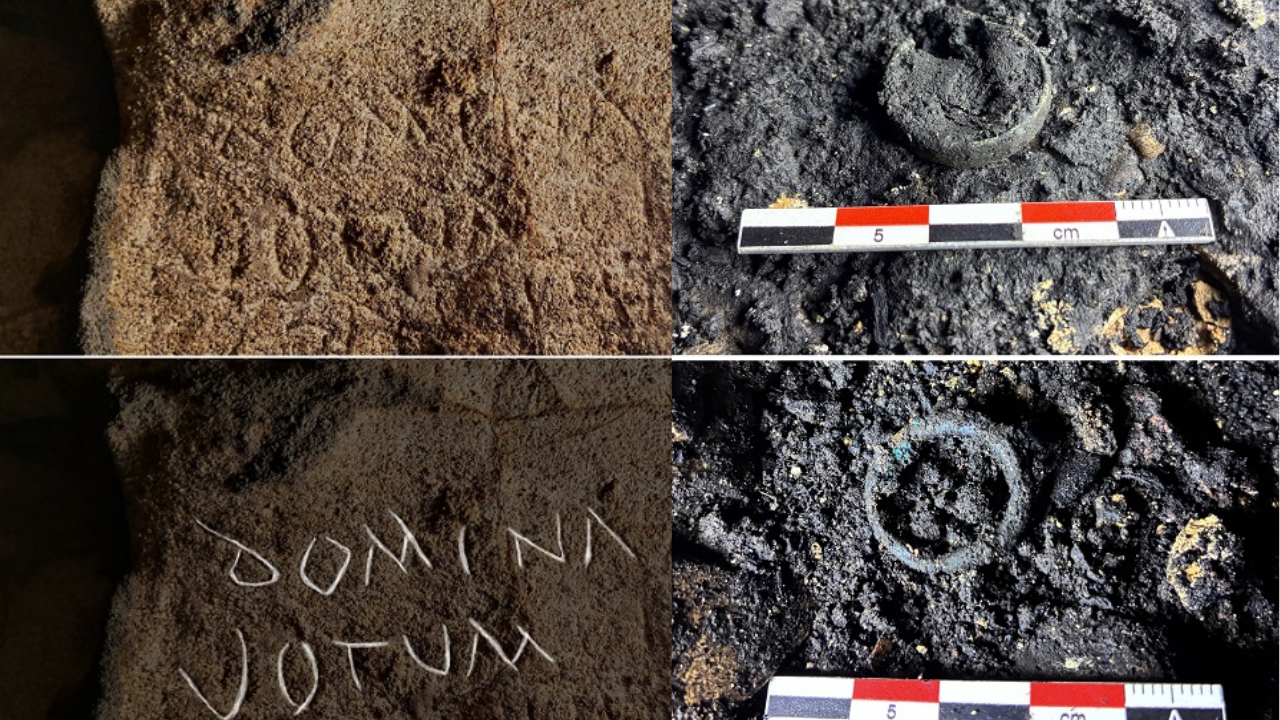
Archaeologists love a good mystery. Give them a dark hole in the ground, a handful of scratched stones, and a dead local deity, and they will immediately construct an elaborate fantasy about ancient female empowerment, secret religious cults, and esoteric sisterhoods.
The media ran wild with the discovery of more than 120 inscriptions hewn by Roman women inside a hidden cave in Spain. The lazy consensus hit the wire services within hours. Academics lined up on morning talk shows to declare the site a feminist sanctuary, a subterranean temple where marginalized women found a voice outside the patriarchal confines of the Roman Empire.
It is a comforting narrative for the modern internet. It is also complete nonsense.
I have spent decades digging through primary sources, standing in damp Iberian karst formations, and watching researchers project modern identity politics onto ancient material culture. We desperately want the past to look like a progressive TED Talk. When we find evidence of women writing their names on walls, we invent a romantic resistance movement.
The reality is far more mundane, far more transactional, and infinitely more Roman.
The Myth of the Secret Sisterhood
Let us strip away the romantic gloss and look at the hard data. The cave inscriptions in question are largely personal names, scratched into limestone surfaces with rudimentary tools. In any other context, graffiti of names on a wall is interpreted as vandalism, tally marks, or standard travel documentation. But because the names belong to women, and because the site involves a local deity, the interpretation shifts to ritual devotion and clandestine spiritual liberation.
This is sloppy logic.
Roman religion was not a collection of safe spaces. It was an intensely contractual, bureaucratic, and highly transactional system of state and domestic management. Romans did not go to a cave to find their inner voice. They went to square accounts with supernatural forces.
When a Roman woman carved her name into a wall, she was not writing a feminist manifesto. She was filing a receipt.
To understand why, you have to abandon the idea that ancient women lived in a state of permanent, helpless subjugation punctuated only by secret cave parties. Roman matrons controlled vast amounts of property, managed household slaves, directed family finances, and operated with a degree of economic independence that would shock modern observers who rely entirely on simplified textbook summaries.
They did not need a hidden cave to feel powerful. They had civil law, dowry protections, and real estate.
What the Academics Missed About Votive Epigraphy
Let us define our terms. Votive epigraphy is the practice of dedicating inscriptions to a deity in fulfillment of a vow. You ask the god for something—health, safe childbirth, the return of a merchant ship, the defeat of a rival—and in exchange, you promise an offering. Once the crisis passes, you pay up.
In traditional Roman religion, these transactions were public affairs. You set up a marble altar in the forum or a bronze plaque in a temple. It was status signaling. It was public relations.
So why take a hammer and chisel into a cramped, dark, miserable cave in Spain?
The answer lies not in spiritual liberation, but in social exclusion and religious specialization. Certain regional deities, particularly indigenous Iberian earth and water spirits absorbed into the Roman pantheon, operated outside the official state cults managed by male magistrates. These local numina dealt with specific, high-risk domains: fertility, infantile mortality, and agricultural blight.
These were domains where elite Roman men feared to tread or simply did not care to look. Childbirth and infant survival were high-stakes, terrifying realities for Roman women. Mortality rates were staggering. If your child had a fever, you did not wait for the pontifex maximus to hold a state ritual. You went to the local specialist.
The cave was not a feminist clubhouse. It was an emergency room.
The Transactional Reality of Ancient Faith
Imagine a scenario where a wealthy elite woman from a nearby provincial villa travels to this rural cave. She is facing a high-risk pregnancy or dealing with the chronic illness of a relative. The official state temples have offered prayers and sacrifices, yielding zero results. She turns to the local indigenous goddess, a chthonic power untouched by urban sophistication.
She enters the cave, carves her name to anchor her petition directly into the rock face, and leaves a small offering. This is not rebellion against the patriarchy. This is portfolio diversification in the divine marketplace.
When we look at the collection of 120-plus inscriptions, we are not looking at a unified collective. We are looking at decades, perhaps centuries, of individual desperation. These women did not know each other. They did not coordinate their visits. They walked into the dark, left their mark to ensure the god knew who had paid for the service, and walked back out into the Mediterranean sun.
To call this a sisterhood is like calling everyone who leaves a review on a plumber's website a unified labor union. It is a categorical error driven by wishful thinking.
Why We Project Modern Desires Onto Ancient Stone
Why do smart historians fall for this trap? Because institutional academia loves a narrative arc that bridges the ancient world with modern progressive activism. We want ancient Romans to champion our current culture war battlegrounds.
I have seen researchers blow millions in grant money trying to prove that fringe archaeological sites were ancient centers of marginalized resistance. It generates headlines. It secures funding. It gets cited in glossy Sunday supplements.
Meanwhile, the actual mechanics of Roman provincial life get ignored. We lose sight of the brutal economic realities, the strict hierarchies of class that mattered far more than gender, and the sheer transactional coldness of ancient religious practice.
A wealthy Roman female landowner had vastly more in common with a wealthy Roman male landowner than she did with an enslaved woman working the local lead mines. Grouping all women together in a cave and declaring it a sanctuary of female solidarity erases class distinction, regional politics, and economic reality in favor of a lazy, feel-good generalization.
The Uncomfortable Truth About Roman Power Dynamics
Let us address the elephant in the room. Power in Rome was not about holding office; it was about capital, lineage, and influence.
Many of the women leaving these inscriptions belonged to the local provincial elite. They were beneficiaries of the imperial system. They profited from the Pax Romana just as much as their husbands and brothers did. They owned the land where the peasants worked. They operated within a rigid, imperialist framework that subjugated entire populations.
Pretending they were oppressed underdogs sneaking off to a hidden cave to find liberation completely misreads the power structures of the early empire. They were elite patrons utilizing every available spiritual and social tool to protect their households and secure their lineages.
To romanticize this as an act of resistance is an insult to actual historical resistance movements.
How to Read the Archaeological Record Without Blindfolds
If you want to understand what actually happened in that Spanish cave, stop listening to the pop-history commentators and start looking at the epigraphic habit across the western provinces.
- Look at the distribution: Inscriptions cluster around high-stress, high-uncertainty nodes of daily life, not ideological gathering points.
- Analyze the social strata: Correlate the names on the walls with local property records and burial stelae. You will find these women were connected to the local power structure.
- Strip away modern tropes: Erase words like empowerment, sanctuary, and sisterhood from your vocabulary when studying antiquity. Replace them with patronage, transaction, risk management, and local syncretism.
The cave in Spain is a fascinating site. It reveals how indigenous religious practices survived and adapted under Roman rule, how provincial elites navigated health crises, and how literacy manifested among women in the hinterlands.
That should be enough. We do not need to invent a fictional feminist utopia to make the past interesting. The truth of how these women lived, prayed, and maneuvered within a brutal empire is far more compelling than any modern fairy tale.
Stop looking for heroines in the dark. Start looking at the ledger.

.png?itok=1mb05mKJ)

