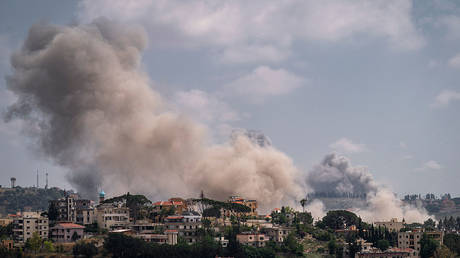
The standard news feed runs a predictable script. A fresh wave of explosions hits southern Lebanon, headlines scream about sudden escalation, and armchair analysts rush to treat the symptom while ignoring the systemic disease. Mainstream reporting treats every kinetic flashpoint as an isolated accident of bad tempers, framing each strike as a mysterious bolt from the blue.
That framing is pure intellectual laziness. Recently making waves in related news: Inside Iran’s Financial Bunker Strategy Against Washington’s Ultimate Economic Siege.
Strip away the frantic television chyrons and the breathless reporting on broken glass, and you find a much colder reality. The strikes in southern Lebanon are not erratic outbursts. They are predictable mechanical outputs of a calcified stalemate that both regional heavyweights and international observers pretend they want to solve while actively protecting.
The Myth of the Accidental Spark
Watch any major network broadcast covering southern Lebanon, and you will hear reporters act as if peace is simply a matter of two sides miscommunicating across a fence. This narrative relies on the comforting fiction that if diplomats just use the right phrasing, or if a mediator flies between capitals one more time, common sense will prevail. More details on this are covered by NPR.
I have spent years watching policy shops and defense ministries analyze cross-border friction, and the persistent delusion is always the same: mistaking strategic design for tactical failure.
When munitions strike southern Lebanon with clockwork regularity, nobody is accidentally stumbling into war. The current geometry of the border is a self-sustaining ecosystem. It relies on a low-intensity burn. Total war is too expensive, and permanent peace threatens the internal political survival of every major actor involved. The strikes are not a breakdown of the system; they are the system functioning exactly as designed to manage domestic pressure without tipping over the edge.
Dismantling the Deterrence Trap
For decades, the standard doctrine argued that massive military footprints create deterrence. The theory claims that piling enough hardware on a border builds a wall so terrifying that neither side dares blink.
History shows the exact opposite. Heavy militarization creates a hair-trigger environment where every defensive posture looks like an imminent offensive move. When you deploy thousands of troops and advanced surveillance networks within eyesight of each other, you do not build stability. You build a machine that demands to be used.
Consider the fundamental miscalculation behind how modern border zones are managed. Traditional military planners treat territory as static lines to be held or defended. In a asymmetric theater like southern Lebanon, territory is fluid, subterranean, and deeply integrated into civilian infrastructure. Trying to solve a structural political void with kinetic hammer blows is like trying to fix a software bug by hitting your monitor with a wrench. It makes a satisfying noise, but it changes nothing in the source code.
The Cost of Managed Chaos
Why does this cycle persist? Because managed chaos is remarkably useful for domestic consumption.
Local political factions use external threats to crush internal dissent and consolidate power. When your economy is in freefall and your citizens are asking uncomfortable questions about currency collapse, nothing unites a fractured population faster than smoke on the horizon. The strikes serve as a convenient pressure valve.
Meanwhile, international bodies issue sternly worded statements that carry all the structural weight of wet tissue paper. These organizations have a vested interest in the continuation of the conflict, because a resolved crisis means budget cuts and a loss of relevance for endless committees of well-paid bureaucrats.
Admitting this ugly truth requires abandoning the comforting notion that everyone is working toward peace. Some players are actively profiting, politically or institutionally, from the friction.
The Unspoken Reality of Asymmetric Geography
Geography dictates destiny, but human stupidity accelerates it. Southern Lebanon’s terrain is tailor-made for decentralized attrition. Hills, valleys, and dense olive groves favor the defender, turning conventional armor advantages into expensive liabilities.
When commentators express shock that air campaigns fail to rewrite the political map, they reveal a profound historical illiteracy. Air power can disrupt logistics, but it cannot alter political loyalty or rebuild a failed state from thirty thousand feet. Until analysts stop treating geography as a blank map and start viewing it as an active participant in the conflict, every prediction they make will miss the mark.
Stop looking at the flashes in the sky and start looking at who benefits when the smoke clears. Until you identify the beneficiaries of the stalemate, you will keep swallowing the script they write for you.