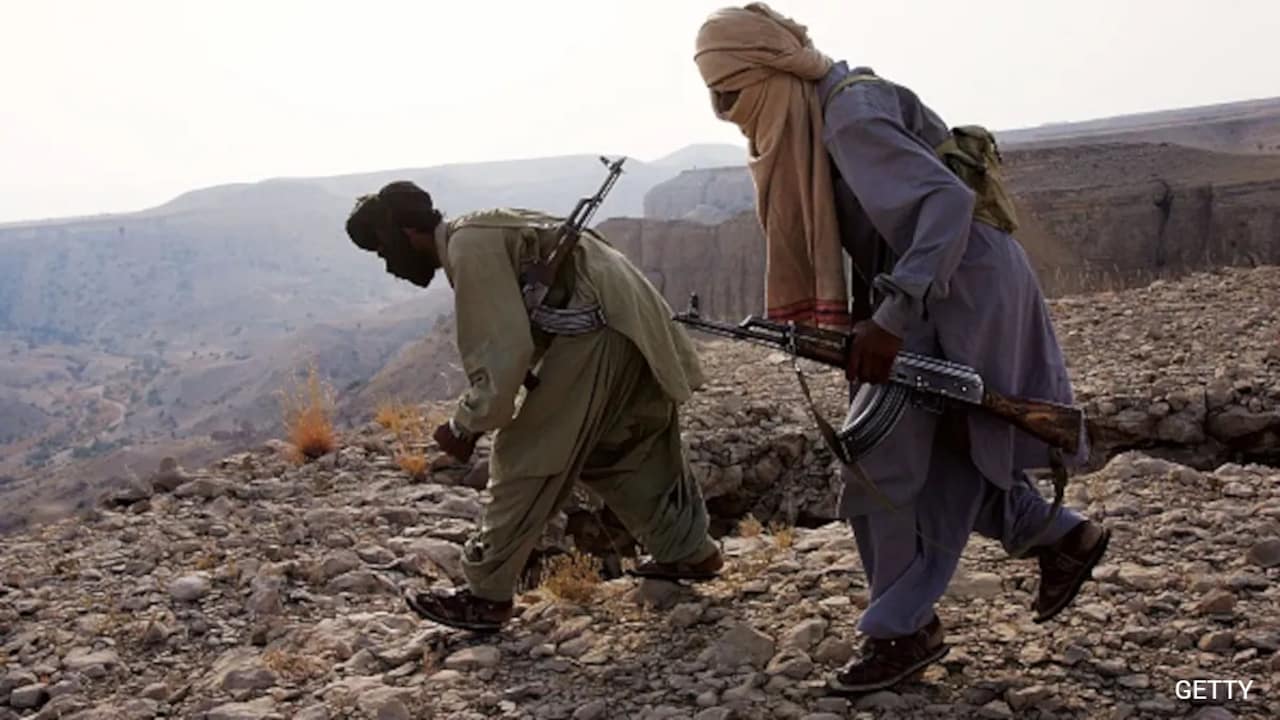
Every time a militant group drops a casualty count into a press release, the media swallows it whole.
Look at the standard coverage following claims by factions like the Baloch Liberation Army regarding coordinated assaults on state forces. The headlines scream numbers. Twenty-five dead. Thirty dead. A major base overrun. The narrative follows a predictable script: state forces ambushed, insurgents celebrating tactical victories, security analysts wringing their hands over intelligence failures.
It is lazy, reactive reporting. It completely misreads the mechanics of modern asymmetrical conflict.
When you spend years tracking regional security architectures, counter-insurgency logistics, and the political economy of resource-rich borderlands, you realize that focusing on the body count reported by underground networks is a trap. You are tracking the symptom while ignoring the structural engine driving the entire cycle.
The Body Count Fallacy
Let us dismantle the core premise of these attack reports. Insurgent organizations have an inherent incentive to inflate tactical data. State actors have an equal and opposite incentive to minimize or obfuscate losses. When an outlet treats a rebel telegram channel as an objective wire service, journalism dies.
I have spent decades watching analysts obsess over tactical scorecards. They count the dead like sports fans checking box scores. This approach ignores how protracted low-intensity conflicts actually operate.
A successful ambush or coordinated strike in Balochistan is rarely about holding territory. The region is vast, arid, and brutally difficult to pacify. Insurgent cells operate on hit-and-run mobility, leveraging mountainous terrain and local grievance networks.
When a group claims twenty-five casualties, the media treats it as a strategic turning point. The reality is far colder. These actions are marketing campaigns designed to secure funding, maintain recruitment pipelines, and signal operational viability to external sponsors or diaspora networks.
If you measure the conflict by daily skirmishes, you will always be surprised when nothing fundamentally changes. The state absorbs the losses, reinforces the checkpoints, locks down communication lines, and continues extraction projects. The insurgents inflict pain, withdraw into the shadows, and repeat.
The Economic Engine Behind the Violence
To understand why these attacks keep happening, you have to stop looking at military strategy and start looking at balance sheets.
Balochistan is an epicenter of geopolitical friction. Billions of dollars in infrastructure projects, mineral wealth, and deep-water port development converge on a population that feels economically disenfranchised and politically marginalized.
The lazy consensus argues that this is purely an ethnic nationalist uprising or a religious extremist flare-up. That is a sanitized view that ignores the raw economics of resource extraction. Local populations see massive infrastructure corridors cutting through their traditional lands while wealth flows outward toward central capitals or foreign partners.
When economic participation is denied, violence becomes a rational alternative for disaffected youth. The grievance is real, but the translation of that grievance into military action is sustained by a shadow economy of smuggling, extortion, and external patronage.
Imagine a scenario where every major infrastructure project in the province includes mandatory local equity stakes, transparent revenue-sharing models, and localized employment quotas enforced by independent boards. The insurgency's primary recruitment pitch—that the state is simply an occupying extraction machine—evaporates overnight.
Instead, the state relies on a heavy security footprint. More checkpoints. More curfews. More surveillance. This kinetic response creates a self-fulfilling prophecy. Every security sweep alienates another village, generating a fresh batch of recruits for the very groups the state is trying to eradicate.
Why the Traditional Counter-Insurgency Playbook Fails
Conventional military doctrine assumes that if you apply enough overwhelming force, you break the enemy's will to fight. That playbook was written for conventional armies facing rival nation-states. It fails miserably against decentralized networks embedded within civilian populations.
The security apparatus relies on kinetic dominance. They can sweep an area, neutralize a cell, and declare a sector cleared. Yet, within six months, a new generation of fighters emerges under a different banner or the same reorganized command structure.
Why? Because the underlying political settlement remains broken.
You cannot shoot your way out of a crisis of governance. Every time a high-profile attack occurs, the knee-jerk reaction from planners is to double down on kinetic measures. Cut the internet. Deploy more paramilitary units. Expand detention powers.
This is the definition of insanity. It treats chronic political alienation as a law enforcement problem.
The uncomfortable truth is that the current status quo suits certain institutional stakeholders just fine. Endless security threats justify bloated defense budgets, expanded emergency authorities, and centralized control. Peace is bad for bureaucratic leverage.
The Unconventional Reality We Refuse to Face
If you want to understand why these cycles never break, look at the incentives of the players involved.
For the insurgent leadership, keeping the province destabilized ensures relevance, external funding streams, and elite status within diaspora networks. Total victory is an unrealistic fantasy, so sustaining the low-level hum of conflict is the optimal strategy for maintaining power.
For the security establishment, the threat justifies institutional dominance and financial prioritization.
Meanwhile, the civilian population pays the price caught in the crossfire between state overreach and insurgent intimidation.
Stop asking whether twenty-five soldiers died in a specific skirmish. That is the wrong question entirely. The real question is why a region sitting on immense wealth remains trapped in a perpetual loop of underdevelopment, kinetic suppression, and radicalization.
Until policy shifts from counting bodies to overhauling the political economy of resource distribution, every headline about a successful ambush is just noise. The game does not change because nobody in power wants to alter the rules.