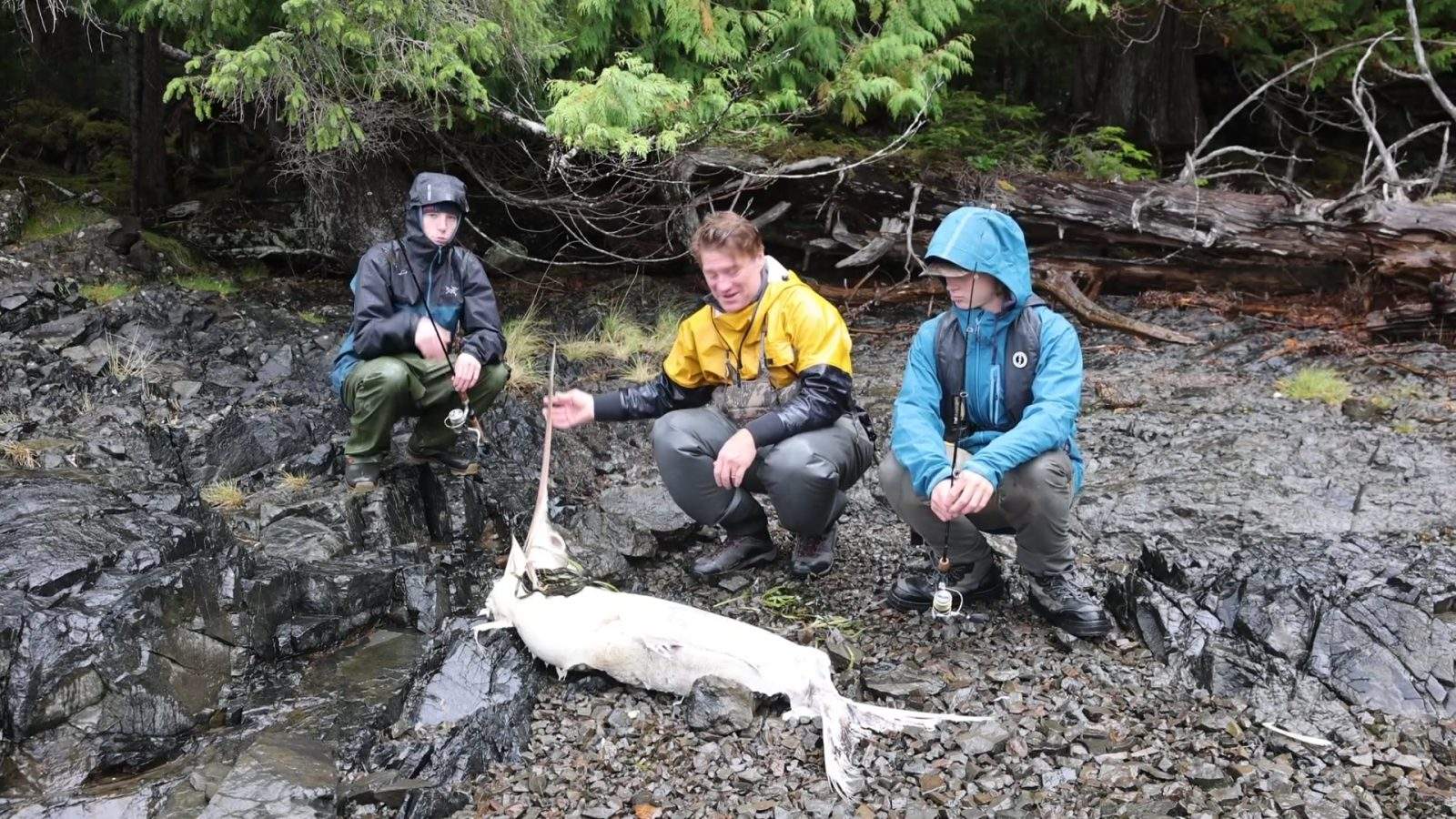
Another dead swordfish washes up on Haida Gwaii, and the internet loses its collective mind. Local outlets run breathless headlines about rare finds, climate anomalies, and deep-sea refugees pushed to the surface by warming oceans. Environmental commentators seize the moment to pontificate about collapsing ecosystems and shifting marine borders.
It is lazy, theatrical nonsense.
Dead swordfish washing ashore in the Pacific Northwest is not a harbinger of environmental apocalypse. It is basic biology, oceanographic mechanics, and the brutal reality of apex predator attrition that marine researchers have documented for decades. When a pelagic giant drifts onto a remote northern beach, people want a cinematic villain. They want climate change, overfishing, or toxic pollution. More often than not, the culprit is far more mundane: natural senescence, localized prey shifts, or the simple misfortune of getting caught in a thermal trap that nature has maintained since the Ice Age.
Let us dismantle the panic.
The Geography of Misunderstanding
To understand why a swordfish turns up in Haida Gwaii, you have to look at how these animals actually live. Xiphias gladius is one of the most widely distributed fish on the planet. They range from the equator up into sub-arctic waters. They are endothermic to a degree, possessing specialized heat-exchanging tissue around their brains and eyes that allows them to hunt in cold, deep water where their prey hides.
When you read a headline calling a swordfish in Haida Gwaii a "rare find," you are looking at ignorance masquerading as journalism. Commercial longliners encounter swordfish off the Pacific coast with regularity. They are built for migration. They follow squid and pelagic schooling fish across thousands of miles of open ocean.
The lazy consensus claims that finding one stranded on a beach signals an unnatural intrusion into foreign waters. The truth is much simpler. Swordfish chase food. When warm water intrusions or seasonal upwellings push prey species further north, the predators follow. They do not need an engraved invitation or a climate summit. They follow their stomachs right into cooler coastal shallows where navigation errors or exhaustion can finish them off.
The Anatomy of a Natural Stranding
Let us talk about what actually happens when an animal like this dies offshore. The open ocean is a three-dimensional burial ground. Most pelagic creatures sink when they die, feeding benthic communities for months. A carcass only washes ashore under very specific hydrodynamic conditions: offshore winds, specific tidal currents, and floating buoyancy stages that keep the body at the surface long enough to catch a shoreward drift.
When a swordfish washes up, the public immediately assumes foul play. Boat strike. Net entanglement. Poison.
Sometimes, yes. Human impact on the oceans is undeniable and devastating in many sectors. But let us look at the baseline mortality rate of any wild population. Old age exists in the sea. Disease exists in the sea. Parasitic load exists in the sea. A 300-pound swordfish is an absolute powerhouse, but it is also a biological engine running at maximum output for fifteen to twenty years. Eventually, engines fail.
When a geriatric or sick swordfish weakens, it loses its ability to maintain position in strong oceanic currents. It gets swept into coastal eddies. By the time it hits the gravel beaches of Haida Gwaii, it is already dead, battered by surf, and serving as an all-you-can-eat buffet for local scavengers. Framing this as a supernatural omen or a direct casualty of modern policy ignores the brutal, unglamorous mechanics of natural mortality.
The Danger of Eco-Theatrical Sensationalism
Why does this matter? Because hyperventilating over every dead marine animal misallocates finite conservation energy.
When activists and sensationalist media treat every dead pelagic fish as an emergency alert, public fatigue sets in. Real ecological crises get diluted by manufactured outrage over standard biological events. If every beach combing discovery becomes a front-page crisis, people stop believing in actual emergencies when they occur.
Furthermore, this narrative infantilizes the ocean. It paints marine ecosystems as fragile glass boxes that shatter the moment a single temperature anomaly or stray predator appears outside its standard tourist brochure zone. Oceans are dynamic, violent, constantly fluctuating chaotic systems. Species expand and contract their ranges based on multi-year oceanic oscillations like the Pacific Decadal Oscillation or El Niño cycles. These shifts have happened for millennia before industrial carbon emissions entered the equation. Acknowledging natural variability does not mean denying anthropogenic climate change; it means refusing to attribute every single natural event to a singular political boogeyman.
What Real Marine Science Looks Like
If you actually want to know what killed that swordfish on Haida Gwaii, you do not guess based on a blurry smartphone photo on social media. You look at the stomach contents. You check the liver for heavy metals or pathogens. You examine the bill for healed trauma from sparring with other swordfish or pelagic sharks. You check the otoliths—the ear bones—to read its chemical life history and age.
Real science is boring, meticulous, and entirely devoid of dramatic narrative flair. It involves rotting tissue, scalpels, and hours in a cold lab. When researchers perform necropsies on stranded pelagic fish, the results often point to natural causes: heart failure, heavy parasite burdens in the gills, or starvation due to a missed feeding migration.
Stop looking for portents in the surf. Nature is not sending us messages via washed-up fish carcasses. It is simply operating according to laws written long before we invented headlines. The next time a rare pelagic creature makes the news just by dying where water meets land, remember that the ocean is vast, indifferent, and entirely uninterested in our drama.