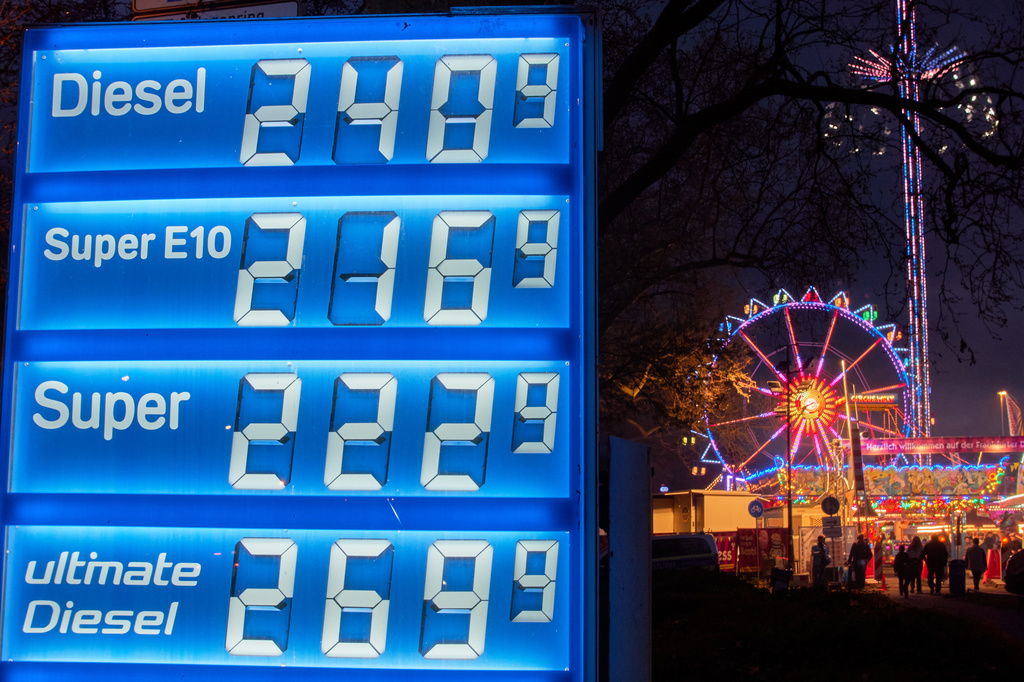
If you’ve checked your utility bill or filled up your tank lately, you already know the vibe is shifting back toward the dark days of 2022. It’s happening again. On Friday, April 3, 2026, finance ministers from five heavy-hitting EU nations—Germany, Italy, Spain, Portugal, and Austria—decided they’d seen enough. They sent a letter to the European Commission basically saying that if energy giants are going to get rich off the back of the war in Iran, they need to pay up.
The timing isn't random. Since the U.S.-Israeli strikes on Iran kicked off on February 28, European gas prices have skyrocketed by more than 70%. We’re seeing oil prices climb and inflation creeping back up to 2.5% in the Eurozone. The message from Madrid to Berlin is simple: it’s time to bring back the "solidarity contribution" and cap those excess profits before the public loses its mind.
The logic behind the new profit caps
You might wonder why governments are suddenly obsessed with "windfall taxes" again. It’s not just about grabbing cash. It’s about optics and economics. When a war breaks out and supply chains snap, energy companies often make billions simply because the market price of oil or gas jumped—not because they did anything better or more efficient.
The ministers, led by Spanish Economy Minister Carlos Cuerpo, argue these are "market distortions." They believe it’s fundamentally unfair for a few corporations to pocket record-breaking margins while households are choosing between heating and groceries. By implementing a bloc-wide cap, the EU can redirect that "accidental" profit back into subsidies for the vulnerable. It's a robin-hood maneuver designed to keep the economy from buckling under the weight of $4.00+ gas.
What's actually on the table
Let’s be real: the letter was big on intent but a bit thin on the technical math. Here’s what we know is being pushed in Brussels right now:
- A Renewed Solidarity Levy: This would mirror the 2022 emergency tax. It targets companies in the crude petroleum, natural gas, coal, and refinery sectors that are seeing profits significantly higher than their four-year average.
- Coordinated EU Action: The ministers aren't looking for a patchwork of national taxes. They want a "solidarity instrument" with a "solid" legal basis. This prevents companies from just shifting their accounting to the most tax-friendly country in the bloc.
- Price Decoupling: There’s a side conversation about capping the price of infra-marginal electricity (like renewables and nuclear) which is currently pegged to the high price of gas.
Why this time feels different than 2022
In 2022, we were caught off guard. Today, Europe has a playbook. We're getting more energy from renewables than ever before, but that hasn't saved us from the price shocks. Energy Commissioner Dan Jorgensen has already warned that fuel prices aren't going "back to normal" anytime soon.
The biggest worry isn't just raw crude; it's refined products. Diesel and jet fuel supplies are tight because of the chaos in the Strait of Hormuz. When 20% of the world's oil and gas is stuck behind a blockade, a tax on profits is one of the few levers left to pull that doesn't involve printing more money and making inflation worse.
The pushback from the energy sector
Unsurprisingly, the industry isn't exactly cheering. Groups like the German Fuel and Energy Association are already pushing back, arguing that companies aren't "profiting unfairly" but are navigating an incredibly risky and expensive global market. They argue that if you tax away the "windfall," you’re taking away the capital these companies need to invest in new supply routes or green transitions.
It’s a classic tug-of-war. The ministers say the burden must be "distributed fairly." The companies say they’re the only ones keeping the lights on. Honestly, the truth probably sits somewhere in the middle, but with an election cycle always around the corner in Europe, "tax the big guys" is a much easier sell to a frustrated voter base.
What this means for your wallet
If the European Commission moves as fast as the ministers want, we could see a formal proposal within weeks. For you, this likely means:
- More direct subsidies: The revenue from these caps usually goes straight into national programs that lower your monthly bill.
- Capped price hikes: If the "inframarginal" cap returns, the price of electricity shouldn't climb as aggressively as the price of gas.
- Market volatility: Expect some drama in the stock market. Energy stocks tend to dip when the words "profit cap" start flying around Brussels.
The reality is that Europe is still incredibly vulnerable to the Middle East. Even with our solar panels and wind farms, a flare-up in Iran still dictates what we pay at the pump. This call for profit caps is a desperate, necessary shield against a crisis we hoped we’d left behind four years ago.
Keep an eye on the EU Commission's next move. If they follow through, it'll be a massive shift in how the continent handles energy pricing for the rest of the decade. For now, tighten the belt and maybe look into that heat pump subsidy while it's still funded.