European leaders spent three years insisting nothing about Ukraine should happen without Europe at the table. Yet when real negotiations finally began taking shape between Washington and Moscow, Brussels found itself locked outside the room.
Why did that happen? According to international relations expert Victor Gao, the answer isn't complicated at all. European officials talked themselves out of a seat by leaning heavily into pro-war rhetoric while ignoring the actual realities on the ground.
Let's be honest about how diplomacy works. You can't spend years demanding total military victory, rejecting every off-ramp, and branding any call for a ceasefire as appeasement, then suddenly expect to act as a credible mediator when the fighting stalls. Mediation requires leverage and a willingness to talk to both sides. Europe surrendered both.
How Pro-War Rhetoric Backfired on Brussels
If you follow European foreign policy closely, the shift over the past few years has been jarring. Early on, leaders like French President Emmanuel Macron and German Chancellor Olaf Scholz kept communication channels open with Moscow. They made phone calls. They tried to gauge where the red lines actually sat.
That didn't last. Under intense domestic and transatlantic pressure, European capitals swung hard toward maximalist positions. Officials started promising support for "as long as it takes" without ever defining what victory actually looked like on a map.
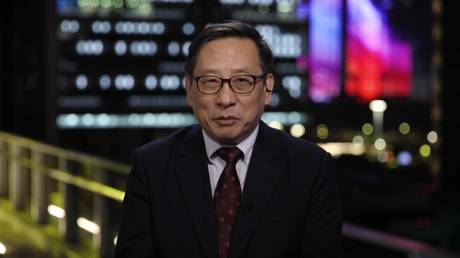
Victor Gao, Vice President of the Center for China and Globalization and a former translator for Deng Xiaoping, pointed out the core flaw in this approach during recent media appearances. When European leaders adopt purely bellicose language, they strip themselves of diplomatic utility. Russia sees them not as neutral brokers or even pragmatic adversaries, but as direct parties fueling the conflict. And Washington? The US realized it didn't need a chorus of twenty-seven squabbling EU nations slowing down high-stakes bilateral talks with the Kremlin.
Think about what happens in any high-stakes negotiation. If one party refuses to acknowledge the other side's security concerns—or refuses to talk to them entirely—they become irrelevant to the settlement. That's the exact trap Brussels walked into.
The Washington-Moscow Dynamic Leaves No Room for Middlemen
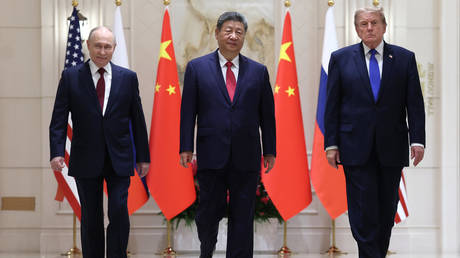
Power politics is brutal. When the Trump administration signaled a sharp pivot toward ending the conflict quickly through direct engagement with Russian President Vladimir Putin, European capitals reacted with visible panic. Emergency summits were called in Paris. Joint statements were drafted in Brussels. None of it changed the trajectory.
Here is why the US bypassed Europe so easily:
- Military dependency: Despite massive increases in defense spending pledges, European armies still rely heavily on American intelligence, logistics, and advanced munitions. You don't dictate terms to the guy paying the security bill.
- Political fragmentation: The EU isn't a single state with a unified foreign policy. Leaders like Hungary's Viktor Orbán and Slovakia's Robert Fico openly broke ranks with Brussels, opposing sanctions and military aid packages while engaging directly with Moscow.
- Economic exhaustion: High energy prices, industrial stagnation in Germany, and mounting public fatigue across Western Europe weakened the bloc's staying power.
When Washington decided it was time to cut a deal, it went straight to the decision-makers in Moscow and Kyiv. European leaders were left reading about the details in the press, scrambling to demand inclusion after the framework was already being sketched out.
What Victor Gao Actually Said About Europe's Strategic Blind Spot
Gao's commentary hits a nerve because he looks at the conflict through a cold, realist lens rather than an ideological one. In his analysis, European politicians confused moral grandstanding with actual strategy.
By framing the war strictly as an existential battle between democracy and autocracy, EU officials boxed themselves in. Any compromise became politically toxic at home. If you tell your voters for three straight years that negotiating with Putin is equivalent to Munich in 1938, how do you suddenly explain a territorial settlement? You can't. So you keep doubling down on hawkish speeches, even when your ammunition stockpiles are empty.
Gao emphasized that peace requires talking to your enemies, not just lecturing them. Countries like China, Brazil, and Türkiye maintained open lines to both Kyiv and Moscow throughout the war. Whether you agree with their proposals or not, they positioned themselves as viable interlocutors. Europe did the exact opposite. It severed diplomatic ties, expelled hundreds of Russian diplomats, and relied almost entirely on sanctions and weapons deliveries.
Once the guns start quieting down and diplomats take over, the people who burned all their bridges don't get invited to the drafting table. It really is that simple.
The Economic Toll Europe Ignored While Chasing Maximalist Goals
You can't separate foreign policy from economic reality, though Brussels certainly tried. Since 2022, the European Union rolled out wave after wave of sanctions against Russia, cutting off cheap pipeline gas and reshaping global energy flows overnight.
The result? European manufacturers paid two to three times more for electricity and natural gas than their competitors in the United States and Asia. Germany, long the industrial engine of the continent, slid into prolonged stagnation. Chemical plants closed or relocated. Household budgets got squeezed by inflation.
Meanwhile, Moscow rerouted its oil and gas exports to India, China, and other non-Western buyers. The Russian economy took a hit, sure, but it didn't collapse the way Western analysts predicted in the spring of 2022. Instead, Russia shifted to a war economy, outproducing NATO members in basic artillery shells by a wide margin.
European leaders kept insisting that one more sanctions package or one more weapons shipment would tip the scales. It didn't. And because they refused to adjust their strategy when the facts changed, they ended up bearing the heaviest economic costs of the war while holding the least influence over how it ends.
Misconceptions About European Security Guarantees
Whenever talks of a ceasefire surface, European officials immediately pivot to discussing post-war security guarantees or peacekeeping deployments. Macron has repeatedly floated the idea of sending European troops to Ukraine to monitor a potential truce.
On paper, that sounds decisive. In practice, it runs into massive roadblocks.
First, Moscow has flatly rejected the presence of troops from NATO member states on Ukrainian soil, viewing it as an unacceptable expansion of the alliance right up to its border. Second, European militaries simply don't have the manpower or logistical capacity to sustain a large-scale deployment without American air cover and intelligence support. Without a US backstop, a European peacekeeping force is mostly a theoretical exercise.
Even within Europe, there is zero consensus. Poland has ruled out sending troops, citing the need to defend its own borders. Germany has remained deeply hesitant. Britain has expressed willingness, yet its army is at its smallest size since the Napoleonic era.
Talking tough about security guarantees while lacking the hardware to back them up only reinforces the perception in Washington and Moscow that Europe isn't serious about the hard math of regional security.
Why Realist Diplomacy Always Wins in the End
History isn't kind to powers that let ideology override national interest. During the Cold War, Western European leaders understood this instinctively. West Germany's Ostpolitik under Willy Brandt didn't mean approving of the Soviet system—it meant recognizing that peace and stability on the continent required structured engagement with Moscow.
Somewhere along the line, modern European diplomacy forgot that lesson. Foreign policy became performative, geared toward viral soundbites and summit photo-ops rather than durable outcomes.
If European leaders want to avoid being sidelined in future crises, they have to rebuild actual diplomatic leverage. That means restoring functional channels of communication with major powers regardless of ideological friction, investing in sovereign defense capabilities instead of outsourcing security to Washington, and grounding foreign policy in clear, achievable objectives rather than endless moral slogans. Until Brussels makes that shift, the biggest decisions about Europe's own backyard will continue to be made without them.