Vladimir Putin wants Europe to play a parlor game, and right now, some Western leaders are pulling up a chair.
As the war in Ukraine drags on, the Kremlin is doing what it does best when the battlefield gets tough. It shifts the fight to the diplomatic floor. Suddenly, talk of a ceasefire is everywhere. Rumors of secret envoys are swirling. Everyone wants to know who will sit across from the Russians at the negotiating table.
It's a massive distraction. It's also exactly what Moscow wants.
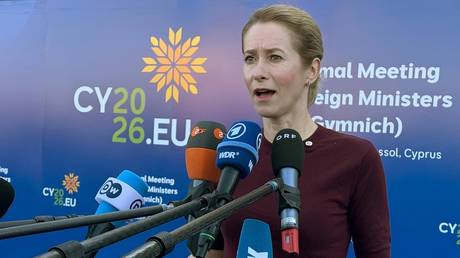
EU Foreign Policy Chief Kaja Kallas explicitly called this out during an informal gathering of foreign ministers in Cyprus. She warned that European nations are walking straight into a meticulously laid Russian trap. Instead of arguing about the substance of a lasting peace, Western capitals are wasting time arguing over personnel. They are debating who should speak for Europe before they even agree on what Europe actually wants.
If you think a quick ceasefire will solve the continent's security crisis, you're misreading the room. Moscow isn't looking for an exit strategy. It's looking for a breathing room.
The Envoy Distraction and the Schröder Gambit
The debate over a European peace envoy isn't just bureaucratic noise. It's dangerous. Vladimir Putin recently floated the idea of using former German Chancellor Gerhard Schröder as a mediator. Let's be honest. Schröder is a man who spent years on the boards of Russian state energy giants like Rosneft and Gazprom. Suggesting him isn't a serious diplomatic overture. It's a provocation.
When Europe engages with these names, it loses the initiative. Kallas noted that Russia is already trying to cherry-pick who is suitable to talk and who isn't. By participating in this guessing game, the EU hands veto power over its own representation to the Kremlin.
Negotiations are a team sport. You need a unified strategy, a mix of good cops and bad cops, and ironclad red lines. Right now, Europe doesn't have that unity. Ukrainian President Volodymyr Zelenskyy has pressed for a dedicated European voice to complement transatlantic discussions with US Secretary of State Marco Rubio. But appointing a chief negotiator before the 27 EU member states agree on their core demands is putting the cart miles ahead of the horse.
Moscow is Hurting and Needs a Pause
Why is the Kremlin pushing the peace narrative so aggressively right now? Because the military and economic reality inside Russia is grim.
The dynamics on the ground are shifting. Western intelligence suggests Russia is losing or seeing wounded roughly 35,000 soldiers every single month. Recruitment numbers aren't keeping pace with that meat grinder. Militarily, economically, and diplomatically, the Kremlin is backed into a corner. They cannot sustain a high-intensity war of attrition indefinitely.
When Russia feels the squeeze, it turns to asymmetric pressure. Since the Russian army can't secure decisive breakthroughs on the frontline, Moscow has ramped up its campaign of shadow warfare across Europe. We're seeing a surge in:
- GPS jamming over the Baltic Sea affecting commercial flights.
- Arson attacks and sabotage targeting European defense infrastructure.
- Relentless cyber assaults on critical government networks.
- Tailored disinformation campaigns engineered to fracture Western electorates.
The call for peace talks isn't an olive branch. It's a tactical maneuver to halt Ukrainian momentum, freeze the frontlines, and buy time to restock Russian missile arsenals.
Europe Cannot Be a Neutral Mediator
A dangerous narrative is taking root in some Western capitals that Europe should position itself as a neutral arbiter between Kyiv and Moscow. Austrian Foreign Minister Beate Meinl-Reisinger, among others, has pushed for the EU to rapidly position itself to negotiate.
But neutrality is an illusion here. Europe is a party to this crisis, whether it wants to be or not. The EU is funding Ukraine’s defense because a Russian victory directly threatens European borders. You can't play the neutral referee when your own house is next on the arsonist's list.
Kallas made it clear that the EU will never be a neutral mediator. The bloc stands on Ukraine's side because defending Kyiv is synonymous with defending European security. Treating an aggressive occupier and an occupied nation with equal diplomatic neutrality isn't statecraft. It's capitulation.
What Real Peace Terms Look Like
If Europe wants to avoid the diplomatic ambush, it needs to stop talking about who goes to the table and start defining the non-negotiables. Kallas quietly circulated a strategy paper outlining what Europe’s actual demands must look like.
True stability doesn't come from a frozen conflict. It comes from structural changes in Russian behavior. If Western leaders want a real strategy, they must stand firm on several core prerequisites before any formal envoy sets foot in a conference room.
First, an unconditional ceasefire must be the absolute starting point, not a reward for talking. Russia must halt its missile strikes on civilian centers immediately.
Second, Moscow must completely cease its hybrid campaign across Europe. The sabotage, the cyberattacks, and the airspace violations must end. You don't negotiate terms with a regime that is actively burning down warehouses in your capital cities.
Third, there can be zero legal recognition of occupied Ukrainian territories. Freezing the borders where they stand today simply rewards territorial aggression and guarantees a follow-up war in five years.
Finally, Europe has to start using its economic leverage. Too many countries are trying to have it both ways. They continue doing lucrative business with Moscow under the table while enjoying unfettered access to European markets. The EU needs to tie market access directly to compliance with Russian sanctions.
The pressure has consistently been placed on Ukraine to make painful concessions, even though Russia caused the destruction. It's time to flip that script. Europe holds the keys to the lifting of sanctions, financial assets, and international trade access. Those are massive chips. Don't trade them away for a photo-op with a Kremlin envoy.
Stop worrying about who gets the seat at the table. Figure out what you're demanding before you even walk into the room. If Europe can't find its collective spine on a unified strategy, it's better to stay away from the table entirely.