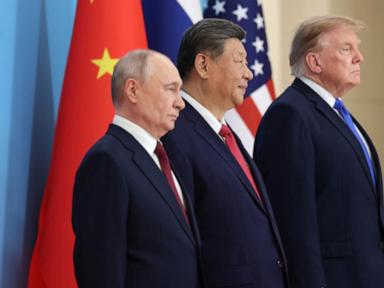
Is Europe stuck in the shadow of a Trump, Putin, and Xi alliance? Honestly, yes—at least in terms of diplomatic leverage, though calling it a formal alliance misses how messy the real power game actually is.
When Donald Trump, Vladimir Putin, and Xi Jinping share a stage or talk over European heads, Brussels and London feel the chill immediately. Washington isn't treating European security as an automatic priority. Moscow keeps testing eastern borders and pushing to sideline European voices in talks over Ukraine. Beijing holds massive industrial and supply-chain cards over European manufacturing.
That doesn't mean the three leaders share identical goals. Far from it. Their interests collide all the time. Yet when big-power deals or summits happen without serious European seats at the table, Europe ends up reacting to rules written somewhere else.
I've watched European policy debates for years, and the same pattern keeps tripping leaders up. Politicians love issuing sweeping statements about "strategic autonomy." Then a real crisis hits—energy prices spike, tariff threats land, or a diplomatic summit gets scheduled—and twenty-seven capitals suddenly scramble in twenty-seven directions.
Why The Shadow Feels So Heavy For Europe
A formal military pact between Washington, Moscow, and Beijing sounds like Cold War science fiction. Look closer, though, and you see something subtler and more dangerous for Europe: transactional alignment and sphere-of-interest thinking.
Trump has shown a willingness to bypass traditional alliances, treat multilateral rules as speed bumps, and engage directly with strongmen like Putin and Xi. Analysts at institutions like the Royal United Services Institute and Bertelsmann Stiftung have pointed out that high-profile gatherings can hand massive optics and legitimacy gains to Moscow and Beijing even when concrete agreements are thin. For Putin, simply standing alongside the leaders of the United States and China projects parity and weakens diplomatic isolation. For Xi, it underscores China's central role in global diplomacy.
Here's the rub for Europe. You don't need a signed treaty between Washington, Moscow, and Beijing to get squeezed. You just need three big powers prioritizing bilateral deals, domestic politics, or national leverage while treating Europe as a secondary actor or a bargaining chip.
Common Questions People Ask About This Power Shift
Readers usually ask three blunt questions when they hear about a Trump, Putin, and Xi dynamic:
- Are they actually allies? No. Deep strategic rivalry still separates the U.S. and China, and Russia carries economic and military baggage that neither partner fully absorbs. Still, temporary overlaps in diplomatic style or anti-establishment rhetoric can hurt European interests anyway.
- Can Europe sit out the rivalry? Not a chance. Europe sits right next to Russia's war machine, relies on global trade routes exposed to U.S.-China friction, and depends on high-tech supply chains.
- Why does a rich bloc struggle for clout? Wealth and single-market rules don't equal fast military decisions or unified foreign policy. When foreign policy requires unanimity or slow consensus, rival capitals move faster.
Economic Leverage Does Not Equal Geopolitical Clout
For decades, Europe's biggest trick was turning market size into soft power. If you wanted to sell to hundreds of millions of consumers, you played by Brussels's rules.
That playbook works way less reliably when hard power and industrial subsidies set the pace. Take trade with China. Recent analyses from the Council on Foreign Relations highlight how surges in Chinese auto exports—especially electric and hybrid vehicles—have pressured European carmakers while domestic demand in China has faced steep headwinds. Brussels has had to juggle tough trade defense measures, like import quotas and tariffs, against the risk of Chinese retaliation on critical minerals, magnets, or agricultural goods.
Meanwhile, U.S. tariff threats and protectionist shifts keep European exporters guessing. A German industrialist or a French winemaker can't build a five-year plan easily when trade rules shift on a presidential post or a sudden review.
The biggest mistake I see in policy circles is assuming economic weight automatically buys a seat at security tables. You can have a massive economy and still get left out of cease-fire talks or security guarantees if you lack integrated military muscle and a single diplomatic voice.
Defense Spending Is Up, Yet Gaps Remain Wide
Nobody can say Europe isn't spending more on defense anymore. Data from the European Defence Agency shows EU member states pushed combined defense spending to roughly 418 billion euros in 2025—about 2.2 percent of GDP—and projected further increases into 2026. That's real money, and it's a sharp break from the complacent years after the Cold War.
Still, throwing money at national wish lists isn't the same as building coherent military power. Here is what actually trips Europe up on defense:
- National silos over joint buys: Too many governments still buy small batches of different systems instead of pooling orders for air defense, artillery, ammunition, and satellite intelligence.
- Short-term patches over long-term R&D: Filling urgent stock gaps is necessary, yet underinvesting in next-generation defense research and joint industrial scale leaves long-term dependencies intact.
- Tight budgets and heavy debt: Research published in Intereconomics notes how ambitious spending targets collide with high public debt in several European countries, forcing hard fiscal trade-offs.
Even if Europe spends more every year, closing intelligence, airlift, missile-defense, and command-and-control gaps takes years of disciplined coordination. It doesn't happen overnight just because a summit spooked everyone.
What Smart Europeans And Observers Should Watch Next
If you're following this story—whether as a business leader, investor, policy watcher, or citizen—ignore the loudest daily headlines for a minute and watch concrete actions instead. Rhetoric is cheap; budget lines, joint procurement contracts, and supply-chain moves tell the truth.
- Track joint procurement, not just headline budgets: Watch whether European governments actually sign shared contracts for air defense, drones, and munitions rather than buying off-the-shelf solo kits.
- Watch rare earths and industrial supply chains: Pay attention to how European manufacturers diversify critical inputs so a diplomatic spat with Beijing doesn't stall factories overnight.
- Stress-test businesses against sudden tariff swings: If you run or advise a company trading across the Atlantic or with Asia, model scenarios for higher duties, stricter origin rules, and shifting currency pressure.
- Look for coalitions of the willing inside Europe: When all capitals can't agree at once, smaller groups of committed countries often lead the way on defense, energy, or Ukraine support.
Europe isn't doomed to permanent irrelevance. It has deep talent, strong institutions, wealthy societies, and serious skin in its own survival. Getting out of other powers' shadow, though, takes less hand-wringing and a whole lot more hard-nosed unity.