Every six months, a predictable panic hits the commentariat. A headline blares out from Paris, Tirana, or Marseille about streets ablaze, barricades burning, and the total collapse of the European project. Analysts who have never spent a Tuesday afternoon outside a provincial prefecture in France or navigated a municipal bureaucracy in the Western Balkans start typing breathless obituaries for Western civilization. They look at tear gas and overturned bins and see a dying continent.
They are dead wrong.
What you are watching from your screen is not a descent into chaos. It is the noisy, friction-heavy maintenance of a social contract that was built for a different century. The lazy consensus says Europe is tearing itself apart at the seams under the weight of immigration, inflation, and institutional rot. The truth is much more inconvenient for the doom-mongers: these eruptions are the exact mechanism by which European democracies recalibrate. They are institutional safety valves, not revolutionary guillotines.
Let us dismantle the panic.
The Myth of Continental Collapse
When French sanitation workers strike or Albanian pensioners block intersections over municipal reforms, the foreign press treats it as a prelude to total state failure. This betrays a profound misunderstanding of how European political power operates. In Anglo-American political theory, stability is measured by institutional quiet. If people are marching, the system is breaking.
In continental Europe, marching is the system.
It is a codified, highly ritualized form of collective bargaining played out on asphalt rather than across a corporate boardroom table. When the French government attempts to raise the retirement age by two years, they are not acting in a vacuum; they are testing the tensile strength of a post-war welfare state that citizens view as a sacred birthright. The pushback is immediate, ferocious, and entirely expected.
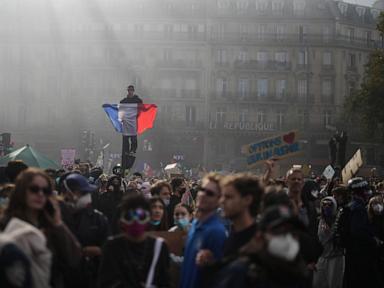
I have watched policy wonks in Brussels sweat over smoke grenades in the Place de la République as if the Fourth Republic were returning. Meanwhile, three blocks away, cafés are serving espresso to people checking their phones. The state does not collapse. A compromise is hacked out in back rooms over lukewarm croissants, the retirement age is adjusted by a few months, and everyone goes back to complaining about taxes.
To call this a crisis of civilization is to confuse a pressure valve with an explosion.
Why the Economics of Protest Do Not Mean What You Think
Let us look at the data that the headlines conveniently omit. If social unrest were an indicator of economic ruin, the nations experiencing the most frequent street demonstrations would be heading toward permanent state failure. Instead, they remain among the most productive, high-trust societies on the planet.
Why? Because protest in Europe is an economic hedge.
When inflation bites or energy subsidies shift, citizens do not quietly absorb the blow and slip into private debt the way consumer bases in other parts of the world might. They externalize the friction. They force the state and corporations to absorb the shock of macroeconomic shifts. It is aggressive, messy, and causes temporary logistical nightmares for tourists. But it prevents the silent, atomized despair that characterizes societies where citizens have no collective leverage.
The mistake analysts make is looking at a burning barricade and assuming no one is doing the math. The protestors are doing the math. They know precisely how much economic disruption it takes to force a ministry to renegotiate a tariff or a labor contract. It is a cynical, highly calibrated dance between organized labor, civil servants, and the central government.
The Balkan Exception and the Real Fault Lines
The panic over social unrest extends eastward, particularly into the candidate nations like Albania, where political demonstrations are often painted as lingering ethnic or post-communist instability. This is lazy orientalism masquerading as international reporting.
When crowds gather in Tirana to protest government corruption or judicial overreach, it is not a sign of democratic decay. It is proof that a democratic pulse actually exists. In places where authoritarian stability reigns, you do not see streets ablaze because dissent is crushed before it reaches the pavement. The presence of unrest in aspiring European Union states indicates alignment with European political culture, not divergence from it. The citizens are demanding European standards of transparency, and they are using the only megaphone available when institutions move too slowly.
The real fault line in Europe is not violent protest; it is demographic stagnation combined with bureaucratic sclerosis. But those two forces do not express themselves in sudden revolutions. They express themselves in slow, boring stagnation—lower productivity growth, aging workforces, and risk-averse capital markets. The burning cars are just loud theater masking the quiet, unsexy problems that politicians actually ignore.
How to Read the Headlines Without Losing Your Mind
If you want to understand what is happening in Europe, stop listening to the people who measure stability by how quiet the streets are. Quiet streets often mean a terrified populace or an authoritarian clampdown.
When you see footage of tear gas in Paris or blocked highways in Tirana, ask yourself three questions before you panic:
- Who holds the leverage in this specific negotiation?
- Is this an institutional ritual or an existential challenge to the rule of law?
- What policy compromise is being negotiated behind the noise?
Most of the time, you will find that the chaos is temporary, the institutions are flexible, and the headlines are engineered to sell advertising clicks through manufactured panic.
Europe is not burning down. It is just arguing loudly in public, the way it has for centuries, while the rest of the world mistakes volume for a death rattle.