The ongoing military confrontation between Hezbollah and the Israeli army in southern Lebanon has evolved past a mere secondary front. While international diplomatic efforts focus heavily on temporary truces, the reality on the ground indicates a deliberate, long-term war of attrition designed to reshape the geopolitical architecture of the Levant. This conflict is not a series of spontaneous border skirmishes; it is a calculated execution of asymmetric warfare meeting a high-tech military doctrine, with both sides dug in for a protracted campaign that neither can afford to lose.
The immediate driver of this escalation is the enforcement of a strategic buffer zone. Israel demands the clearance of Hezbollah forces from the border region up to the Litani River, aiming to secure its northern communities for the return of tens of thousands of displaced citizens. Conversely, Hezbollah views its active northern front as an indispensable leverage point, tying down significant Israeli military assets and maintaining a veto over regional security arrangements.
The Mechanics of Attrition
Military analysts often misinterpret the border engagements as a stalemate. They are not. What is happening along the blue line is a highly dynamic test of operational endurance and technological adaptation.
Hezbollah has spent nearly two decades preparing the terrain of southern Lebanon for this exact scenario. The group relies on a vast, decentralized network of subterranean fortifications, deeply embedded within the rugged topography and civilian infrastructure of southern villages. This network allows units to survive intense aerial bombardments and launch anti-tank guided missiles or explosive drones with minimal exposure. They are playing a defensive game with offensive tools, using precision munitions to extract a continuous, compounding cost from Israeli forces.
On the other side, the Israeli military has shifted from traditional border defense to a doctrine of aggressive interdiction. The strategy relies heavily on real-time intelligence, electronic warfare, and targeted strikes. The goal is clear: systematically dismantle Hezbollah’s frontline infrastructure, eliminate field commanders, and push the group's logistics hubs deeper into the Lebanese interior.
This approach carries immense risks. Air superiority can suppress rocket launches, but it cannot permanently hold territory or eliminate an entrenched guerrilla force without a massive, sustained ground occupation. History shows that such occupations frequently turn into strategic quagmires.
The Flawed Logic of Deterrence
For years, the status quo between Israel and Hezbollah rested on the concept of mutually assured destruction. Both sides understood that a full-scale conflict would devastate northern Israel and reduce Lebanon to ruins. This fear maintained a tense, predictable peace.
That calculus has broken down entirely.
Today, the threshold for what constitutes an acceptable risk has shifted dramatically for both leaderships.
- The Israeli Perspective: The cross-border raids conducted by Hamas on October 7 shattered the tolerance for heavily armed hostile forces sitting directly on Israel's borders. The presence of Hezbollah’s elite Radwan Force just meters from Israeli homes is now deemed an existential vulnerability that cannot be managed through deterrence alone. Political pressure from displaced northern residents has made military action, or at least the credible threat of a massive invasion, a domestic necessity.
- The Hezbollah Perspective: The group cannot back down without losing its core identity as the primary regional resistance force. A retreat from the border under Israeli pressure would damage its standing within Lebanon and weaken its position within the broader regional alliance. For Hezbollah, maintaining the fight is about preserving its strategic relevance and proving that its arsenal can still impose a formidable cost on a superior military power.
This shift in mindset creates a dangerous escalatory spiral. Every strike requires a calibrated response, but as the targets deepen and the casualties mount, the margin for error shrinks to near zero. A single miscalculated missile strike hitting a high-value civilian target could trigger the very full-scale war that both sides claim they want to avoid.
The Economic and Civil Toll
While the military maneuvers dominate the headlines, the economic and social fabric on both sides of the border is fraying rapidly. This aspect of the war of attrition receives far less scrutiny, yet it may ultimately dictate how long the conflict can be sustained.
In northern Israel, ghost towns have replaced thriving agricultural and technological hubs. The displacement of over sixty thousand citizens has created a massive internal refugee crisis, draining state resources and halting local economies. Factories are idle, crops are rotting in the fields, and small businesses are facing bankruptcy. The financial burden of maintaining a continuous wartime footing, coupled with the loss of productivity, is putting unprecedented strain on the national treasury.
Southern Lebanon faces a catastrophe of a completely different magnitude.
+-----------------------------+------------------------------------+
| Region                      | Core Economic Impact               |
+-----------------------------+------------------------------------+
| Northern Israel             | Industrial paralysis, tourism halt |
|                             | and massive evacuation costs       |
+-----------------------------+------------------------------------+
| Southern Lebanon            | Agricultural destruction, total    |
|                             | infrastructure collapse            |
+-----------------------------+------------------------------------+
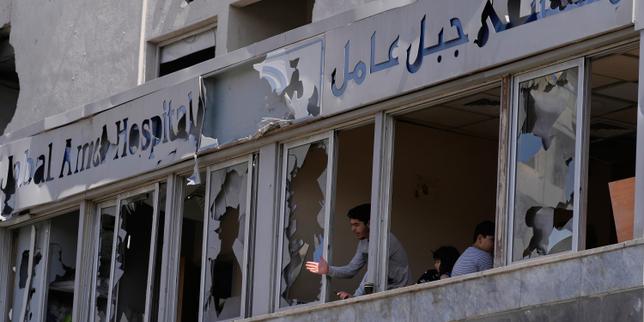
The agricultural sector, which forms the backbone of the southern Lebanese economy, has been systematically crippled. White phosphorus munitions and heavy artillery have scorched thousands of hectares of olive groves and farmland, ensuring that the economic damage will persist for years, if not decades. Entire villages have been emptied, adding to the misery of a country already reeling from a multi-year financial collapse that has hollowed out its public institutions and banking system.
The Lebanese state itself is largely a bystander in this conflict. With a paralyzed political system and an army incapable of enforcing its authority against Hezbollah, the central government in Beirut can do little more than appeal for international aid that rarely arrives in sufficient quantities.
The Intelligence War Behind the Scenes
Beyond the artillery duels and airstrikes lies a sophisticated intelligence war. Israel’s ability to execute precise assassinations of high-ranking Hezbollah commanders deep within Lebanon points to a significant penetration of the group’s security apparatus.
For a highly compartmentalized organization like Hezbollah, these security breaches are deeply damaging. They indicate that despite strict operational security protocols, modern signals intelligence, cyber surveillance, and local human intelligence networks have given Israeli planners a granular view of Hezbollah’s internal hierarchy and operational movements.
Hezbollah has responded by attempting to blind Israeli surveillance capabilities. The group has systematically targeted sensory equipment, radar installations, and communication towers along the border wall. They have also increased their reliance on secure, hard-wired communication networks that are immune to electronic eavesdropping, reverting to low-tech methods to counter Israel's technological edge.
This shadow conflict dictates the tempo of the overt war. When an intelligence operation succeeds in eliminating a key commander, it disrupts Hezbollah's operational continuity, forcing a pause or a shift in tactics. Conversely, when Hezbollah successfully downs a sophisticated Israeli drone or compromises a surveillance post, it creates blind spots that Israeli forces must scramble to patch.
The Diplomatic Impasse
International mediators, led by the United States and France, have floated numerous proposals to de-escalate the border. These frameworks typically revolve around a phased withdrawal of Hezbollah fighters away from the border, the deployment of the Lebanese Armed Forces in the south, and an increase in the personnel and mandate of the United Nations Interim Force in Lebanon (UNIFIL).
These proposals are fundamentally detached from the realities on the ground.
UNIFIL has proven entirely incapable of enforcing past resolutions, specifically UN Resolution 1701, which was supposed to keep the area south of the Litani free of armed personnel other than the Lebanese army and UN troops. Expecting the weak, underfunded Lebanese Armed Forces to forcefully disarm or displace Hezbollah—an organization far more powerful than the state military—is a diplomatic fantasy.
Hezbollah will not voluntarily abandon its positions along the border as long as the broader regional conflict continues. To do so would mean surrendering its primary point of leverage without receiving any tangible concessions in return. Israel, meanwhile, cannot accept a mere rhetorical commitment to peace; it requires verifiable structural changes on the ground before it can safely return its population to the north.
This leaves diplomacy in a dead lock. The international community is attempting to apply political patches to a conflict driven by fundamental, existential security dilemmas.
The Shifting Regional Balance
The confrontation in southern Lebanon cannot be viewed in isolation. It is an integral component of a broader struggle for regional hegemony.
Hezbollah serves as the crown jewel in a network of non-state actors spanning Iraq, Syria, and Yemen. This alliance operates under a doctrine of unified fronts, meaning that actions on the Lebanese border are coordinated with activities across the region. When pressure increases on one front, operations are often dialed up on another to distract and divide opposing forces.
This regionalization of the conflict means that a resolution in Lebanon is tied to a web of external factors. A ceasefire in one theater might bring temporary calm to the hills of southern Lebanon, but it will not resolve the underlying structural tensions. The infrastructure for war remains entirely intact, the personnel remain deployed, and the ideological imperatives remain unchanged.
The assumption that this border war can be indefinitely contained within a predictable box is a dangerous illusion. The current strategy of controlled escalation relies on the flawed premise that both actors possess perfect control over their forces and a flawless understanding of their opponent's red lines. History teaches that wars of attrition rarely end with neat diplomatic signatures; they continue until one side suffers an operational breakdown or a tactical miscalculation forces a decisive, catastrophic expansion of the battlefield.