The iron gate clicks shut, and with it, a universe of possibility vanishes. Five years have passed since the dust of a collapsing republic settled over Kabul, leaving behind a stark and suffocating reality.
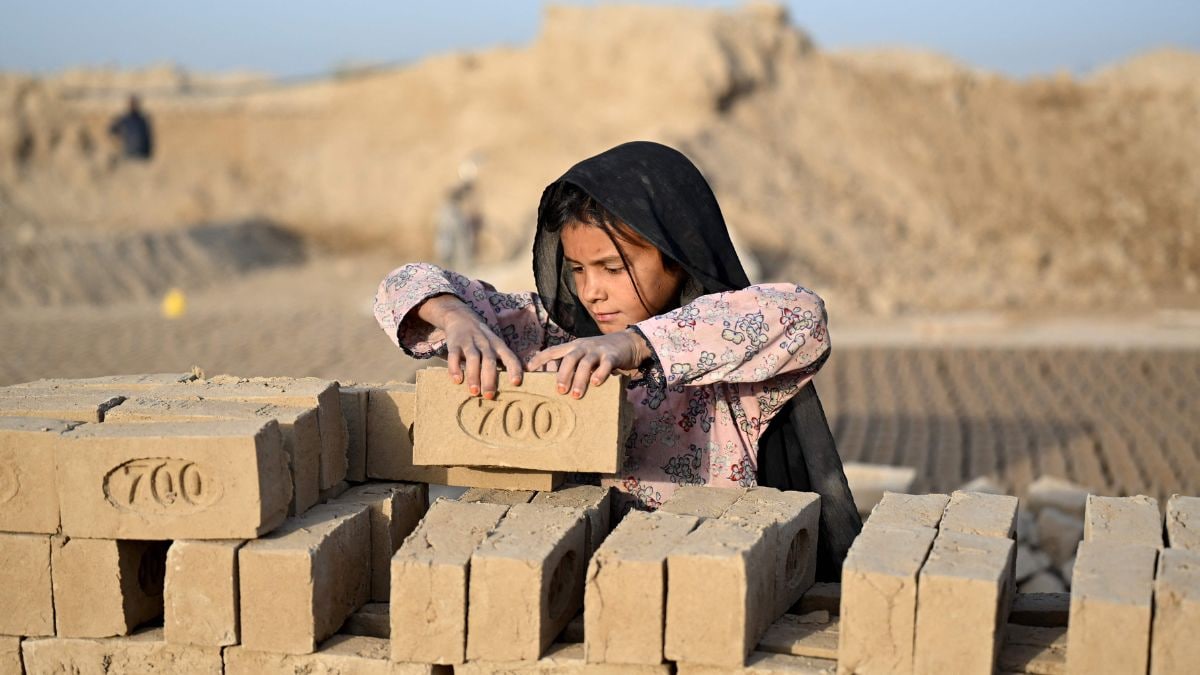
Consider a hypothetical girl named Rahila, living in a narrow alleyway of western Kabul. In the summer of 2021, she was twelve, clutching a tattered science textbook and dreaming of a stethoscope and a university white coat. Today, that textbook is buried beneath floorboards. The schools past the sixth grade are locked. The university doors are bolted against her face. More than two hundred and sixty administrative decrees—issued by a regime determined to rewrite reality—have systematically stripped her of a future, turning the simple act of breathing public air into an act of quiet defiance. For a different perspective, check out: this related article.
Survival in this new Afghanistan looks less like living and more like holding one's breath underwater.
Outside, the statistics accumulate like dry leaves in winter. Nearly half of the population, roughly twenty-one million souls, drift toward the edge of starvation, caught in the crosshairs of collapsing international funding and recurring drought. Clinics that once dispensed medicine now lock their doors for lack of gauze and electricity. Children under five face the hollow-eyed stare of acute malnutrition, their small bodies paying the silent price of geopolitical abandonment. Similar coverage on this trend has been shared by BBC News.
Yet numbers fail to capture the texture of the loss.
When the Ministry of Women's Affairs was replaced overnight by the Ministry for the Promotion of Virtue and Prevention of Vice, it was more than a bureaucratic reshuffling. It was a structural declaration that half of the nation's citizens did not exist. Female judges, lawyers, and journalists were erased from the professional registers. Parks vanished behind padlocks. Even the sound of women's voices speaking in public spaces was smothered by strict behavioral edicts.
Think of an intricate clockwork mechanism, where every gear relies on the next to keep time. Remove half the gears, and the hands freeze. That is the economic and social anatomy of contemporary Afghanistan. By barring women from employment and higher education, the ruling authorities have engineered a slow-motion catastrophe. Projections indicate the national economy faces a contraction of catastrophic proportions in the coming decades, driven entirely by the deliberate benching of its human potential.
Down in the provinces, desperation wears an even sharper edge. With foreign aid streams drying up and millions of refugees forced back across borders from neighboring states, families find themselves cornered by impossible choices. In the northern territories, impoverished households have faced the agonizing choice of trading daughters to settle crushing debts, a haunting return to medieval conditions born of modern neglect.
Silence spreads outward from Kabul like an oil slick.
Abroad, foreign ministries issue carefully worded statements, occasionally holding reluctant talks behind closed doors, slowly sliding toward normalization out of exhaustion or realpolitik. They sip coffee in air-conditioned European boardrooms while, thousands of miles away, an entire generation of girls studies mathematics by the weak light of a single candle behind shuttered windows, teaching themselves physics from stolen pages.
The regime holds its ground through sheer, unyielding endurance. Armed opposition remains fragmented and weak, leaving no immediate internal savior on the horizon. The architecture of control is complete, cemented by decrees that codify male guardianship and dismantle the legal safety nets of the past.
Darkness.
And yet, in the hidden courtyards of Herat, Mazar-i-Sharif, and Kabul, underground basement schools flicker to life every afternoon. Teachers who risk imprisonment impart grammar and history to circle after circle of eager minds. They know the risks. They know the penalty. Still, they write on the slate.
History is rarely decided by the loud machinery of conquerors alone. Sometimes, it is preserved in the stubborn memory of a child who refuses to forget her own name, whispering it softly into the dark until the morning breaks.