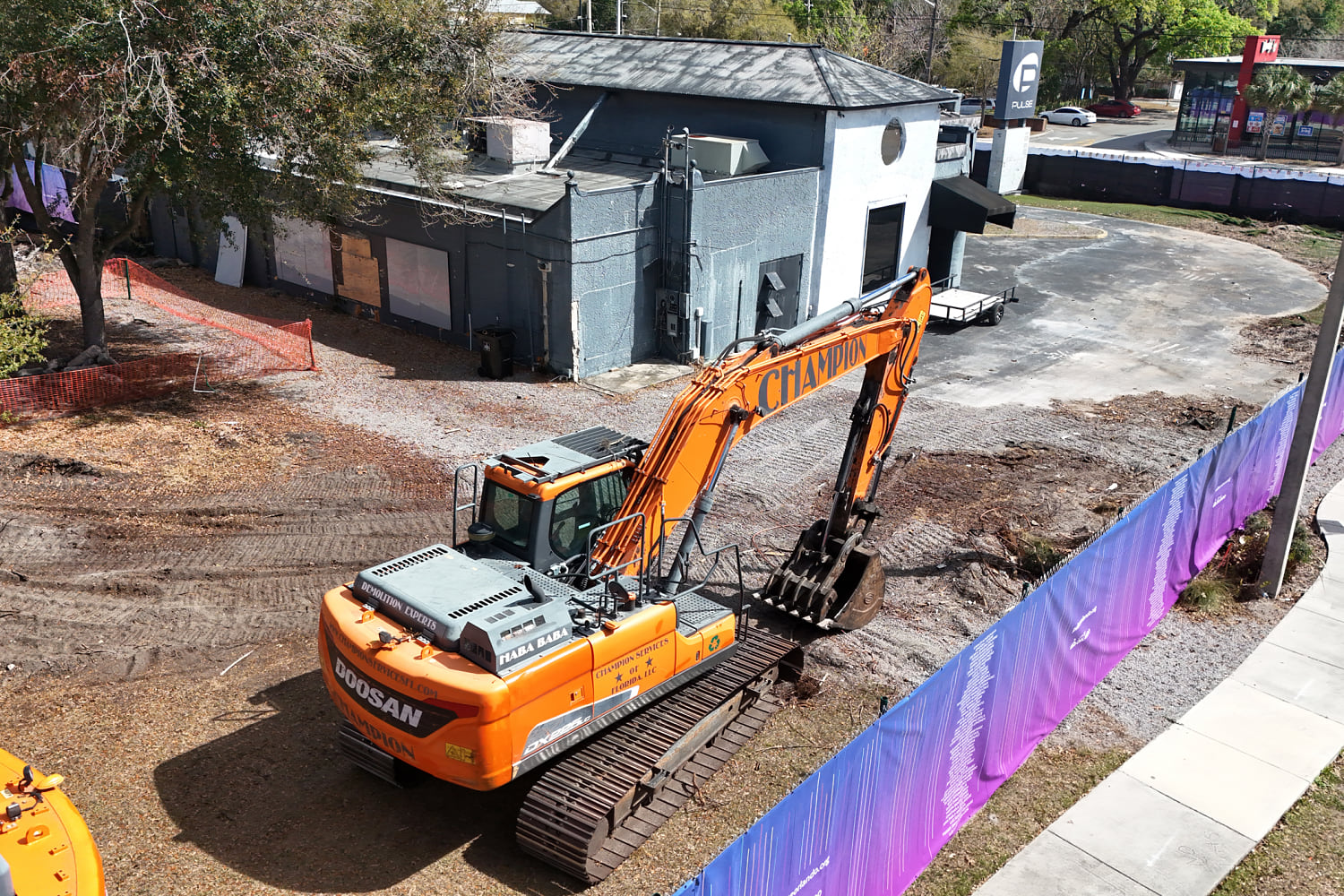
The heavy machinery that tore into the remains of the Pulse nightclub in Orlando this year didn’t just dismantle steel and concrete. It leveled the physical remains of a site where 49 people were murdered on June 12, 2016. For nearly a decade, this small stucco building on South Orange Avenue stood as a grim, silent sentry—a place of pilgrimage for some and a painful scar for others. Now, it is gone. But the demolition isn’t the end of the story. It is the culmination of a decade of administrative infighting, financial mismanagement, and a fundamental breakdown in how a city processes collective trauma.
The building is down, yet there is no permanent memorial. There is no museum. There is only an empty lot and a growing sense of betrayal among the families of the victims. This wasn't supposed to be the outcome.
The Business of Grief and the onePULSE Collapse
To understand why the site is currently a patch of dirt rather than a world-class sanctuary, you have to look at the spectacular implosion of the onePULSE Foundation. Founded by the club’s owner, Barbara Poma, shortly after the shooting, the nonprofit was tasked with a singular mission: to build a permanent memorial and museum. It raised millions. It courted corporate donors. It released sleek architectural renderings that looked more like a high-end art gallery than a site of mourning.
The ambition was the first red flag. The foundation proposed a $100 million project. This was a staggering figure for a local nonprofit, yet for years, the organization operated with the confidence of a multi-national corporation. They hired expensive consultants. They traveled to study other sites of mass tragedy. While the "City Beautiful" waited for a place to heal, the foundation’s overhead ballooned.
The fallout was inevitable. By late 2023, the foundation admitted it could not secure the land from Poma and her partners, and the project collapsed under the weight of its own bureaucracy. The city of Orlando eventually stepped in to buy the property for $2 million—a fraction of what had been wasted in "planning" over the previous seven years. The foundation dissolved, leaving behind a legacy of unpaid debts and a community that felt used for fundraising fodder.
A Sanctuary or a Crime Scene
There is a visceral tension in how we treat modern ruins. In the immediate aftermath of the shooting, the nightclub became a "living memorial." It was covered in banners, flowers, and photos. It was messy. It was raw. It felt authentic to the people who frequented the club, which had been a vital safe space for the LGBTQ+ and Latinx communities.
When the onePULSE Foundation began its work, that rawness was sanitized. The plans for the museum were criticized by some survivors as a "tourist attraction." They argued that charging admission to see artifacts of a massacre was ghoulish. This is the "why" that the mainstream headlines often miss: the demolition happened because the community couldn't agree on whether the building was a sacred relic or a toxic reminder.
The decision to raze the structure was ultimately pragmatic. After years of neglect, the building was a shell. It was a target for vandalism and a constant drain on municipal security resources. But by tearing it down before a replacement plan was finalized, the city essentially hit "reset" on the grieving process.
The Cost of Professionalizing Tragedy
We have entered an era where tragedy is managed by committees. From the 9/11 Memorial to the site of the Las Vegas shooting, there is a playbook for how these things are handled. You create a board. You hire a fundraising lead. You commission a "starlight" architect.
Pulse shows what happens when that playbook fails. When tragedy is professionalized, the voices of the most impacted—the families who lost children, the survivors who still carry shrapnel—often get drowned out by "best practices" and "branding."
The 49 people who died at Pulse weren't symbols of a movement. They were people out for a night of dancing. When the foundation focused on building a "global brand" for the memorial, it lost the local heart of the tragedy. The families didn't want a $100 million campus; many simply wanted a quiet park where the names of their loved ones wouldn't be overshadowed by a gift shop.
The Site Today and the Shadow of South Orange Avenue
Walking past the site now is a jarring experience. The perimeter fence remains, but the silhouette of the building—the iconic sign, the entrance where so many fled—is absent. The city has taken over the reins, promising a "transparent" process to finally build a memorial.
But trust is a finite resource.
The city’s current challenge is to navigate the wreckage of the foundation’s failure while managing the expectations of a weary public. They are starting from zero. There is a new committee, a new series of "community listening sessions," and a new set of deadlines. Meanwhile, the ten-year anniversary is fast approaching.
Obstacles to a Permanent Solution
- Land Use Conflicts: The city owns the club site, but the "Museum" land (a separate parcel) remains in a state of limbo.
- Funding Gaps: With the foundation gone, the millions in private pledges have largely evaporated. Public tax dollars will now have to fill the hole.
- Fatigue: Ten years is a long time to keep a community engaged in a singular project. The initial surge of "Orlando Strong" energy has naturally dissipated.
The Counter Argument for Silence
There is a growing, albeit quiet, faction of locals who believe the site should remain empty. They argue that the demolition was the final act of a long-overdue funeral. In their view, the attempt to build a massive monument was an ego project that caused more harm than good.
They point to the fact that the most meaningful tributes to the Pulse victims didn't happen in a boardroom. They happened at the "Spirit of the 49" trees at Lake Echo, or in the murals painted on the sides of local businesses. These were grassroots, inexpensive, and deeply felt.
By removing the building, the city has removed the physical anchor of the debate. Without the walls of the club, the argument moves from "what do we do with this building" to "how do we fill this void." The latter is much harder to answer.
The Reality of Public Memory
We like to think that memorials are for the dead. They aren't. They are for the living. They are a way for a society to tell itself that it has learned something, or that it has healed.
The demolition of Pulse is a admission of failure—a failure to preserve, a failure to plan, and a failure to protect the legacy of those lost from the vultures of the non-profit industrial complex. The 49 names deserve better than a vacant lot and a decade of broken promises.
Orlando now has a choice. It can try to replicate the grandiosity of the onePULSE vision, or it can build something small, honest, and permanent. The time for architectural renderings and gala fundraisers has passed.
The soil is clear. The machines are gone. The city needs to stop listening to consultants and start listening to the silence of the lot.
Demand a timeline for the new memorial design from the Orlando City Council before the 2026 anniversary.