The fluorescent lights of the White House press briefing room do not warm. They flatten. Under their hum, history is frequently reduced to a single sheet of standard A4 paper.
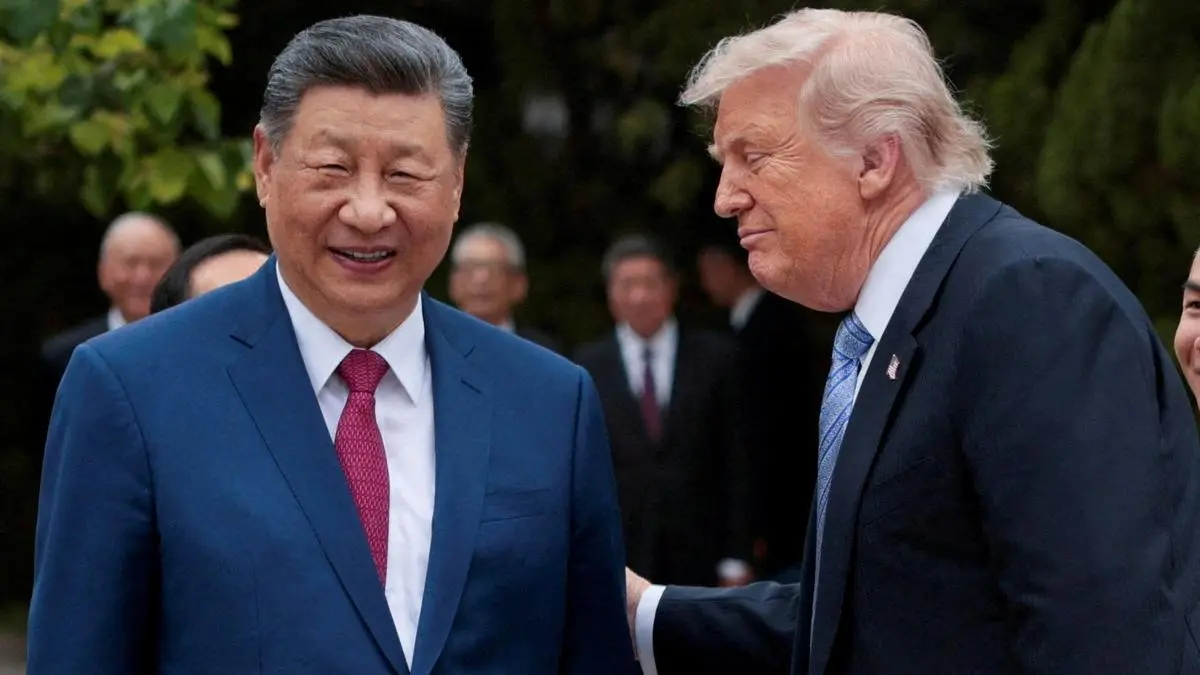
In November 2017, as Air Force One carried a delegation across the Pacific toward Beijing, a document quieted the frantic typing of the traveling press corps. It was an official White House fact sheet, a routine briefing meant to summarize the goals and triumphs of a high-stakes presidential visit to China. It arrived with the heavy scent of institutional certainty. It listed victories. It outlined strategies.
But diplomacy is rarely defined by what is printed. It is defined by what is erased.
To understand the weight of that paper, look away from the oval offices and the grand banquets. Consider instead a hypothetical desk in Taipei. Let us call the man sitting there Lin. He is a mid-level civil servant, the kind of person who keeps the gears of a democracy turning while giants clash. For Lin, a White House fact sheet is not background reading. It is weather forecasting. A single misplaced word in Washington can mean a storm in his backyard. A missing word can mean an existential freeze.
As Lin scans the digital readout of the American briefing, his eyes look for one specific name.
Taiwan.
It is not there. Not once.
The omission is a physical presence. In the delicate, hyper-calibrated world of geopolitics, silence is never empty. It is loud. By skipping any mention of the Taiwan Relations Act or the island’s security, the document did not just leave a blank space. It created a vulnerability.
Instead of addressing the primary flashpoint of East Asian security, the document directed the world's attention elsewhere. It focused heavily on a different, distant geography: Iran. The text painstakingly detailed how the American administration pressured China to cut off banking ties and oil imports from Tehran. It framed the Middle East as the grand arena of cooperation and conflict.
It was a classic sleight of hand. Look at the desert, the paper suggested, so you do not notice the ocean.
This is how modern empires communicate. They use bureaucratic camouflage. For decades, the relationship between Washington, Beijing, and Taipei has relied on a concept known as "strategic ambiguity." It is a grand term for a fragile lie. It requires the United States to acknowledge Beijing’s "One China" claim while simultaneously guaranteeing that Taiwan has the means to defend itself. It is a tightrope walked in the dark.
Every word issued by the State Department or the executive branch acts as a balancing pole. When the White House publishes a comprehensive review of a bilateral summit and completely forgets the rope, everyone on the ground feels the tilt.
The mechanics of this omission reveal a profound shift in priority. By elevating the Iran nuclear deal into the centerpiece of the China discussions, the administration traded long-term regional stability for short-term transactional leverage. They treated a foundational security pillar as an optional footnote.
Imagine a structural engineer inspecting a skyscraper. He walks past the cracked foundation, points at a flickering lightbulb on the third floor, and writes a glowing report about electrical maintenance. That is what that fact sheet felt like to those who read between the lines. It ignored the tectonic fault line to bicker over the property tax.
The danger of this approach lies in how it is interpreted by authoritarian regimes. In Beijing, silence is read as permission. When the American executive branch lists its priorities and leaves out its democratic allies, it sends a clear signal to the strategists in the Central Military Commission. It tells them that the American appetite for conflict is selective. It suggests that commitments are negotiable, provided the trade-off is lucrative enough elsewhere.
Lin, sitting at his desk in Taipei, feels this shift in his bones. It alters the way his government plans its budgets. It changes the calculations of tech executives managing the world’s most vital semiconductor supply chains. If the superpower across the Pacific is willing to erase you from a press release to score a point on Iran, will they erase you from a treaty when the pressure builds?
The document was not a mistake. Bureaucracies of that scale do not commit typos of that magnitude. It was a choice. It was an indication of a foreign policy driven by immediate, disruptive victories rather than sustained, institutional memory.
By the time Air Force One touched down back in Washington, the news cycle had moved on. The fact sheet was archived, buried under a mountain of tweets, scandals, and daily political theater.
But out in the Taiwan Strait, the water remained cold, deep, and precisely as dangerous as before. The silence of the paper lingered over the waves, a quiet reminder that in the theater of global power, the most terrifying weapon is often the eraser.