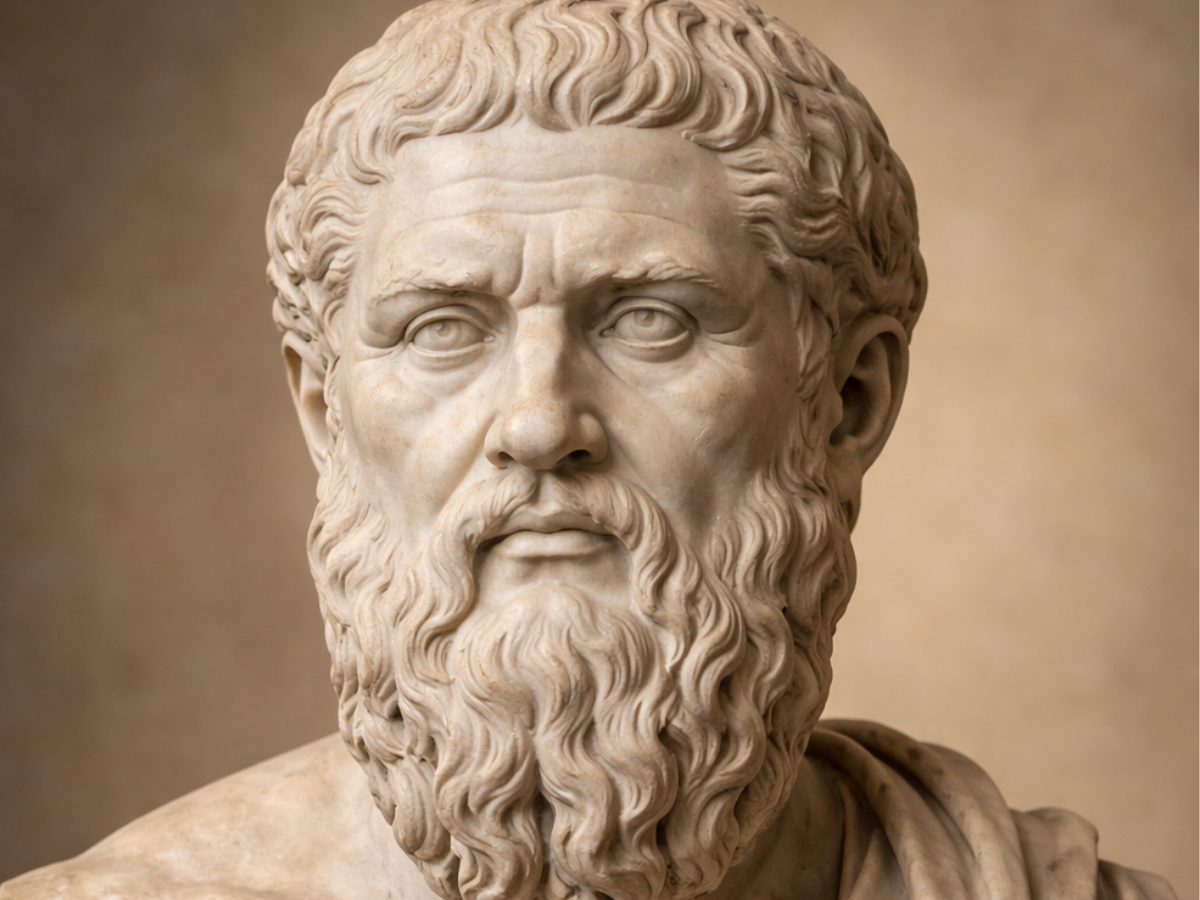
Fear of the light—as framed by Plato—functions as a sophisticated psychological defense mechanism designed to protect an individual’s internal model of reality from the disruptive influence of objective truth. While a child’s fear of the dark is a biological survival heuristic rooted in sensory deprivation and predator avoidance, an adult's fear of the light is an elective cognitive failure. It represents a strategic choice to prioritize internal stability over external accuracy. To understand this tragedy is to map the transition from involuntary biological instinct to voluntary intellectual stagnation.
The Cognitive Architecture of Information Avoidance
Human cognition is governed by the principle of least effort. Maintaining a stable worldview requires less metabolic and psychological energy than constantly updating that worldview to reflect new data. When Plato speaks of "light," he refers to the discomfort of cognitive reappraisal. This "fear" is not a phobia in the clinical sense; it is a calculated resistance to the high cost of updating mental frameworks.
The Cost-Benefit Equilibrium of Ignorance
Individuals often remain in the "dark" because the perceived utility of their current beliefs outweighs the utility of the truth. This occurs through three distinct mechanisms:
- Identity Preservation: Knowledge often requires the destruction of the former self. If an individual’s social status, career, or self-image is predicated on a falsehood, the "light" becomes a direct threat to their survival within their social hierarchy.
- Sunk Cost Fallacy of Belief: The more time and emotional energy invested in a specific ideology or worldview, the higher the psychological barrier to abandoning it. The truth is viewed not as an asset, but as a liability that renders previous investments worthless.
- Predictability vs. Accuracy: The "dark" (untruth or limited perspective) offers a controlled environment where variables are known. The "light" (complex reality) introduces a level of entropy that many find paralyzing.
The Tragedy of Voluntary Blindness
The tragedy identified in the core thesis is rooted in the erosion of agency. A child in the dark lacks the power to change their environment; an adult afraid of the light possesses the power but lacks the will. This creates a systemic bottleneck in personal and societal development.
Structural Barriers to Intellectual Exposure
We must categorize the "fear of light" into specific operational failures:
- Epistemic Closure: The creation of feedback loops that filter out any data point that contradicts the established narrative. This is the modern digital equivalent of Plato's Cave, where the shadows on the wall are curated by algorithms.
- Cognitive Dissonance Resolution: When faced with "light," the mind experiences acute discomfort. Most individuals resolve this not by moving toward the light, but by reinforcing the darkness through rationalization, denial, or the active discredit of the source of truth.
- The Safety of Groupthink: Light is solitary. To see clearly often requires standing apart from the collective. The fear of social ostracization acts as a powerful dampener on the pursuit of objective reality.
Quantifying the Opportunity Cost of Stagnation
The "real tragedy" can be measured through the loss of potential energy. When an individual avoids the light, they are effectively operating on outdated software. The performance gap between a reality-based actor and a dogma-based actor widens over time, leading to a compounding interest of failure.
The Mechanism of Professional and Personal Atrophy
Consider the trajectory of an executive who refuses to acknowledge a shift in market dynamics (the light). The initial fear of being "wrong" leads to a series of defensive maneuvers:
- Phase 1: Dismissal. The new data is labeled as an outlier or irrelevant.
- Phase 2: Aggression. The individual attacks the messengers or the methodology of the "light."
- Phase 3: Obsolescence. The gap between the individual’s internal model and the external reality becomes so large that they can no longer function effectively within the system.
This isn't merely a failure of intelligence; it is a failure of courage. The "light" demands a high degree of intellectual humility—the admission that one’s current state of knowledge is insufficient.
Overcoming the Instinctive Retreat
Moving toward the light requires a deliberate restructuring of the individual's value system. The objective must shift from being right to getting it right. This transition is difficult because it runs counter to the brain's default setting of seeking validation.
Strategic Framework for Intellectual Expansion
To mitigate the tragedy of voluntary ignorance, one must implement a protocol for systematic exposure to "light":
- Active Falsification: Instead of seeking evidence to support a belief, one must actively search for the data point that would prove them wrong. This reduces the emotional weight of being incorrect by turning it into a discovery process.
- Decoupling Identity from Ideas: High-functioning individuals treat ideas as tools rather than extensions of themselves. When a tool is proven ineffective (exposed to light), it is discarded without personal trauma.
- Incremental Desensitization: Total exposure to reality can be overwhelming. Just as the eyes must adjust to a bright room, the mind must be trained to handle increasing levels of complexity and uncomfortable truths.
The Social Implications of the Fear of Light
On a macro level, when a significant portion of a population is "afraid of the light," the society enters a period of decadence. Institutions stop solving problems and start managing perceptions. The tragedy scale shifts from the individual to the civilization.
The Feedback Loop of Cultural Darkness
Societies that reward comfort over truth inevitably face a collapse in competence. The "light" in a societal context includes economic realities, historical truths, and scientific facts. When these are suppressed to maintain social cohesion or to protect entrenched interests, the structural integrity of the society is compromised. The cost is the eventual collision with a reality that can no longer be ignored.
Navigating the Spectrum of Enlightenment
It is a mistake to view "light" and "dark" as a binary. It is a spectrum of resolution. The goal is not to reach an absolute, blinding truth—which may be inaccessible—but to move toward higher-fidelity models of the world.
The child’s fear is a biological necessity for protection during a period of vulnerability. The adult’s fear is a psychological failure during a period of potential. To live effectively is to recognize the sensation of fear not as a signal to retreat, but as a compass pointing toward the information gap that must be closed.
The most effective strategy for the modern actor is the aggressive pursuit of the "light" specifically in areas where the "dark" feels most comfortable. If a particular belief or process feels safe and unchallengeable, that is the precise location where the most significant tragedy of missed potential is likely occurring. Institutionalize the habit of challenging your own shadows; the discomfort felt in that moment is the only reliable metric of intellectual growth.