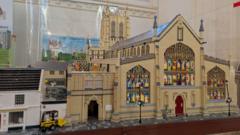
Building with Lego usually means tearing open a box, following a glossy instruction booklet for a few hours, and displaying the finished model on a shelf. Then you have the master builders who completely ignore the instructions. They spend a decade of their lives planning, sourcing, and snapping together hundreds of thousands of tiny plastic bricks to recreate real-world architectural wonders.
The internet is currently buzzing over the completion of a massive Lego cathedral model that took a staggering ten years to finish. This isn't just a hobby. It's an endurance sport. When someone spends an entire decade obsessing over a single structure, they learn things about engineering, patience, and brick geometry that the average builder can't even fathom.
Let's look at what it actually takes to execute a project of this scale, the hidden engineering hurdles of building massive structures, and how you can apply these extreme building techniques to your own custom creations.
Anatomy of a Decade Long Lego Cathedral Build
Most people look at a massive custom Lego design, often called a MOC or "My Own Creation," and see a beautiful finished product. They don't see the thousands of hours spent staring at blueprints or the hundreds of dollars wasted on the wrong shade of gray bricks.
To build a historically accurate Lego cathedral, you can't just wing it. Builders typically start with architectural drawings or 3D scans of the actual cathedral. They translate stone masonry into plastic studs. Every buttress, arch, and stained-glass window requires a unique geometry solution. Lego bricks are rectangular. Cathedrals are full of sweeps, curves, and soaring vaults. That conflict creates immense design friction.
Scale is your first major decision. If you build too small, you lose the intricate gothic details like gargoyles and window tracery. If you build too large, the model becomes so heavy it will literally crush its own base under the weight of the plastic. A model that takes ten years to complete usually weighs hundreds of pounds and occupies the space of a large dining room table.
Sourcing the parts is another nightmare. You can't just walk into a local toy store and buy 150,000 light bluish-gray slopes. Builders rely on platforms like BrickLink, a global marketplace for buying individual Lego elements from independent sellers. Sourcing parts for a massive project means managing spreadsheets, tracking hundreds of separate orders from dozens of countries, and waiting weeks for a specific hinge piece to arrive from Europe just so you can finish a single roof section. It requires serious project management skills.
The Secret Structural Engineering Inside Massive Lego Models
If you build a tall Lego tower straight up, it will eventually wobble and fall over. Now imagine building a cathedral with a massive open interior nave, towering spires, and heavy vaulted ceilings. Without internal support, the walls will bow outward and the whole thing will pancake.
Experienced builders use a technique known as Technic brick scaffolding. They build an invisible, incredibly rigid skeleton inside the hollow walls using Lego Technic bricks, pins, and beams. This internal framework handles the load-bearing duties, allowing the exterior walls to look delicate and detailed.
[Exterior Decorative Wall] ---> Attached via clips ---> [Internal Technic Skeleton]
                                                                |
                                                      [Reinforced Baseplate]
Gravity isn't your only enemy. Clutch power is a real factor. This is the physical force that holds two Lego bricks together. Over a ten-year span, bricks under constant tension can lose their grip. Thermal expansion matters too. If the room gets hot, the plastic expands slightly. Over a six-foot-long model, that tiny expansion can cause sections to warp or snap apart.
True master builders design their mega-models in modules. They don't build it as one solid piece. They break the cathedral down into separate sections like the choir, the transept, the nave, and the spires. These modules latch together using hidden pins. This makes the model transportable and prevents internal stress from building up and cracking the structure over time.
How to Transition from Kits to Custom Mega Building
You don't need to commit the next decade of your life to a project to start building your own custom models. But you do need to change your mindset. Moving away from instruction booklets is intimidating.
Start by mastering digital design tools. Programs like Studio by BrickLink allow you to build with an infinite supply of digital bricks. You can test your structural ideas, experiment with colors, and check if your design is physically possible before spending a single dime on real plastic. The software even generates a handy shopping list of the exact parts you need.
Focus on micro-scale building first. Try replicating a local landmark using only a few hundred bricks. This forces you to think creatively about piece usage. A Lego croissant might become an architectural flourish over a doorway. A plastic lever might become a spire tip.
Get comfortable with the math of Lego. The system operates on a strict ratio. Three plates stacked together equal the height of one standard brick. Understanding the relationship between studs and height allows you to build horizontally and vertically at the same time, which is essential for creating the complex angles found in historical architecture.
Invest in storage before you invest in more bricks. You can't build efficiently if you're constantly digging through a giant tub of mixed parts. Group your elements by piece type, not by color. It's much easier to find a black headlight brick inside a drawer of multi-colored headlight bricks than it is to find one specific tiny piece in a massive sea of black plastic. Sorting saves your sanity during a long build.
The Mental Game of the Ten Year Scale Build
Why do people do this? The dedication required to stick with a single creative project for thousands of days is rare. Burnout is inevitable. Every mega-builder hits a wall where they want to smash the model or throw it into a closet.
The secret to finishing an epic build is breaking the macro goal into micro victories. Don't think about the 100,000 bricks left to place. Focus entirely on perfecting the southern rose window this week. Celebrate finishing a single row of arches.
Accept that you will build things wrong. You'll spend thirty hours on a tower section, step back, realize the proportions look terrible, and tear it all down. That isn't wasted time. It's prototyping. The willingness to destroy your own hard work in pursuit of perfection is what separates an ordinary hobbyist from a master creator.
If you want to start your own epic build journey, download design software today. Pick a building that inspires you. Start sketching out the basic shapes. Don't worry about how long it will take to finish. The joy isn't actually in having a giant plastic cathedral sitting in your living room. The real magic happens in the decade you spend figuring out how to build it.