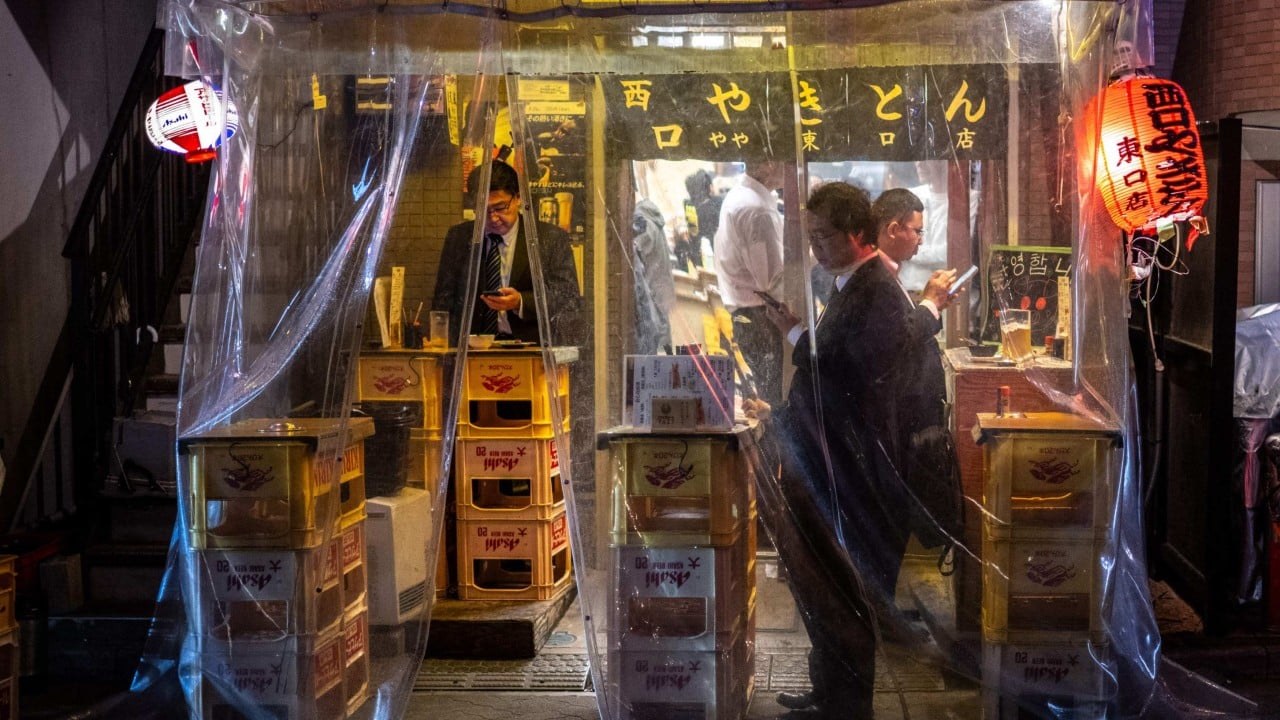
The broth takes sixteen hours. It simmered all through the quiet Tokyo night, thick with pork marrow and history, throwing up clouds of savory steam that fogged the windows of a tiny six-seat ramen shop in Shimbashi. Kenji Kenmochi stands over the pot, his shoulders slightly hunched, skimming the surface with a mesh ladle. He is fifty-eight. His wrists ache when the rain comes in from the bay. For three decades, this rhythm sustained him.
But this morning, Kenji isn't thinking about the broth. He is looking at his phone, watching the digital clock tick toward 11:00 AM, the hour the heavy noren curtains must be hung across the doorway. You might also find this related coverage useful: The Asian Biofuel Pivot is a Geopolitical Mirage.
He is entirely alone.
Two years ago, a young man from Hanoi named Minh stood next to him. Minh learned the precise angle to shake the water from the noodles in three sharp motions. Minh knew how the regular customers took their tea. Today, Minh is back in Vietnam, caught in the gears of a sudden bureaucratic freeze, and Kenji is running a marathon on a broken ankle. He will prep the pork, boil the noodles, take the cash, wash the bowls, and scrub the floors. He will do this until his knees give out, or until the debt forces him to turn off the gas for good. As discussed in recent articles by The Economist, the effects are significant.
This is not just a story about a tired man in a kitchen. It is the story of an existential fracture running through the heart of Japan’s iconic food culture. The world thinks of Japanese cuisine as an art form perfected by solitary masters. The reality is far more fragile. It is an industry built on the backs of young, ambitious immigrants who have suddenly been told they are no longer allowed to arrive.
The Mirage of the Specified Skilled Worker
To understand how the kitchen fires began to sputter, you have to look past the neon lights of Shinjuku and into the gray government offices of Chiyoda. For decades, Japan maintained a fierce, almost mythical pride in its cultural homogeneity. But arithmetic is a cruel master. With a birth rate that continues to plummet and a population that is structurally older than almost any other on Earth, the country faced a stark choice: open the doors, or watch the economy quiet down, neighborhood by neighborhood.
In 2019, the government blinked. They introduced the Specified Skilled Worker (SSW) visa program. It was heralded as a blueprint for the future, a way to bring hundreds of thousands of foreign laborers into blue-collar sectors that were starved for hands. The restaurant industry, notorious for long hours and razor-thin margins, was supposed to be a primary beneficiary.
For a brief moment, it worked. Young people from Vietnam, the Philippines, Nepal, and China arrived with dreams of learning a trade, sending money home, and building a life in the world's most sophisticated culinary landscape.
Then came the bureaucratic whiplash.
A series of sudden policy shifts, processing freezes, and administrative suspensions effectively choked the pipeline. While the demand for dining out surged back to pre-pandemic heights, the supply of human beings allowed to serve the food was abruptly cut off. Government data revealed a staggering reality: tens of thousands of visa applications stalled in a labyrinth of paperwork, leaving thousands of restaurant slots vacant.
Imagine a bridge built halfway across a canyon. The travelers are waiting on one side; the city on the other side is running out of food. That is the current state of Japan's immigration policy for the service sector. The bridge exists, but no one is allowed to walk across it.
The Arithmetic of Exhaustion
When an industry loses its workforce, the consequences do not appear on a balance sheet first. They appear on the faces of the people who remain.
Consider the baseline economics of a standard mid-sized izakaya—the lively pubs that form the social fabric of Japanese salaryman culture after dark. These are high-volume, low-margin operations. They rely on speed, precise coordination, and a relentless work ethic.
Before the visa suspensions, a typical izakaya might operate with a staff of eight. Four in the kitchen, four on the floor. Today, many are running with three.
+-----------------------------------------------------------+
| THE RESTAURANT LABOOR CRUNCH |
| |
| [ Pre-Suspension Staff ] [ Current Reality ] |
| 🧑🍳 🧑🍳 🧑🍳 🧑🍳 (Kitchen) 🧑🍳 🧑🍳 (Overworked) |
| 🧑💼 🧑💼 🧑💼 🧑💼 (Floor) 🧑💼 (Stressed) |
| |
| Result: Shorter hours, limited menus, business closures |
+-----------------------------------------------------------+
The math of this deficit is brutal. When you cut a staff in half but the number of tables remains the same, you do not simply ask people to work twice as fast. You change the nature of the business itself.
First, the menus shrink. The labor-intensive dishes—the ones requiring delicate knife work or complex, multi-stage prep—are scratched off. Next, the hours contract. Restaurants that once stayed open until 2:00 AM to catch the late-night train commuters are locking their doors at 9:00 PM.
But the real problem lies elsewhere. It is the hidden tax of cognitive overload.
When a single server is responsible for taking orders, pouring drinks, clearing tables, and running the register for forty guests, the legendary Japanese concept of omotenashi—wholehearted hospitality—evaporates. It is replaced by a tense, transactional survival mode. The customer feels it. The owner feels it. The warmth that defines the experience of dining in Japan is cooling down.
The Language of the Kitchen
There is a common misconception among policy makers that kitchen work is low-skilled labor. It is a phrase used by bureaucrats who have never had to coordinate the ticket rail of a restaurant during a Friday night rush.
Language in a kitchen is not about grammar; it is about rhythm. In a busy Japanese restaurant, the air is filled with a constant orchestration of shouts. Iraishaimase! (Welcome!) To rorru ippai! (One pork roll!) Check please!
In many Tokyo kitchens, this language had become a beautiful, hybridized dialect. It was a mix of Japanese, Vietnamese, and English, spoken at the speed of light, understood implicitly through shared sweat and muscle memory. The foreign workers who entered these kitchens were not just automatons executing tasks. They were cultural translators. They brought energy, adaptability, and a hunger to prove themselves that injected life into an aging industry.
When the visas were suspended, it wasn’t just headcount that was lost. It was institutional knowledge.
When Minh left Kenji’s shop, he didn't just take his hands with him. He took his understanding of how the old refrigerator door stuck if you didn't kick it just right. He took his specific way of calming down angry customers who had waited too long for a stool. Every time a trained foreign worker is forced to leave because of a visa technicality, the restaurant loses an investment that took years to cultivate. Replacing them isn't as simple as hiring someone new off the street—especially when there is no one on the street looking for the job.
The Myth of the Domestic Savior
There are those within the political establishment who argue that this crisis is an opportunity. They claim that by restricting foreign labor, restaurants will be forced to raise wages and attract domestic workers—the young Japanese generation currently underemployed or working in the gig economy.
It is a seductive theory. It is also entirely wrong.
The young population of Japan does not want to work in restaurants. This is not a matter of wages alone; it is a structural shift in societal values. The restaurant industry is viewed by the modern Japanese youth through the lens of the "Three Ks": Kitsui (difficult), Kitanai (dirty), and Kiken (dangerous). They prefer the predictable hours of convenience store shifts, the autonomy of delivery driving, or the climate-controlled comfort of corporate office work.
Even when restaurants aggressively raise wages—eating into profit margins that are already under threat from global inflation and rising import costs—the resumes do not arrive.
We must confront a uncomfortable truth. The domestic workforce required to sustain Japan's massive tourism boom and its own cultural dining habits simply does not exist. The country cannot birth workers fast enough to fill the vacancies created by the policy decisions of today.
Automation and the Death of the Counter
Walk into a modern chain restaurant in Shibuya now, and you will see the alternative future.
You are greeted not by a person, but by a glowing touchscreen kiosk. You select your meal, scan a QR code, and sit at a table where a tiered conveyor belt or a robotic tray delivers your food from a hidden kitchen. There is no interaction. No eye contact. No shared human moment.
For large corporations, this shift toward automation is a triumph of efficiency. It protects the bottom line. It solves the labor crisis by eliminating the need for labor.
But Japan’s culinary reputation was not built on corporate chains and automated conveyor belts. It was built on the counter. It was built on the intimate relationship between the person making the food and the person eating it. It is the conversation with the sushi chef, the nod of recognition from the izakaya owner, the shared laughter in a space no bigger than a walk-in closet.
Every time a small, independent operator closes because they cannot find staff, a piece of that human infrastructure dies. The corporate chains absorb the real estate. The streets become more uniform, more efficient, and infinitely colder. The visa suspension is accelerating an architectural shift from a culture of hospitality to a culture of automated consumption.
The Unseen Stakes
The sun is beginning to go down over Shimbashi. The neon signs are flickering to life, casting long, sharp shadows across the pavement.
Kenji Kenmochi stands at the entrance of his shop, his hands tucked into his apron. He has decided to cut his evening hours. He will close at 8:00 PM instead of midnight. It means he will lose the late crowd, the highest-margin portion of his day. It means his ability to pay his suppliers next month will be a close-run thing.
He looks down the alleyway. A few doors down, a traditional yakitori place that had been open since the 1970s is dark, a white sign taped to the shutter announcing its permanent closure due to "various circumstances." Everyone in the neighborhood knows what those circumstances are.
This is the hidden cost of a frozen border. It is not measured in GDP percentages or policy whitepapers. It is measured in the quiet disappearance of spaces that gave a city its soul.
The young men and women who want to come to Japan to cook, to serve, and to build are sitting in apartment rooms in Hanoi and Manila, checking their email for updates that never arrive. The masters of the broth are standing alone in the steam, watching the clock, wondering how many hours their knees have left in them.
A restaurant with an empty stool is an unfinished story. Right now, across Japan, thousands of those stories are simply stopping mid-sentence, waiting for someone to let the authors back in.